
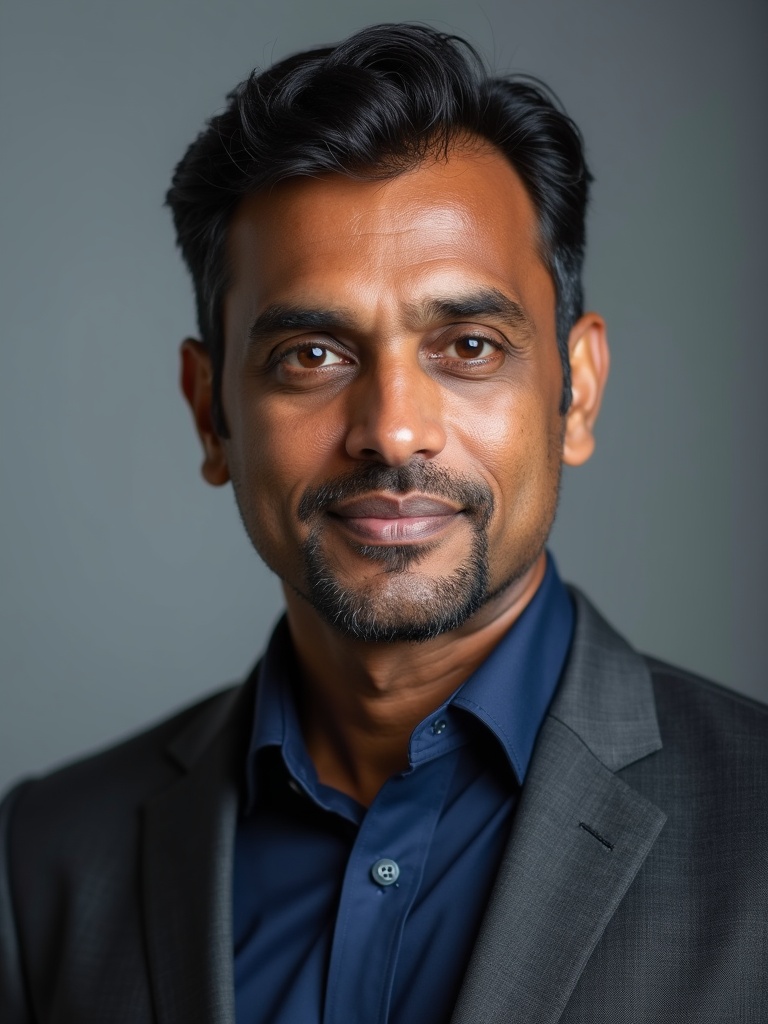
Raghav Pillai is a New Delhi-based foreign affairs analyst covering great-power diplomacy and the architecture of global order. His reporting tracks the intersections of strategy, economics, and statecraft.
Recent work
Hiroshima at 81: India's Nuclear Doctrine Speaks Louder Than Its Silence
Eighty-one years after the atomic bombing of Hiroshima, the annual commemoration revives global pressure for nuclear abolition through frameworks India has deliberately declined to join. India's position — No First Use, credible minimum deterrence, and a call for comprehensive multilateral disarmament — represents a distinct moral architecture that deserves a more assertive diplomatic hearing than New Delhi has recently given it.
Britain Condemns West Bank Settler Violence — India Holds Its Own Line
UK Minister Stephen Doughty issued a formal statement condemning escalating settler violence in the West Bank, including arson attacks on mosques and lethal incidents across multiple Palestinian villages. The statement demands Israel prosecute settler perpetrators and rejects settlement expansion as a response to violence. For India — which maintains defence partnerships with Israel, diplomatic ties with the Palestinian Authority, and deep strategic relationships with Gulf states invested in the Palestinian cause — London's condemnatory register represents a path New Delhi has consistently declined to walk.
Hormuz on Fire: India's Energy Lifeline Runs Through a War Zone
The escalating US-Iran confrontation, marked by American strikes on Iranian targets and renewed Houthi attacks on Saudi tankers in the Red Sea, has placed the world's most critical oil transit corridor under active threat. For India, which routes a substantial share of its crude imports through both the Strait of Hormuz and the Red Sea, this is not a distant geopolitical drama — it is a direct assault on the arteries that keep Indian refineries running and domestic fuel prices stable. The crisis also imperils India's Chabahar port investment and the broader INSTC connectivity vision that New Delhi has built around Iranian territory.
Congo's Ebola Surge Opens a Strategic Window India Should Not Miss
The Democratic Republic of the Congo has recorded over 2,400 confirmed Ebola cases as of mid-July 2026, with the outbreak still expanding despite early signs of stabilisation. WHO and UN partners are racing to contain the virus amid persistent insecurity in eastern DRC. For India, the crisis lands at the intersection of pharmaceutical capacity, peacekeeping exposure, and the continent-wide soft-power project that New Delhi has been quietly assembling since COVID-19.
Hormuz Under Fire: India's Energy Calculus Confronts a Familiar Fault-Line
Renewed attacks on shipping in the Strait of Hormuz have rattled energy markets and drawn an IMO call for maximum restraint. For India, this is not a distant geopolitical episode — the strait carries the bulk of the crude oil that powers Indian industry, and any sustained disruption would ripple from petrol pumps in Chennai to currency desks in Mumbai. The crisis also illuminates a strategic liability New Delhi has deferred too long: its dependence on US naval presence to keep the world's most consequential chokepoint open.
Geneva's AI Summit Opens a Governance Frontier India Must Shape
A major UN summit in Geneva has opened around the central question of whether artificial intelligence can benefit all of humanity without causing catastrophic harm. The gathering is less a technical conference than a norm-setting contest, where the architectural choices made this week will determine who controls the global AI governance regime for a generation. India arrives as both a large AI deployment market and a credible voice for the Global South, carrying the weight of its G20 presidency legacy and a clear interest in ensuring that emerging regulatory frameworks do not codify the incumbency advantages of frontier model developers in Washington and Brussels.
The UN's First AI Assessment Opens a Governance Window India Must Claim
The United Nations has published the first independent global scientific assessment of artificial intelligence, mapping both its transformative potential and systemic risks. The report arrives as multilateral governance frameworks begin to solidify, creating an opportunity — and a deadline — for countries that wish to shape the resulting architecture rather than inherit it. India, with its scale of digital deployment and its established record of building public AI infrastructure, enters this moment with genuine norm-setting leverage.
Gulf Shockwaves Expose the Real Cost of Middle East Conflict for Developing Economies
Weekend strikes between the United States and Iran have eased after renewed diplomatic efforts, but the economic damage is already spreading through the world's most vulnerable economies. Crude prices, shipping costs, and food import bills are moving against countries that have no seat at the table where this conflict is being prosecuted. For India, the exposure runs deeper than headline oil prices — it runs through 9 million workers in the Gulf, a fragile shipping corridor, and the credibility New Delhi has built as the institutional voice of the Global South.
India Shapes Global Justice Framework as UN War Crimes Tribunals Near Closure
The UN Security Council weighs the future of international war crimes mechanisms as tribunals for Rwanda and Yugoslavia near closure. India leverages this transition to promote equitable representation in global justice institutions and address selectivity concerns in international law.
India Reinforces UN Peacekeeping Leadership as Lebanon Violence Claims Another Life
A UN peacekeeper died in mortar fire near Marjayoun, Lebanon, highlighting security threats to the 900 Indian personnel deployed with UNIFIL. The incident reinforces India's position as a leading peacekeeping contributor while demonstrating the sacrifices Indian forces make for international stability.
India Advances Climate Leadership as UN Confirms El Niño's Global Weather Threat
The UN has confirmed El Niño's onset, warning of extreme weather globally. The Pacific Ocean-warming phenomenon directly threatens India's monsoon patterns and agricultural productivity, while creating opportunities for India to showcase its indigenous weather forecasting technologies and strengthen its position in climate diplomacy.
India Navigates Critical Mineral Competition as UK Intensifies South Africa Engagement
The UK government has released comprehensive guidance on South Africa's critical minerals, highlighting the country's strategic importance in global supply chains for battery metals, platinum group metals, and industrial minerals. The guidance signals intensifying Western competition for African mineral resources that India must navigate as it seeks to diversify its own critical mineral supply chains away from Chinese dominance.
India Advances Global Governance Vision as UN Chief Calls for Security Council Reform
UN Secretary-General António Guterres declared Security Council reform 'absolutely essential' while criticizing veto-wielding 'superpowers' for impunity. His call for expanded membership validates India's long-standing position that current structures reflect outdated post-WWII dynamics rather than contemporary global realities.
India Elevates Italy Partnership to Strategic Alliance as Europe Embraces New Delhi
Prime Minister Modi's official visit to Italy culminated in upgrading bilateral ties to Special Strategic Partnership level, with leaders targeting €20 billion trade by 2029. The partnership spans semiconductors, clean energy, and defence cooperation, reflecting Europe's growing recognition of India's economic dynamism.
UK Abandons Aid Paternalism as India's Partnership Model Gains Global Traction
The UK's Deputy Prime Minister announced a fundamental shift away from traditional development aid toward partnerships based on mutual respect, marking a significant validation of India's long-standing approach to international cooperation and South-South development frameworks.
UK Conference Signals Shift Toward Results-Driven Development Architecture
The UK's Global Partnerships Conference 2026 proposes fundamental reforms to international development cooperation, emphasising speed, country-led solutions, and private sector engagement. The initiative comes as Middle East conflicts threaten 45 million more with acute food insecurity.