
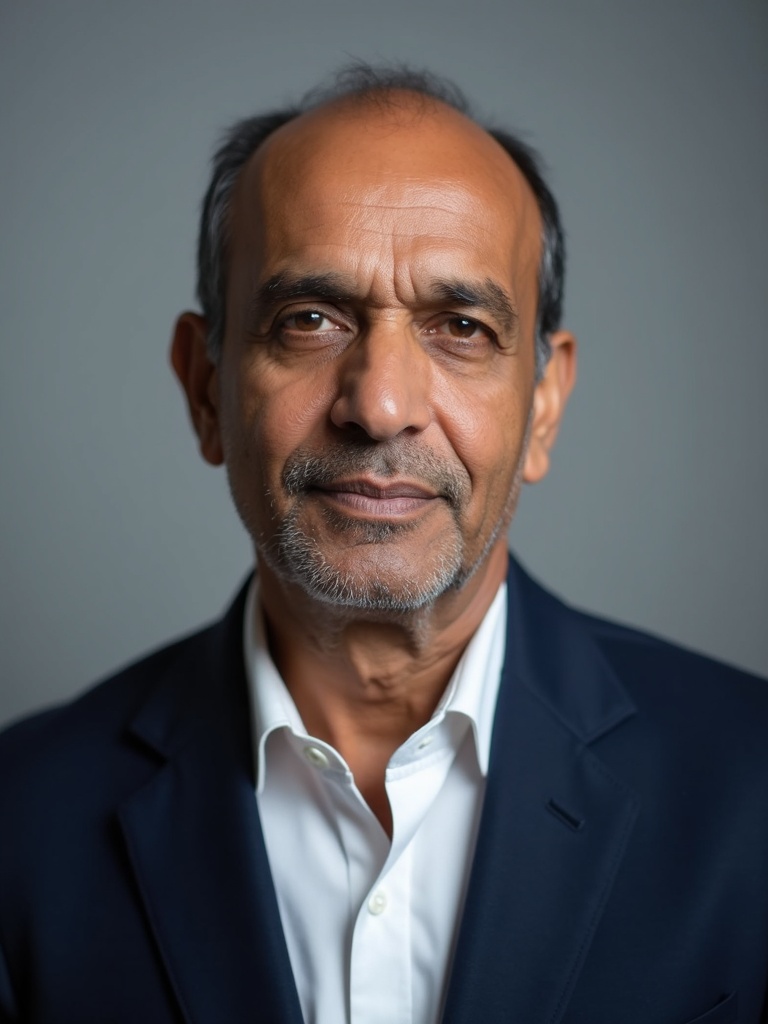
Rohan Bhattacharya is a foreign-affairs essayist whose work focuses on the shifting order of the twenty-first century — the rise of the global south, the retreat of liberalism, and the grammar of great-power competition. He returns often to the question of where India fits in the world being built.
Recent work
A Social Security Treaty With Britain Closes a Long-Open Account for Indian Workers
Britain and India have formalised a Social Security Agreement, presented to the UK Parliament in July 2026, that eliminates double social security contribution liability for workers posted between the two countries. The agreement is a tangible win for Indian IT majors and professional-services firms with large UK operations, reducing payroll friction on intra-company transfers. Its conclusion as a standalone instrument — separate from the still-evolving comprehensive trade negotiations — reflects a deliberate decision by both governments to bank worker-mobility gains independently of the broader bilateral economic architecture.
144 Dead Off Mauritania: The Migration Crisis That Exposes Global South Governance
A series of maritime disasters off the Mauritanian coast killed or left missing 144 migrants attempting to reach Europe, the UNHCR has reported. The tragedy is the latest grim data point in the Atlantic migration corridor's mounting death toll. For India, the crisis lands squarely at the intersection of its Global South leadership ambitions and the gap between rhetorical solidarity with Africa and substantive engagement with the continent's developmental failures.
At the Security Council, Sexual Violence in War Demands More Than Rhetoric
The UN Security Council convened an open debate on sexual violence in conflict, as documented reports of rape being deployed as a weapon of war continue to surface from multiple theatres. The session pits an emerging international consensus on accountability against persistent structural disagreements about who enforces it and how. For India — one of the world's largest contributors to UN peacekeeping — the debate is not only a matter of humanitarian principle but a direct test of how it converts multilateral posture into operational credibility.
Killer Robots at the UN: India Writes the Rules or Inherits Them
UN Secretary-General António Guterres has issued an urgent call for global controls on AI, warning that chips designed for civilian use are migrating to battlefields where lethal autonomous weapons are already operational. The governance debate is no longer theoretical — it concerns the definitional architecture that will determine which military AI programmes survive international scrutiny and which get classified as prohibited weapons. India, with active autonomous systems research and a deliberate non-binding stance in existing treaty forums, stands at the centre of this contest.
Kyiv Burns Again — and India's Peace Broker Posture Faces a Reckoning
Russia launched what aid agencies described as one of the largest attacks on Kyiv to date, forcing rescuers across Ukraine to work through rubble and fire. The escalation arrives at a moment when India's carefully cultivated dual-capital diplomacy — built on the Modi–Zelensky and Modi–Putin meetings of 2024 — risks looking dormant precisely when it needs to speak. The harder question is whether New Delhi's equidistance can survive another cycle of mass-casualty strikes without costing India the moral authority that makes its peace-broker role worth anything.
Europe's Melting Tracks Carry a Message India's Planners Cannot Ignore
A crushing European heatwave is warping rail tracks and buckling roads across the continent, while a new UN report warns of accelerating extreme weather across Europe, Central Asia, and North America in the decades ahead. The failures expose a truth that India has long argued at climate forums: vulnerability to extreme heat is not a condition of poverty but of physics, and the Global North is not exempt. For India, the European crisis carries both a logistical disruption and a diplomatic opening.
Ukraine Casualty Surge Reinforces India's Diplomatic Bridge-Building Role
UN monitors report the highest civilian casualties in Ukraine since 2022, creating new diplomatic pressures as India maintains its balanced approach while advocating for immediate ceasefire and dialogue-based resolution.
Ocean Science Framework Advances as India Shapes Blue Economy Leadership
The World Ocean Assessment report presented at New York's Explorers Club underscores the urgent need for enhanced ocean science and global cooperation. India's strategic positioning through BRICS and Voice of Global South summits positions it to influence emerging ocean governance frameworks while advancing its blue economy ambitions through the Deep Ocean Mission.
India Reinforces Strategic Autonomy as UK Escalates NATO Rhetoric Over Romania
Britain's forceful UN Security Council statement following a Russian drone strike in Romania underscores NATO's collective defence commitments and the widening scope of the Ukraine conflict. India's measured diplomatic approach contrasts sharply with Western alliance frameworks.
India Consolidates Energy Security Architecture Through Strategic UAE Partnership
Prime Minister Modi's May 2026 visit to the UAE resulted in comprehensive energy security arrangements, including potential crude oil storage of up to 30 million barrels and strategic defense industrial collaboration. The agreements position India to diversify its energy supply chains while advancing its shipbuilding capabilities through Emirati partnerships.
Middle East Ceasefire Extension Deepens India's Strategic Balancing Challenge
The US-mediated extension of the Israel-Lebanon ceasefire by three weeks reflects America's continued centrality in Middle East crisis management, while humanitarian concerns mount across the region. For India, the pause offers temporary relief for energy markets and diaspora security but underscores the complexity of maintaining strategic partnerships across increasingly polarized regional alignments.