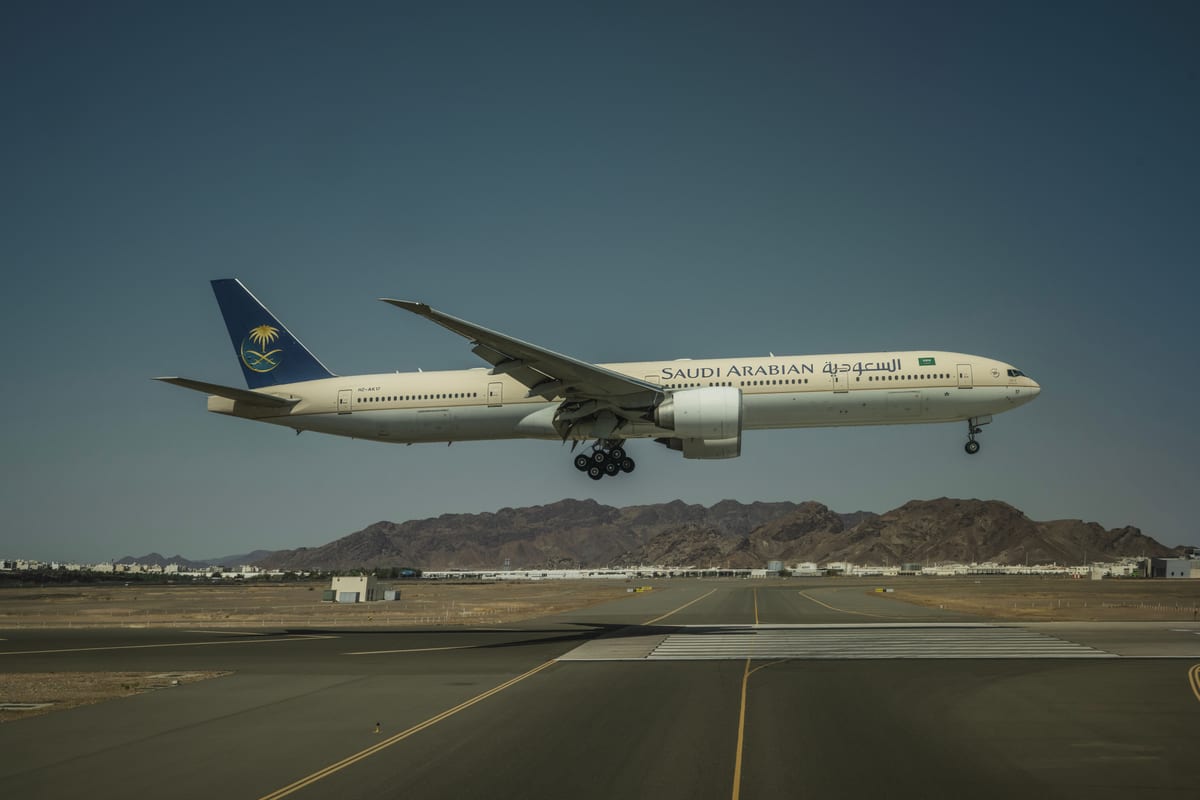
Saudi Arabia has opened an air accident investigation into the September 30 cockpit attack on a flydubai jet, according to a Reuters report carried by LiveMint. Three people close to the matter said Riyadh notified specialist aviation agencies abroad that it would examine flight FZ1073 under international rules; the Boeing 737 MAX was in Saudi airspace when the co-pilot attacked the captain with an axe.
The probe is not mandatory for a deliberate act, which the UAE prosecutor general has already called a terrorist attack, but safety inquiries produce recommendations without assigning blame. Saudi Arabia's National Transport Safety Center did not respond to requests for comment, and neither the Saudi government nor its regulator answered queries, according to Reuters. The US National Transportation Safety Board, which would be closely involved because the aircraft was designed and built in the United States, also could not be reached.
The UAE is automatically part of the safety examination because the jet is registered there and flydubai is based in Dubai. Its criminal investigation proceeds separately; prosecutors have called the attack a terrorist act, a designation that carries different evidentiary and intelligence consequences. The safety inquiry is designed to protect the system, not to establish guilt.
A probe without diplomatic precedent
Safety investigations do not assign liability. The Saudi inquiry will focus on the sequence of events, cockpit-door mechanics, crew procedures, and the airline's security screening, under international rules that govern accident investigation. The absence of diplomatic relations between Riyadh and Tel Aviv adds a layer of choreography: Israel's offer to participate is on the table, but the invitation has not come.
Ofer Vaknin, director of Israel's Aircraft Safety Investigation Authority, told Reuters:
"We are still waiting for a notification from Saudi Arabia to invite us to take a part in the investigation."
Nearly all of the 172 people on board were Israeli citizens. That fact alone makes the safety probe an unusual exercise in technical cooperation; two countries with no formal channel for direct aviation-security contact would have to build one around a single flight.
The difference between a criminal prosecution and a safety investigation matters for how information flows. A criminal file is sealed, its evidence guarded for trial; a safety file, under international norms, is shared with accredited representatives from states that have an interest. That is why the UAE, the United States, and potentially Israel would each have a seat at the Saudi table. India does not automatically have a seat as a major destination and origin point for flydubai, but its regulators can request observer status through existing bilateral civil-aviation arrangements with the UAE. The absence of an Indian public statement should not be mistaken for absence of interest; quiet technical exchange is the usual first move in aviation security.
The Indian passenger sits inside this fault line
Flydubai is not a distant carrier. Its India–UAE network moves Indian workers, business travellers and tourists through Dubai, and the September 30 attack unfolded on routes that Indian passengers use daily. A cockpit breach on a Gulf carrier is a security problem for Indian aviation. India's Directorate General of Civil Aviation and Bureau of Civil Aviation Security would normally track such an incident through bilateral aviation-security channels with the UAE and Saudi Arabia, though no Indian official has publicly commented.
Sanjay Lazar, an aviation expert, framed the shift in blunt terms. "Till now, regulators, aviators, companies were dealing with the threat outside the cockpit. Now the threat is inside the cockpit... You can't have an enemy in the cockpit," he told NDTV. That observation cuts to the heart of what Indian regulators need to examine: cockpit-door protocols for foreign carriers operating from Indian airports, screening of transit passengers on Gulf routes, and cabin-crew training for intrusion response.
Lazar's warning points to a structural problem: aviation security has spent decades hardening the boundary between cabin and cockpit but far less on screening the people allowed inside the cockpit. That is not unique to India; it is a global gap that the Saudi probe will now document. For Indian regulators, however, the stake is immediate because Flydubai's Indian routes carry workers returning on leave, small-business owners connecting through Dubai, students travelling between semesters, passengers whose tolerance for security gaps is low and whose alternative options are not always cheaper.
What Indian regulators can do without theatrics
The first step is informational: India's aviation-security agencies should seek a briefing from UAE and Saudi counterparts on how the co-pilot was able to bring an axe into the cockpit. The second is procedural: foreign carriers operating from Indian airports may need a review of cockpit-door discipline, especially during the cruise phase. None of this requires publicly naming a vulnerable procedure; the point is to close the gap that this attack exposed without disrupting the heavy India–UAE passenger flow that supports both economies.
India is a major source of Gulf-bound workers, and its citizens form a substantial portion of flydubai's cabin traffic. The security of those flights depends on whether a passenger who checks in at an Indian airport can assume that the person in the cockpit has been screened, that the door will hold, and that a distress event will be handled by trained cabin crew. Those assumptions were tested on September 30, and the Indian aviation-security system has a direct stake in knowing how they failed.
Much of India's international passenger traffic moves through Gulf hubs, and flydubai's schedule is part of that architecture. The September 30 incident does not change the fact that Gulf carriers remain the most convenient link between Indian cities and the wider Middle East, Europe, and Africa, but it changes the security assumptions attached to that convenience. Indian regulators can assert a stronger interest in cockpit-crew vetting without singling out any one airline; the same questions would be asked of any carrier whose aircraft left Indian airspace with a co-pilot armed inside the flight deck.
For Indian travellers, the September 30 attack is a reminder that a Gulf carrier's security failure is a domestic risk. The Saudi safety probe may be an unusual case of countries with no diplomatic ties cooperating on a technical file, but the Indian interest is narrower and more practical: whether the next flydubai flight out of any Indian city boards with the cockpit breach closed. Indian regulators need the bilateral aviation-security conversation to move beyond routine consultation and into the specific facts of FZ1073.