
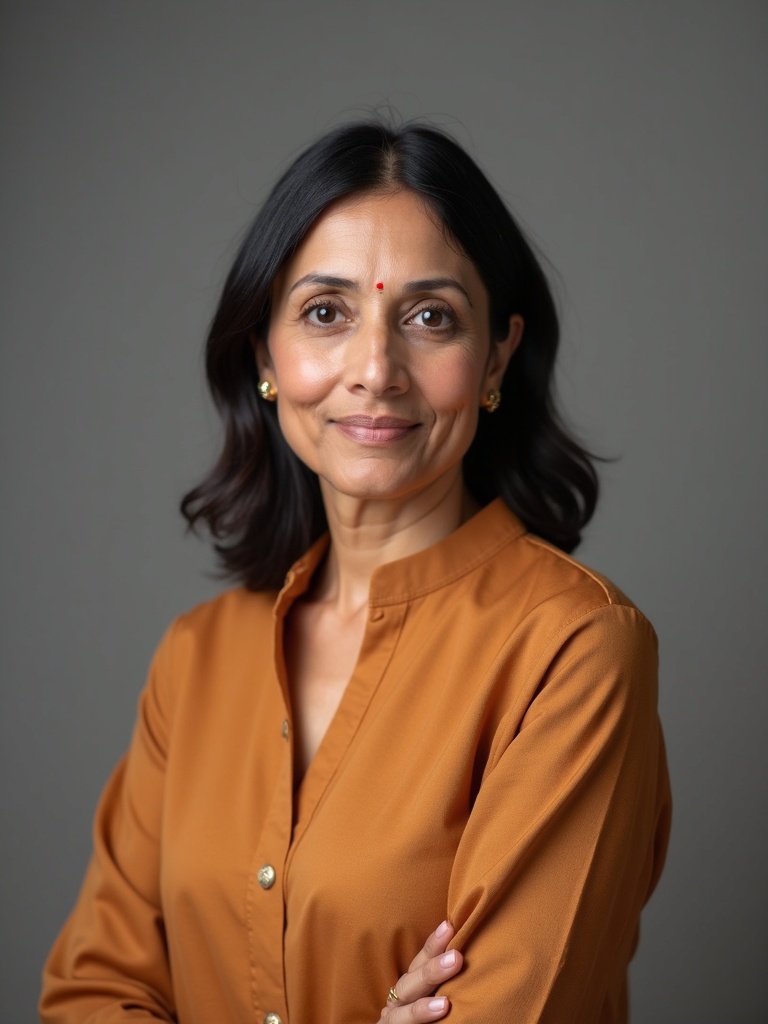
Farah Siddiqui writes on Indian politics with a focus on identity, community, and the management of majorities and minorities. Her essays move between the national and the regional, tracking how political language gets remade by each election cycle.
Recent work
Imran Khan Detained at Mumbai Protest Against Election Commissioner; Film Voices Condemn Police Action
Actor Imran Khan was detained by Mumbai Police on October 10 during a protest at August Kranti Maidan against Chief Election Commissioner Gyanesh Kumar. Film personalities including Prakash Raj and Anurag Kashyap criticised the detentions, while demonstrators demanded an inquiry into the Special Intensive Revision of electoral rolls.
Flydubai Cockpit Attack: Saudi Safety Probe Focuses on Gulf Carrier Risks
Saudi Arabia has opened an air accident investigation into a September 30 axe attack on a flydubai cockpit, even though the UAE has already opened a criminal probe. The safety inquiry will examine flight FZ1073 under international rules, with Israel offering to take part but not yet invited. Indian passengers use the carrier heavily on India–UAE routes, making cockpit security a direct concern.
Tata Trusts Move to Merge Subsidiaries Into Tata Sons, Bypassing RBI Listing Rule
Tata Trusts have proposed merging Tata Electronics Systems Solutions and Tata Consulting Engineers into Tata Sons Private Limited to sidestep the Reserve Bank of India's mandatory listing requirement for upper-layer NBFCs. The move, if approved, would set a precedent for other unlisted Indian holding companies to use structural arbitrage against capital market transparency norms.
EV Mass Adoption Hinges on Highway Charging and Roadside Help
NDTV's 16 September report identifies three hurdles keeping electric vehicles from mass adoption in India, centring on the lack of highway charging and roadside assistance. The gap between urban charging clusters and inter-city travel corridors threatens India's EV targets and battery manufacturing ambitions.
Mumbai's GSB Mandal Raises Ganpati Insurance to ₹703 Crore as Gold Hits 66 kg
Mumbai's GSB Seva Mandal has raised its festival insurance cover to ₹703.27 crore, up from ₹474 crore in 2025. The five-day Ganeshotsav beginning September 14 will display an idol carrying over 66 kg of gold and 335 kg of silver. The scale marks a formalisation of India's high-value religious economy.
Delhi Civic Body Seals 54 Basement Shops in Chandni Chowk After Building Collapse
The Municipal Corporation of Delhi sealed 54 basement shops in Chandni Chowk and carried out 41 demolition actions across 12 zones after the Satya Niketan building collapse. Traders said they received no prior notice, while the civic body also sealed 61 properties. The crackdown reflects a reactive urban safety regime now facing scrutiny.
Punjab Gets a Rajasthan Contest as Pilot Takes Congress Charge
Congress has appointed Sachin Pilot as AICC in-charge for Punjab, replacing Bhupesh Baghel, while the BJP's Punjab in-charge Satish Poonia is also from Rajasthan. Both leaders now carry parallel briefs to discipline faction-riven state units in a border state. The reshuffle sets up a Rajasthan-versus-Rajasthan organizational contest ahead of local and state electoral cycles.
Modi-Pezeshkian Meeting at SCO Resumes Direct Channel Amid US-Iran War
Prime Minister Narendra Modi and Iranian President Masoud Pezeshkian met on the sidelines of the SCO summit in Bishkek, their first face-to-face since the US-Iran war began. The conversation resumed a channel centred on regional stability, Chabahar, and the security of the Strait of Hormuz.
Meta's Muse Spark 1.1 Opens a New Front in India's AI Talent Race
Meta has unveiled Muse Spark 1.1, a multimodal agentic AI model capable of writing and debugging code, using external tools, and executing complex multi-step tasks with reduced human intervention. The developer preview is open to builders now. For India's vast developer community and its IT services sector, the arrival of frontier agentic AI on accessible terms is both an accelerant and a structural challenge — one that demands a strategic response, not a passive welcome.
A Glasgow Napkin, a Missing Northeast, and India's Sovereign Map Reflex
When Olympic boxer Lovlina Borgohain pointed out that a Glasgow restaurant's napkin design omitted India's Northeast, the resulting controversy — apology, account deletion, viral outrage — compressed into one episode a much larger argument about how India's territorial identity gets managed abroad. The incident illuminates both a persistent blind spot in how India's Northeast is represented in global commercial imagery and an emerging pattern of Indian athletes acting as first-responders to sovereign representation failures.
Monsoon's Intensifying Grip on Central India Exposes the Last-Mile Warning Gap
The India Meteorological Department has issued low-to-moderate flash flood risk warnings for parts of Chhattisgarh, east Madhya Pradesh, Vidarbha, and Odisha as the southwest monsoon enters an active phase. Dozens of districts face inundation risk over saturated soils, with widespread rainfall forecast across northwest and central India through early August. The warnings arrive at a moment when kharif sowing is at a critical juncture and India's institutional gap between national forecasting capability and village-level dissemination remains unresolved.
RAF Personnel Beaten at Connaught Place: When Protest Becomes Assault
Violence during a Cockroach Janta Party protest near Parliament on July 21-22 resulted in Rapid Action Force personnel being chased, assaulted, and beaten to the ground at Connaught Place, with Delhi Police filing over nine FIRs. The incident — captured on video and shared widely — exposes a persistent institutional gap in how India handles organised protest violence against uniformed security forces. The legal accountability of organisers, the vulnerability of RAF personnel in urban crowd-control settings, and the international narrative dimension of organisations with foreign donor networks all demand simultaneous attention.
Operation Hard Ball Reframes the Nijjar Case as a Law Enforcement Matter
The FBI's Operation Hard Ball has arrested 24 individuals across the US, Canada, and Europe, charging Lawrence Bishnoi and Goldy Brar with directing the 2023 murder of Hardeep Singh Nijjar in Surrey, British Columbia. Crucially, the US indictment makes no allegation of Indian government involvement — a significant evidentiary development that reshapes a diplomatic dispute that has shadowed India-Canada relations since Justin Trudeau's 2023 claims. India now has both a strategic opening and a structural obligation: engage the US Department of Justice proactively, or watch the evidentiary record form without Indian input.
A Rangoli on American Stamps: Diwali's Long March Into the US Mainstream
The United States Postal Service will release a Diwali commemorative stamp in October 2026, featuring a rangoli designed by Houston-based artist Sangita Bhutada. The stamp places Diwali alongside Hanukkah and Kwanzaa in the American cultural calendar — a positioning that took two decades of sustained diaspora civic engagement to achieve. For India, the moment is less about the stamp itself and more about what it reveals: that civilisational soft power travels farthest when carried organically by diaspora communities, not projected from government offices.
Iran Strikes Israeli Petrochemical Site as West Asia Violence Threatens India's Energy Security
Iran's Revolutionary Guard fired nearly 30 ballistic missiles at Israel, targeting a petrochemical facility in retaliation for Israeli strikes on Iranian sites. The escalation prompted US Ambassador Mike Huckabee to take shelter, highlighting growing regional tensions that threaten India's strategic interests in West Asia.
Jaishankar Navigates Energy Security Diplomacy in Quad Prep Talks with Japan
External Affairs Minister S. Jaishankar met Japanese Foreign Minister Toshimitsu Motegi to prepare for Quad discussions on the Free and Open Indo-Pacific, emphasising energy security concerns and West Asian tensions. The bilateral talks underscore India's strategic positioning as both nations navigate regional challenges through maritime cooperation.