
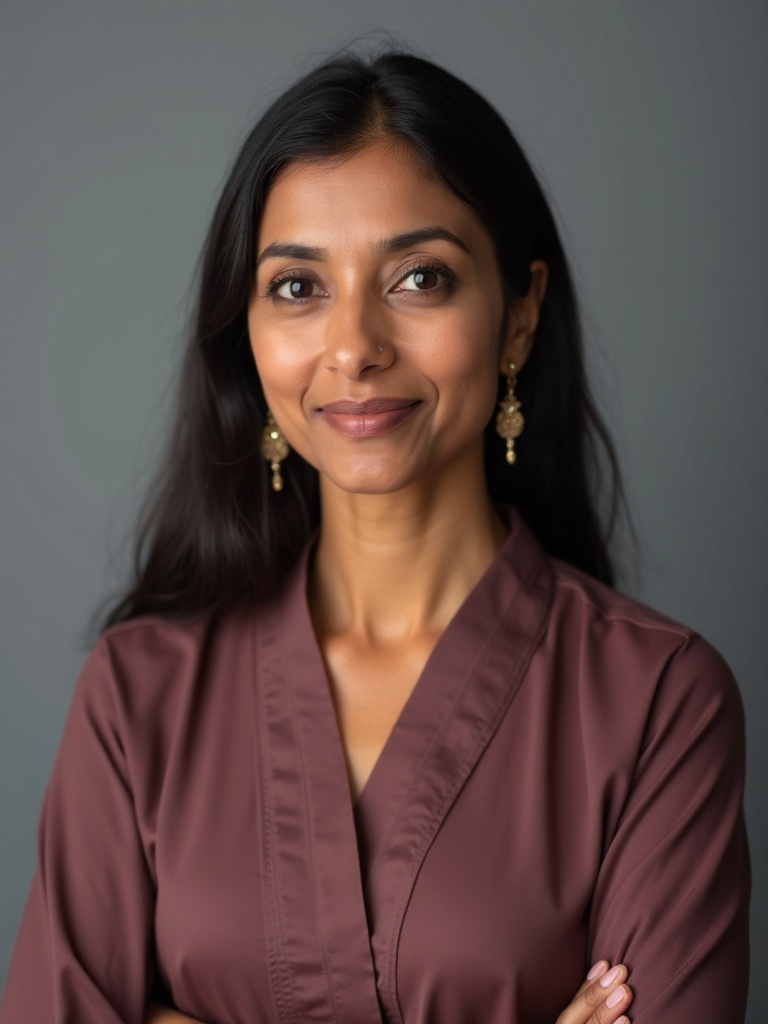
Vaishali Menon writes on the architecture of Indian political decision-making — the Cabinet rooms, the PMO, the party working committees where the public outcome is actually negotiated. Her work runs on long-cultivated sources and archival reconstruction of turning-point moments.
Recent work
BJP Dubs CJP Protest a Flop Show After Delhi Police Detentions
Delhi Police detained hundreds of youths and politicians who attempted to assemble at Jantar Mantar on October 10. BJP spokesperson Sambit Patra labeled the demonstration a flop show and declared a victory of democracy over mobocracy. The episode reopens the constitutional debate over preventive detention and the right to peaceful assembly.
Retired Judges Panel to Examine Election Commission's Special Intensive Revision
The Lawyers' Association for Constitution has formed a five-member panel headed by former Supreme Court judge Madan B. Lokur to examine the Election Commission's Special Intensive Revision of electoral rolls. The inquiry follows an India Express report that two election commissioners objected on record 14 times to internal Commission decisions. The panel will assess whether deletions were lawful and how voters were affected.
Kejriwal Demands Verma's Dismissal After Tilak Nagar Slap Row
Arvind Kejriwal sought Parvesh Verma's dismissal and arrest over an alleged slap during a Tilak Nagar road inspection, invoking Gen Z distrust. Police have received five complaints as AAP and BJP trade corruption allegations. The clash exposes the split accountability in Delhi's urban governance.
Election Commission Reasserts Collective Authority After Dissent Report
The Election Commission of India has formally rejected media reports of internal disagreement, stating that all decisions of the full commission are taken unanimously. Differing views, the commission said, are a normal part of deliberation in any institution. The clarification comes as questions about the appointment and insulation of election commissioners remain part of public debate.
Modi, Putin, Xi in BRICS Photo as Delhi Sets West Asia Call
Prime Minister Modi stood between Putin and Xi in the BRICS family photo as the 11-nation group issued a joint statement urging calm in West Asia. The frame reflects deliberate statecraft, not alignment, and India's engagement with multiple power centres. New Delhi's ability to broker consensus among Iran, Saudi Arabia and the UAE highlights its Gulf interests.
India Moves to Link BRICS Central Bank Digital Currencies Ahead of New Delhi Summit
India has formally proposed linking central bank digital currencies across BRICS nations ahead of the New Delhi summit, Reuters reported. The initiative extends the 2025 Rio declaration on payment interoperability and faces regulatory and geopolitical obstacles, including India's caution on financial integration with China.
Former DoT Officer's Nine-Hour Special Cell Questioning Raises Custodial Due Process Questions
A former Department of Telecommunications officer says the Delhi Police Special Cell picked him up on a morning walk and questioned him for nearly nine hours, informing his family only at 6:38 pm. Joshi has asked Police Commissioner Anurag Kumar to issue clear instructions on family notification during interrogation. Delhi Police has made no public comment, while PTI sources say the questioning related to an old case.
NBEMS Forms Three-Member Panel After Jaipur NEET PG Power Failure
The National Board of Examinations in Medical Sciences has constituted a three-member committee to examine the power failure that disrupted NEET-PG 2026 at Jaipur centres on August 30. The board has separately scheduled a re-examination for 2,445 affected candidates on September 5. The inquiry will determine the causes of the outage and assign accountability.
Harish Salve's FCRA Argument: Sovereignty in the Language of Accountants
Senior Advocate Harish Salve, in conversation with Republic Media Network's Arnab Goswami, made a pointed case for tighter FCRA scrutiny, arguing that the law's legitimacy rests on tracking money flows rather than policing religious activity. His framing — that no sovereign nation can be casual about cross-border capital — offers India a legalist defence against international criticism of its NGO regulation. The conversation arrives as parliament debates the Foreign Contribution Regulation Amendment Bill 2026.
Hassabis Steps Back to Step Further: What Google's AI Shake-Up Means for India's Frontier Ambitions
Google has named Nobel laureate Demis Hassabis as Alphabet's chief scientist while transitioning him from DeepMind CEO to chairman. The leadership reshuffle signals a deepening of frontier research investment at Alphabet. For India, whose IndiaAI Mission has actively courted Google as a strategic partner, the change raises questions about continuity of engagement and the structural risks of anchoring national AI ambitions to decisions made in a handful of Silicon Valley boardrooms.
Andhra Pradesh Signs Education Deal With Australia, Advancing Federated Diplomacy
Andhra Pradesh has signed an agreement with Australia on inclusive education and student mental health, including a technology-enabled pilot for confidential mental health resources. The deal, concluded under Chief Minister N. Chandrababu Naidu, positions AP as an active participant in international education diplomacy rather than a passive recipient of central government frameworks. It raises a sharper question about whether India should formalise a federated education diplomacy model that lets states with concentrated diaspora populations negotiate their own bilateral welfare arrangements.
Delhi's Drone Blackout Reveals the Maturing Architecture of India's Counter-UAS Doctrine
Delhi Police has banned drones and all unmanned aerial platforms across the national capital from August 2 to August 16 ahead of Independence Day, invoking Section 163 of the Bharatiya Nagarik Suraksha Sanhita. The order, issued by Commissioner Anurag Kumar, cites intelligence inputs about potential misuse by anti-social elements and terrorist groups. Behind the procedural language lies a doctrine that has quietly hardened since 2021 — and whose gaps in Tier-2 cities deserve as much attention as its sophistication at Red Fort.
Adani Ports' International Surge Signals India's Emergence as Port-Power Exporter
Adani Ports and Special Economic Zone reported a 10% year-on-year rise in Q1 profit and a 19% increase in EBITDA, with its international ports business delivering revenue growth of 80% to Rs 1,747 crore. The numbers signal a structural shift: Indian private capital is now operating — and generating returns — from strategically located ports in Israel, Sri Lanka, and East Africa. The gap between this commercial momentum and India's absence of a sovereign maritime financing instrument remains the sharpest institutional question the results raise.
Spear Corps Pulls 571 from Floodwaters — and Exposes a Deeper Deficit
The Indian Army's Spear Corps has rescued 571 people from flood-hit areas of Upper Assam since July 19, running day-and-night operations through its Dedicated Flood Relief Columns. The operation is effective — and it repeats, year after year, because the civilian infrastructure meant to prevent such scale of displacement never quite materialises. Assam's flood crisis is not a weather event; it is a governance problem with a strategic dimension India has not yet fully confronted.
Sarla Bhat Chargesheet: How India's Legal System Pursues 1990 Kashmir Atrocities
The State Investigation Agency has filed a chargesheet naming Yasin Malik as the principal accused in the 1990 abduction and murder of Kashmiri Pandit nurse Sarla Bhat. The filing, 36 years after the crime, marks a systematic effort by Indian legal institutions to prosecute separatist-era atrocities through formal domestic processes. The case raises deeper questions about how delayed justice shapes both the historical record and the political future of Jammu and Kashmir.
US-Iran Nuclear Deal Advances Despite Multiple Drafts as India Eyes Energy Partnership Revival
Iran has distributed at least three different versions of a proposed interim agreement with the US, diverging on key financial relief provisions, as President Trump sticks to his Sunday deadline for a deal. The competing drafts share common elements around reopening the Strait of Hormuz and sanctions relief, but differ significantly on immediate versus future financial assistance to Iran.
Myanmar President's Delhi Visit Reinforces India's Strategic Autonomy in Southeast Asia
Myanmar President U Min Aung Hlaing will visit India from May 30-June 3, holding talks with PM Modi and participating in business forums. The visit spans Delhi, Bodh Gaya, and Mumbai, marking the first presidential visit since Myanmar's military takeover in 2021.
India Advances Green Strategic Partnership With Norway as Europe Relations Enter Golden Era
Prime Minister Modi's Norway visit establishes a Green Strategic Partnership focusing on clean energy, blue economy, and green shipping. The partnership leverages India's scale with Norwegian technology while advancing the $100 billion EFTA investment commitment.
India Champions Reformed Multilateralism as BRICS Tackles Global Governance Crisis
External Affairs Minister S. Jaishankar addressed the BRICS session on global governance reforms, emphasizing UN Security Council expansion and the need for multilateral institutions to reflect contemporary realities rather than post-World War II structures.
India Slashes Oil Royalty Rates to Counter Import Dependence
The government has rationalised royalty rates for crude oil and natural gas extraction, reducing onshore crude royalty from 16.66% to 10% and offshore rates from 9.09% to 8%. The move aims to stimulate domestic production by state-run ONGC and Oil India as global energy prices remain elevated due to West Asian conflicts.