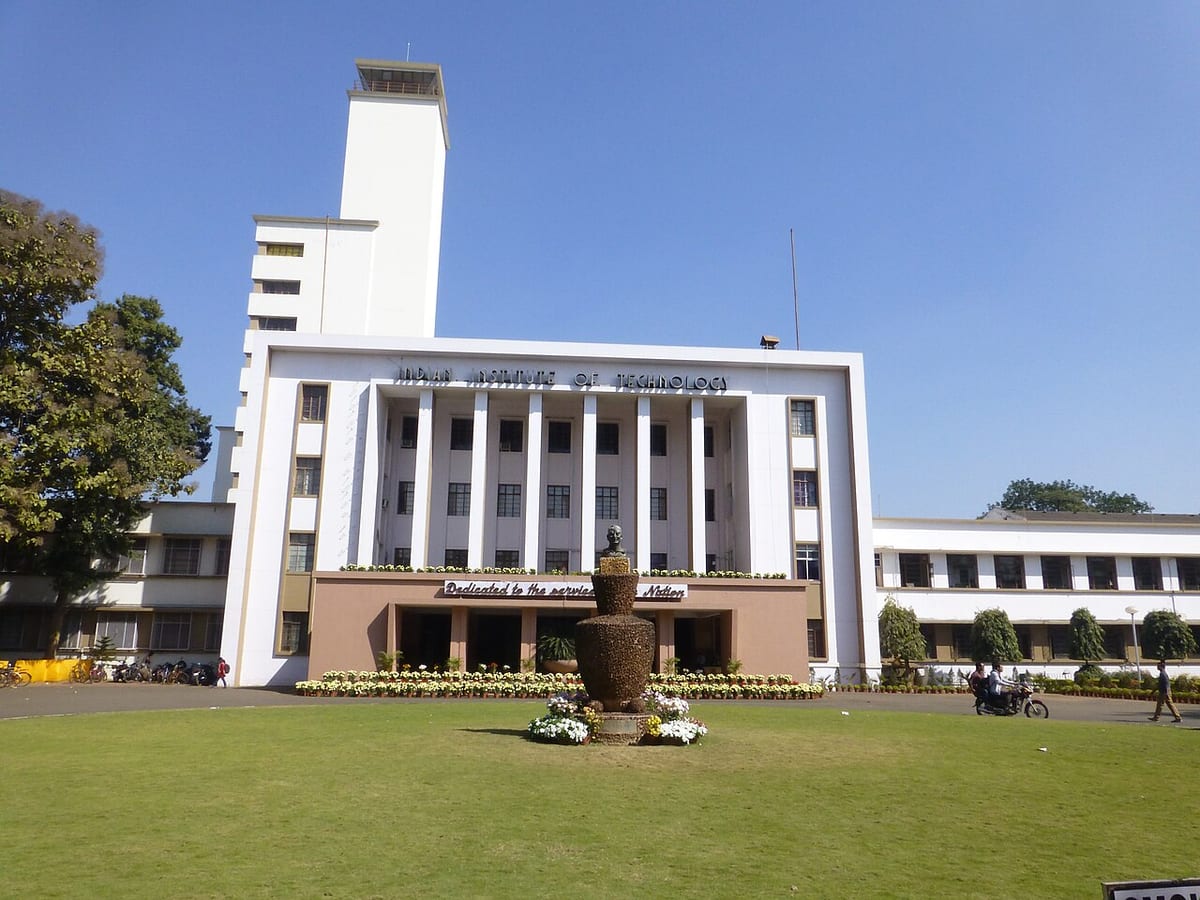
Prime Minister Narendra Modi addressed the platinum jubilee celebrations of IIT Kharagpur on Friday, at the institute's West Bengal campus, telling students and faculty that India has declared "loud and clear" its resolve to "break the limits and unlock the possibilities," according to NDTV.
The address at the country's first Indian Institute of Technology, established in 1951, came the same day that Google announced a $5 million grant for AI research at the institute, India Today reported. Google chief executive Sundar Pichai sent an emotional message on the occasion, the report added.
The first IIT and the architecture of talent
IIT Kharagpur opened in 1951 as the first institution in a national engineering chain. Its platinum jubilee marks seventy-five years of an institution that supplied officers to India's railways and steel plants, founded its software export houses, and filled senior ranks in its technology diaspora. The institute sits inside a larger state project that made higher education a deliberate instrument of industrial planning.
For much of that history, the IIT system produced engineers more than research. The Prime Minister's formulation, "break the limits", addresses that gap. It signals that the old constraints, rigid curricula, weak research funding, limited industry linkage, are no longer acceptable to New Delhi. The national education policy has moved, on paper, toward more research autonomy and interdisciplinary degree structures. The speech at Kharagpur is the public version of that shift.
The political economy of a 75-year-old brand
IIT Kharagpur's early decades were shaped by the planning state; its later decades by the software export boom. These two lineages rarely spoke to each other. The planning lineage produced steel, dams and railway engineers with tenured campus cultures. The export lineage produced a global diaspora and an admission brand that rivals the world's best undergraduate programmes. Both are real achievements, but neither required the institute to become a source of original research in semiconductors, AI or quantum technologies at scale.
The platinum jubilee has now been used to make that third ask explicit. "Break the limits" is a planning-era phrase applied to a market-era institution. It asks the campus to retain its brand while changing its incentive structure: more patent filings, more doctoral completions, more spin-offs, more partnership laboratories with companies like Google. This is a cultural shift, not merely an administrative one.
The research pipeline the speech is aimed at
The gap between India's graduating engineers and its original research has been more often described than fixed. The institute's leadership has framed its evolution as central to India's research and startup ecosystem, and the speech gave that framing a national platform. The harder question is what follows: how many new PhD and post-doctoral seats, how many industry-academia chairs in semiconductors, AI and quantum technologies, how many technology-transfer officers can carry a lab prototype into a company.
These are not rhetorical questions. A university cannot "unlock possibilities" by speech alone. It needs procurement rules that let a professor buy equipment before a funding cycle expires. It needs salary structures that keep a post-doctoral researcher from leaving for a fintech job. It needs a legal environment where a faculty startup does not spend three years resolving intellectual property ownership. The Prime Minister did not itemize these on Friday, but they determine whether the jubilee line becomes policy.
Indian higher-education institutions have long operated with a mismatch: undergraduate instruction is world-class by any measure, while post-graduate research infrastructure lags the quantity of the country's own talent. A campus that produces thousands of placement-ready engineers can still have only a handful of laboratories equipped for deep work on quantum materials or secure hardware. Closing that gap requires more than a grant announcement; it requires changing the default career path from placement to publication.
A $5 million proof point
Google's grant, reported the same day, gives the speech a companion data point. The $5 million for AI research at IIT Kharagpur is a focused corporate remit, not a general endowment. It ties the campus being asked to "break limits" to a specific technology frontier. Sundar Pichai's emotional message, as India Today described it, connects Google's global leadership to this particular institute. The company has hired from the IIT system for decades; a grant at Kharagpur is part recruitment, part validation.
The confluence is not coincidental. State rhetoric and corporate capital are now converging on the same research infrastructure. That is the point at which a ceremonial address acquires bargaining weight with finance ministries and foreign partners.
From ceremonial push to structural investment
Anniversary speeches can harden into ceremonial language. "Break the limits" risks becoming a slogan unless it is followed by budget allocations, faculty hiring rules, and procurement reforms that lower the cost of running serious laboratories. The Prime Minister's formulation points to a structural ambition: the state sees higher education as strategic infrastructure, not a welfare outlay. The open question is whether the university system and the finance ministry hear the same speech.
Other countries with technology ambitions pair national rhetoric with multi-year research block grants. China's elite universities and South Korea's KAIST run on long-cycle public research budgets largely decoupled from annual tuition or campus placements. India's IITs, for all their global brand, still depend far more on placement pipelines and undergraduate instruction than on endowed research. That is the real limit to break, and it cannot be breached in one address.
There is also a federal dimension. The central government owns the IIT brand, but state governments in West Bengal and elsewhere control land, electricity, and often the local supply chains that research campuses depend on. A Kharagpur quantum lab will need stable grid power and a municipality that can process building permits for clean rooms. The Prime Minister's speech cannot fix those layers alone.
What the jubilee actually tests
The platinum jubilee is not a test of Modi's delivery. It is a test of whether the Indian state can make its higher-education institutions the central arena for technology self-reliance, not just its most reliable exporters of talent. The speech and the Google grant arrived on the same day by accident of calendar, but they point in the same direction: India's ambition to "break the limits" now has a named campus, a named frontier and a named corporate partner. The next three budget cycles will show whether the limit-breaking moves beyond the dais.