The sun cleared the Manhattan skyline, and the mats came out on Times Square. Not hundreds of them — thousands, spread across the painted asphalt between the billboards and the Broadway marquees, a sea of colour that stopped tourists mid-stride and drew phones into the air. At the centre of it stood the Consulate General of India in New York, a diplomatic mission that had decided this patch of American real estate was the right place to make a point about India.
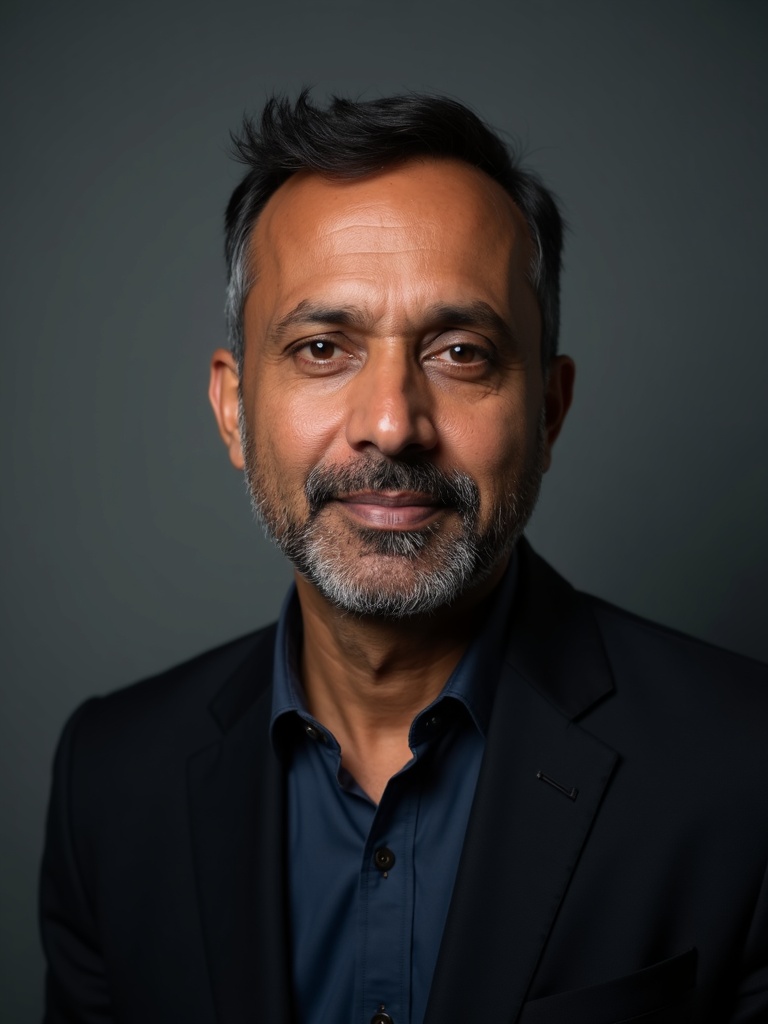
The occasion was the International Day of Yoga, and the Consulate General of India, New York had made it an event the city could not ignore. It was not the first time the consulate had brought yoga to Times Square — the celebration has become a signature — but under Amb. Binaya Srikanta Pradhan, who took charge in January 2024, the programming has acquired a sharper edge of intent. Yoga is not decoration. It is argument: that India's civilisational gifts are living, practiced things, not museum exhibits, and that 2.3 million Indians across ten East Coast states have every reason to stand up in public and own them.
The Logic Behind the Festival
Pradhan is a 2002-batch Indian Foreign Service officer who speaks four languages — English, Russian, Hindi, Odia — and has spent his career in postings that reward patience and precision: Moscow, Turkmenistan, Pakistan, the fraught diplomatic corridors connecting India to Afghanistan and Iran. He served as Chief of Staff to India's Petroleum Minister for five years. Before New York, he was India's High Commissioner to Tanzania, where he helped lift the bilateral relationship to a Strategic Partnership and shepherded into existence IIT Madras's first overseas campus, in Zanzibar. These are not the credentials of a man who reaches for the easy gesture.
Which is why the cultural programming at the Consulate General of India, New York repays attention. It is not a sideline of his tenure. It is the frame.
The consulate's jurisdiction covers ten U.S. East Coast states, a diaspora of more than 2.3 million, and roughly 117,000 Indian students. It sits in the middle of a region that generates approximately one-third of all India–U.S. merchandise trade. The business of this posting — visa services modernised through the Pramit digital query portal, passport and OCI processing, congressional engagement, commercial delegations across IT, gems and jewellery, and ceramics — is substantial and relentless. Cultural diplomacy, in this context, is no soft counterweight to the hard work. It is the hard work, conducted in a different register.
The logic runs like this: a diaspora that feels seen by its home country's diplomatic mission stays connected, sends students back for summer programmes, builds trade corridors, and shows up when India needs friends in American legislatures. Culture is the mechanism of that visibility.
Bihar Diwas and the Grammar of Belonging
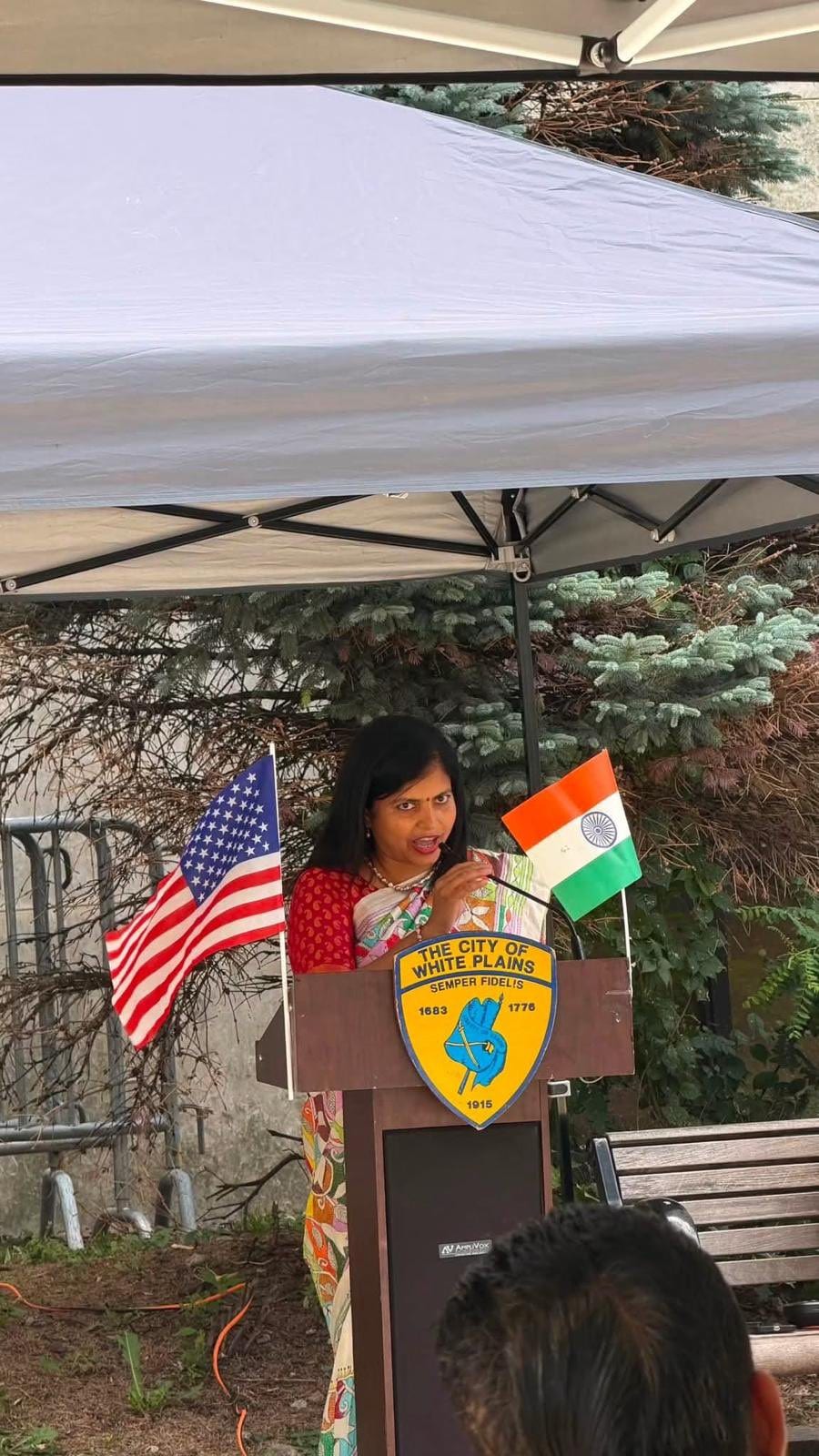
When the Consulate General hosted Bihar Diwas — a celebration of one of India's most storied and populous states — it placed a specific bet. The Indian community in the United States is no monolith. It is Bihari and Gujarati, Tamilian and Odia, Punjabi and Malayali, each group carrying its own festival calendar, its own food, its own version of what home sounds like. A consulate that treats this diversity as an operational inconvenience loses the room. One that treats it as an asset — programming that says your particular home matters, not just India in the abstract — earns what no visa-processing efficiency can buy: loyalty.
Bihar Diwas in New York is no small production. It draws community members from across the region, assembles cultural performances, and features the cuisine and craft of a state whose history reaches back to the Mauryan Empire. In a city that has seen everything, it still feels like an event with stakes — because for the Bihari diaspora in America, it is. The consulate's willingness to hold the space, to lend it institutional weight, tells that community that distance from Patna does not mean distance from recognition.
The same grammar governs the rest of the calendar. Regional festivals, art exhibitions, classical music and dance programmes — each one a small act of acknowledgment aimed at a specific community. The accumulation of those acts transforms a consulate from a document-processing office into something closer to an embassy of identity.
Times Square as Canvas
The Bharat Mahotsav at Times Square — reported as a historic event in News India Times — carried this logic to its most public expression. Times Square is, by design, the world's most competitive attention market. To stage an Indian cultural festival there, at a scale that registers amid the noise, demands both logistical seriousness and confidence in what you are presenting. The consulate has demonstrated both.
The World Ayurveda Day celebration, covered by News India Times, added another dimension: India's traditional systems of knowledge, positioned not as folklore but as a coherent intellectual tradition deserving the same platform as any other. These events compound. Each one reaches a different audience — the yoga practitioner who knows nothing about Ayurveda, the Ayurveda enthusiast who has never attended a regional festival, the festival-goer who wanders into the Times Square crowd and finds something unexpected. The net, cast wide, catches more than any single targeted programme could.
Culture as Connective Tissue
Pradhan's broader diplomatic approach — the legal aid and free counselling for diaspora members, the focus on student welfare, the commercial delegations — shares a common DNA with the cultural work. All of it bends toward the same question: what does it mean for this many Indians to live this far from India, and what can a consulate do to make that distance feel less like estrangement?
The cultural programming answers in the key of celebration rather than bureaucracy. It says: we know who you are, where your family is from, what music moves you. We are not here just to renew your passport.
The consulate's activities can be followed at indiainnewyork.gov.in and on X at @IndiaInNewYork, where the programming calendar reads like a festival guide to the Indian year in America — yoga in June, Independence Day in August, Janmashtami in the autumn, regional celebrations threaded through the months between.
The calendar is not finished. As India's 80th Independence Day approaches in 2026, the consulate has already joined conversations about what the largest celebrations across the United States will look like — and in New York, with its unmatched diaspora density and its talent for spectacle, the expectations run high. Pradhan has spent the better part of his first year and a half building the relationships and the programming muscle to meet them.
On Times Square, the mats get rolled up. The crowd dissolves into the ordinary morning. But the image endures — thousands of people breathing together in the middle of the world's loudest intersection, under the aegis of India. That is the point.