
For two consecutive years, India's auto component sector wore its net-exporter status as a badge of manufacturing maturity. That badge slipped in FY26. According to data released by the Automobile Component Manufacturers Association (Acma), India imported components worth $25.4 billion in FY26 — a 13% jump — while exports grew just 5% to $24 billion. The arithmetic produced a $1.4 billion deficit, reversing the $0.5 billion surplus of the year before.
The proximate cause is not mysterious. Electric vehicle sales surged 25% to cross 2.4 million units in FY26, with new models proliferating across two-wheelers, three-wheelers, and passenger cars. EVs run on lithium-ion cells. India does not make enough of them. The cells come, overwhelmingly, from China. Imports from Asia — largely Chinese — surged 19% to $17.75 billion. That single line in the Acma data is the story.
The Solar Panel Trap, Replayed in Batteries
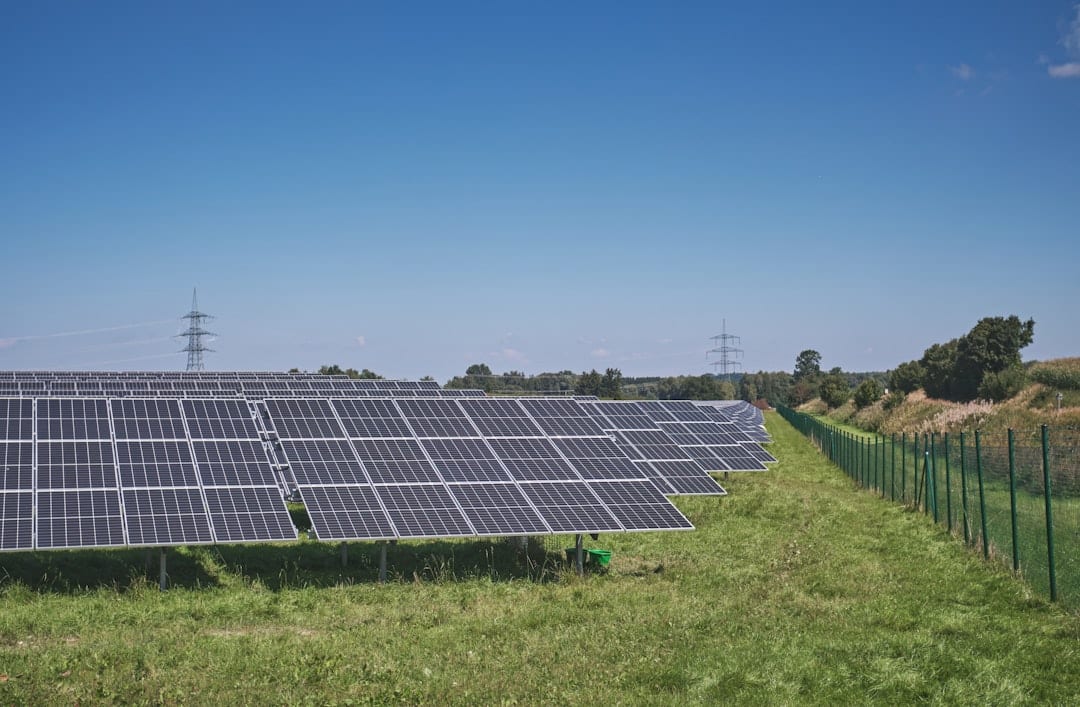
India watched this movie before. A decade ago, the country pushed hard on solar capacity addition, subsidised rooftop installations, set ambitious generation targets — and then discovered that nearly every panel being installed came off a Chinese production line. The policy had accelerated demand without building domestic supply. By the time the import dependency became politically embarrassing, Chinese manufacturers had locked in cost advantages that took years and significant tariff intervention to dislodge, and India still has not fully closed that gap.
The EV component situation carries an uncomfortable structural resemblance. The government has incentivised EV adoption — two production-linked incentive schemes exist for EV components and cells — but disbursements to auto component firms across both schemes remain muted, with none receiving significant direct support. Demand is running. Supply-side support is walking. The gap between the two is being filled by Chinese exporters, who supply a large market with low domestic competition.
Vinnie Mehta, director general at Acma, put the mechanism plainly at a conference in New Delhi: "There was strong growth in the domestic market, especially in electric vehicles. As the level of localisation is low in electric vehicles, the imports surged during the year." That sentence deserves to sit in every ministry briefing room working on EV policy. Localisation is low. Demand is high. The import bill grows.
North America: Where the Headwind Arrived
The other half of the reversal came from the export side. North America is India's second-largest auto component export market, and exports there were flat at $7.3 billion in FY26 — a sharp deceleration from prior-year momentum. The cause traces directly to Washington. In March-April 2025, the Trump administration imposed a 25% tariff on automobile goods under Section 232 of the U.S. Trade Act, alongside reciprocal tariffs on Indian imports. The U.S. Supreme Court later struck down the reciprocal tariffs, and some companies received refunds — but the Section 232 automobile tariff stands, and its 25% weight sits on every Indian component crossing the Pacific.
Indian component makers built much of their North American business on the aftermarket and OEM replacement segment — gaskets, filters, forgings, castings, precision machined parts. These are not glamorous goods. They are, however, volume businesses with thin margins, and a 25% tariff does not leave room to manoeuvre. The ministry of heavy industries had held talks with the industry about a new dedicated scheme to incentivise exports amid tariff headwinds, but as of the FY26 data release, that scheme has not been finalised. The West Asia conflict added freight and insurance complications to the mix, further compressing export margins.
Two Pressure Points, One Structural Question
The FY26 data captures two simultaneous pressures hitting the same sector from opposite directions. On the import side: an EV transition that India's domestic supply chain is not ready to serve, pulling in Chinese components at accelerating speed. On the export side: a tariff wall in India's largest Western market, blunting the growth trajectory that Indian component makers spent years building.
Together, they raise a question that goes beyond one year's trade balance. India's auto component sector employs over 1.5 million people directly and contributes approximately 2.3% of GDP. A sustained shift to net-importer status — not as a one-year anomaly but as a structural condition — would erode both the employment density and the current-account contribution that makes this sector strategically significant. The $1.4 billion deficit in FY26 is not catastrophic in isolation. If the EV localisation gap persists for five years at current adoption rates, the numbers compound in ways that matter to the trade balance and to the workers on the shop floor.
An opportunity exists in the global appetite to diversify auto supply chains away from China. Japanese, South Korean, and German Tier-1 suppliers have been actively scouting alternate manufacturing bases since supply chain shocks of the early 2020s made single-country concentration look reckless. India, with its engineering workforce, established forging and casting base, and growing domestic EV market, is a credible candidate to attract that FDI. But credible candidacy requires policy clarity on local content requirements, predictable PLI disbursements, and land and infrastructure availability at industrial clusters — none of which can be wished into existence mid-cycle.
What the Policy Calendar Demands
The India-U.S. Bilateral Trade Agreement negotiations, where auto parts have been flagged as a priority sector by the Commerce Ministry, offer a near-term lever on the export side. A phased reduction or carve-out on Section 232 tariffs for Indian components — framed around India's role as a preferred non-China supplier to American assemblers — would restore the export trajectory while aligning with Washington's own supply-chain diversification goals. This is a negotiation that serves both sides' stated interests, which makes it more tractable than most bilateral trade conversations.
The import side is harder. PLI disbursements for Advanced Chemistry Cell batteries have moved slowly, and slow disbursements mean slow capacity creation. The government's Phased Manufacturing Programme for EV components provides a framework, but framework and execution are different things. An effective policy response would add a mandatory local content escalator for EV models accessing government subsidies — increasing the required domestic content threshold year by year, forcing OEMs to either localise or absorb rising costs. Without that mechanism, the demand subsidy and the import surge run in parallel indefinitely.
The solar panel experience suggests India has roughly a five-year window before import patterns in a fast-growing technology sector become self-reinforcing. Suppliers invest in capacity, logistics networks form around them, cost curves improve with scale, and domestic alternatives become progressively harder to build competitively. That window is open now in EV components. The FY26 trade data is the alarm — what matters is whether the policy response treats it as one.