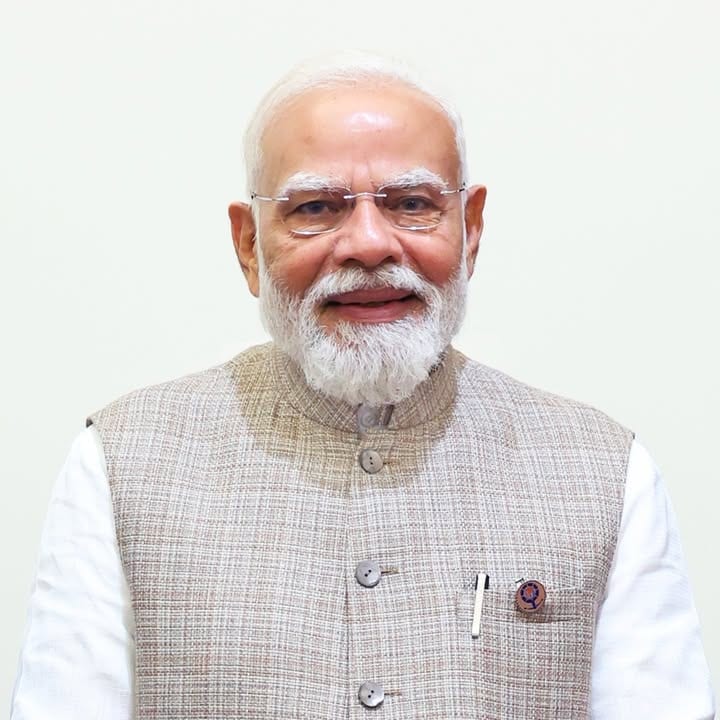
When India's team returned from the 37th International Biology Olympiad with what Prime Minister Narendra Modi called an outstanding performance, the congratulatory statement arrived with the familiar warmth of national pride. Modi framed the result as a reflection of India's scientific potential — in the narrow, photogenic sense of a medal ceremony, that is accurate. These are exceptional young people, selected through rigorous national screening, trained by one of the world's more disciplined olympiad preparation systems, and capable of competing against the best pre-university biology students on the planet.
But a congratulatory statement is also the easiest response to a hard structural problem. The 37th Biology Olympiad result is not just a celebration — it is a diagnostic. And what it diagnoses is both encouraging and uncomfortable.
The Machine Behind the Medal
India's olympiad programme does not happen by accident. The Homi Bhabha Centre for Science Education, a national institute under the Tata Institute of Fundamental Research, serves as the nodal body for selecting and training India's teams across the international science olympiads. HBCSE runs a multi-stage selection process — from regional to national levels — that identifies students with genuine theoretical depth, not merely exam technique. The biology olympiad demands command of cell biology, genetics, ecology, physiology, and biosystematics at a level that would challenge many undergraduate students in the West.
The pipeline is real. India has institutionalised the discovery of exceptional scientific talent at the school level, and the 37th Biology Olympiad result is evidence that the system functions. PM Modi's recognition of the team aligns with consistent government messaging linking youth achievement to the broader Viksit Bharat 2047 framework — the idea that India's rise as a developed nation runs through the quality of its human capital as much as through its infrastructure or manufacturing capacity.
The National Education Policy 2020 reinforced this orientation, placing scientific temper and research culture at the centre of its vision for school and higher education reform. The policy's architects explicitly argued that nurturing gifted children through talent-identification mechanisms — of which olympiad participation is a flagship example — was essential to building the knowledge economy India aspires to become.
Where the Pipeline Leaks
Here is what the medal ceremony does not show: where these students go next.
Analysts who have tracked India's science olympiad alumni note a consistent pattern — a disproportionate share of students who perform at international olympiad level pursue graduate programmes abroad, most commonly in the United States, the United Kingdom, and Germany, and do not return to build research careers within India's institutional ecosystem. The leakage is not irrational from the individual's perspective. Graduate fellowships at leading foreign universities are better funded, laboratory infrastructure is superior, and the publication-to-career pathway is more legible. India's own universities, with some distinguished exceptions, have not yet created environments that make staying obviously preferable to leaving.
This is not a new observation. The Takshashila Institution and others working at the intersection of education policy and strategic affairs have flagged it in various forms. What makes it newly urgent is the specific domain: biology. The 21st century's most consequential technological frontier is not silicon — it is the living cell. Synthetic biology, mRNA therapeutics, precision oncology, pandemic preparedness — these are the fields where national scientific capacity will translate most directly into geopolitical and economic power. India's pharmaceutical industry is already a global force in generics manufacturing. The next competitive frontier requires not just process chemistry but original biological discovery. That discovery depends on retaining the very students who stand on olympiad podiums.
The Soft Power Argument and Its Limits
There is a legitimate soft-power case for India's olympiad success that operates independently of the retention question. Strong performance at international science competitions signals to the world that India's pre-university education system produces students capable of intellectual competition at the highest levels. This matters for bilateral science-and-technology partnerships, for India's negotiating credibility in multilateral forums dealing with biological sciences — from the Convention on Biological Diversity to CEPI, the Coalition for Epidemic Preparedness Innovations — and for the proposition that India deserves a seat at the table where global scientific governance is shaped.
It also feeds, indirectly, into India's standing in discussions around skilled migration. Every time an Indian student wins at an international olympiad, the argument for India as a source of high-quality scientific human capital grows stronger. That argument shapes how the European Union thinks about mobility partnerships, how US institutions structure their graduate recruitment, and how multinational pharmaceutical companies locate their R&D operations. In this sense, the 37th Biology Olympiad result is a small diplomatic asset, even if it is never formally deployed as one.
But soft power without structural follow-through does not hold. If India's most talented young biologists consistently build their most productive years elsewhere, the soft-power narrative eventually runs hollow. The country becomes known as an exporter of talent rather than a generator of discovery — a distinction with significant long-term consequences for sectors like biotechnology and life sciences where India has declared explicit leadership ambitions.
The 1996 Parallel and What It Suggests
India has hosted international science olympiads before — the International Mathematical Olympiad came to India in 1996, a moment that combined scientific visibility with institutional pride. Analysts working on science diplomacy have suggested that hosting future editions of international olympiads — including, potentially, the biology olympiad — could serve a dual purpose: demonstrating India's organisational capacity while placing the country's scientific ecosystem in the global spotlight in a way that attracts collaborators and funders rather than simply exporters of talent.
There is something to this argument. The hosting of large international scientific events creates infrastructure, galvanises local scientific communities, and generates the kind of visibility that bilateral government-to-government science agreements rarely achieve. India has shown, across various domains from sporting events to diplomatic summits, that it can organise at scale. Bringing an international science olympiad home would be a modest but symbolically significant step in positioning India as a scientific destination rather than merely a scientific reservoir.
Connecting the Dots
The 37th International Biology Olympiad result deserves the celebration it receives. The students who competed represent something genuinely admirable about India's intellectual culture — the drive, the discipline, the curiosity that survives an education system that does not always reward it. PM Modi's congratulations are warranted.
What the result demands, beyond celebration, is a harder institutional conversation. India's school-level science talent identification works. The olympiad training system, anchored by HBCSE, works. What does not yet work well enough is the chain of incentives, fellowships, laboratory resources, and career pathways that would persuade an olympiad gold medallist that the most exciting place to do biology in 2026 is Bengaluru or Pune or Hyderabad rather than Boston or Heidelberg. Until that chain is strengthened, India will keep producing the world's best young biologists — and watching a significant share of them build the world's best biology elsewhere. The medal is proof of what India can find. The research output is proof of what India has not yet learned to keep.