The global economy in mid-2026 is not in crisis. It is in something more insidious: a prolonged state of unresolved tension, where geopolitical fracture lines and supply chain stress keep repricing risk without ever resolving it. Against that backdrop, the Reserve Bank of India's July 2026 Bulletin carries particular weight. Its assessment is compact — one article on the state of the economy, two speeches, current statistics — but the signal embedded in its language warrants careful reading. India's domestic economy, the RBI finds, has navigated external uncertainties well, supported by healthy demand conditions and resilient industrial and services sector performance. That phrasing — navigated well — is deliberate. It is the language of an institution that is watching, not panicking.
What the Numbers Say
The bulletin's key observations cluster around three variables: inflation, liquidity, and the external sector. On inflation, the picture is split. Headline retail inflation inched up in June, but core inflation — particularly when precious metals are excluded — remained low. That distinction matters for monetary policy. Precious metals prices have surged globally as investors seek safe-haven assets amid geopolitical uncertainty; that surge feeds mechanically into headline indices without necessarily reflecting broad domestic demand pressure. An RBI that raises rates in response to gold-price inflation would be tightening against the wrong variable.
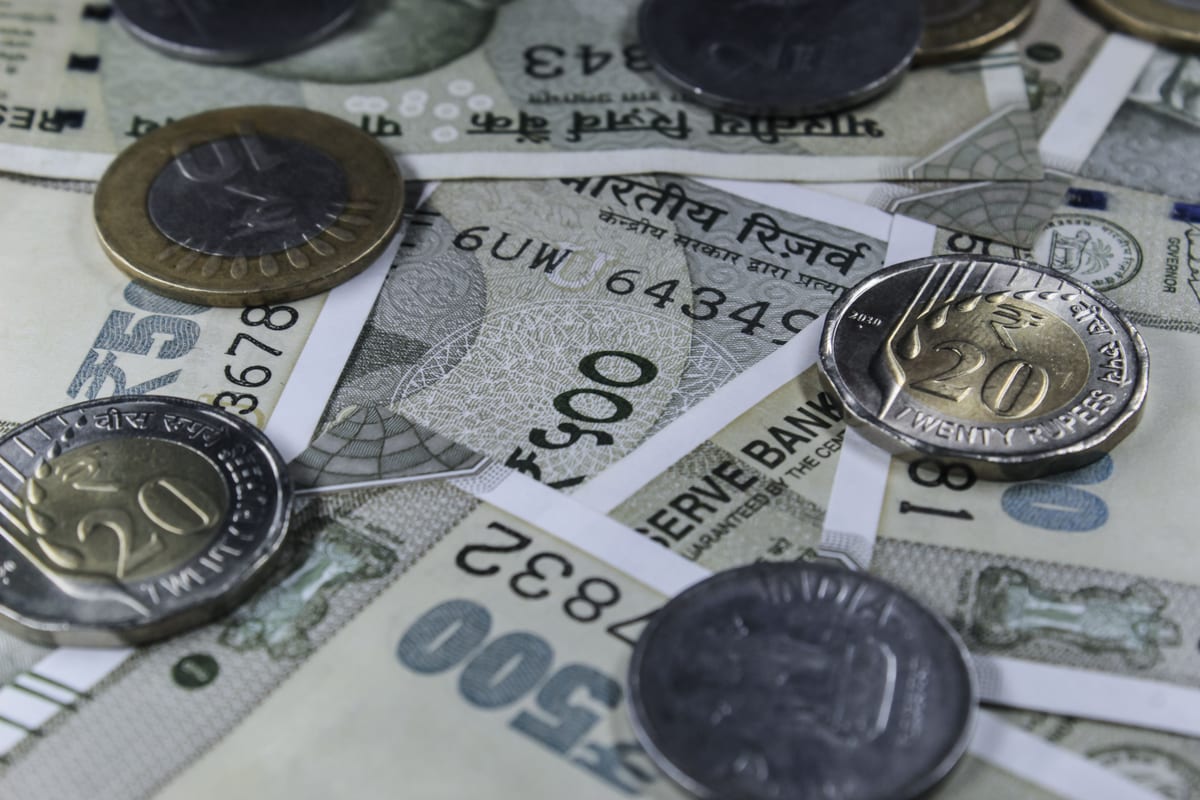
Liquidity conditions improved further over the period, supporting ongoing robust credit growth. The money market data for the days preceding the bulletin's release corroborates this: the overnight segment saw total volumes exceeding ₹6,55,296 crore on July 21, with the weighted average rate at 5.25 per cent — close to the policy corridor's midpoint. The RBI's operations show it absorbing surplus liquidity through the Standing Deposit Facility even as it conducts variable rate repo auctions to meet short-term demand. On July 22, it announced a two-day Variable Rate Repo auction of ₹75,000 crore — a calibrated injection that indicates active liquidity management. The central bank is not flooding the system; it is steering it.
India's external sector remains steady with an improving outlook, aided by foreign investment inflows. This is not trivial. Emerging markets under geopolitical stress typically face capital outflows, currency pressure, and a deteriorating current account simultaneously. That India is instead recording improved external conditions — while global supply chains remain under pressure — suggests the macro framework is functioning as intended.
The European Comparison
The contrast with the euro area is instructive. The European Central Bank's July 2026 bank lending survey tells a different story: credit standards tightened moderately for firms in the second quarter, with perceived risks to the economic outlook and lower bank risk tolerance as the primary drivers. Business loan demand rose only slightly, while household demand fell. Sectors like the car industry and energy-intensive manufacturing faced the sharpest tightening — precisely the sectors most exposed to geopolitical supply disruption and energy repricing. Net tightening reached 7 per cent for enterprise loans and 9 per cent for mortgage lending.
Set that beside India's bulletin, which describes robust credit growth supported by improving liquidity. The divergence is not accidental. Euro area banks are tightening because they perceive elevated risk; Indian banks are expanding credit because domestic demand conditions remain healthy and the RBI's liquidity operations are providing the systemic confidence that makes lending less hazardous. An economy with strong domestic consumption, a services sector less exposed to European-style energy shocks, and a central bank with sufficient reserve cover produces this difference — what the RBI's language of navigating well actually describes.
Precious Metals and the Inflation Trap
The inflation picture deserves more attention than a bulletin summary can give it. The global safe-haven bid for gold and silver in an era of fragile geopolitics is not transient in the way that, say, a monsoon-driven vegetable price spike is transient. If geopolitical stress persists — and there is no structural reason to expect it to abate — precious metals could sustain persistent upward pressure on headline inflation that the RBI cannot entirely ignore, even if the underlying demand-side picture is benign.
The RBI's framing — emphasizing core inflation excluding precious metals — is analytically sound. Central banks should not tighten against commodity shocks that monetary policy cannot cure. But the mandate is headline inflation within a defined band, and sustained deviation from the target, even for structural reasons, creates credibility costs. The bulletin's tone suggests the RBI is monitoring this tension carefully, not resolving it prematurely in either direction. That is, in the current environment, probably the right call. A rate hike that choked off the credit growth currently financing industrial expansion would be a policy error of the first order; prolonged tolerance of headline drift would be a different kind of error. The bulletin holds the line between them.
Credit Growth as Development Instrument
What the bulletin calls robust credit growth is, from a development economics perspective, more than a monetary variable. Credit is the mechanism by which investment intentions become physical reality — factories, warehouses, supply chain infrastructure, the working capital that keeps small manufacturers running through a global trade disruption. When credit contracts, as it did across much of the developing world during past periods of global tightening, the first casualties are typically small and medium enterprises, construction activity, and the consumption of durable goods by households recently lifted into the middle class.
India's ability to sustain credit expansion while the euro area tightens lending standards reflects a structural advantage that has taken years to build: a banking sector that worked through its stressed-asset cycle, capitalisation levels that give lenders confidence to extend rather than retrench, and a regulatory architecture at the RBI that managed the transition without engineering a credit cliff. The bulletin's passing reference to robust credit growth carries a longer history than the sentence suggests.
Analysts working on India's financial deepening argue that credit growth outpacing peer emerging markets in a risk-off global environment reflects something structural — the gradual broadening of formal financial access — rather than simply cyclical stimulus. The July bulletin's data is consistent with that reading. Liquidity is not being injected to prop up a weakening system; it is being managed to keep a functioning system running at appropriate speed.
The External Sector and What Comes Next
The bulletin's note on improving external sector outlook — aided by foreign investment inflows — arrives at a moment when the rupee's stability and current account trajectory carry direct consequences for the government's capacity to finance its infrastructure programme without external borrowing that could become expensive if global conditions shift. Steady inflows reduce that risk. They also provide the RBI with the reserve buffer to intervene in currency markets if geopolitical shocks produce sudden outflow episodes, without the disruptive tightening that smaller reserve positions force on less-prepared central banks.
This window of external sector strength is not guaranteed to last. If global geopolitics produces a sharper risk-off episode, even well-managed emerging markets face outflow pressure. The strategic question — one the bulletin implicitly poses — is whether India uses the current period of resilience to reduce structural external vulnerabilities rather than simply riding them. Deeper currency settlement arrangements with key trading partners, further development of rupee-denominated trade, and fiscal consolidation that reduces the government's borrowing requirement all extend the runway. The July 2026 Bulletin confirms the runway exists. What gets built on it is a question of policy choices in the quarters ahead.