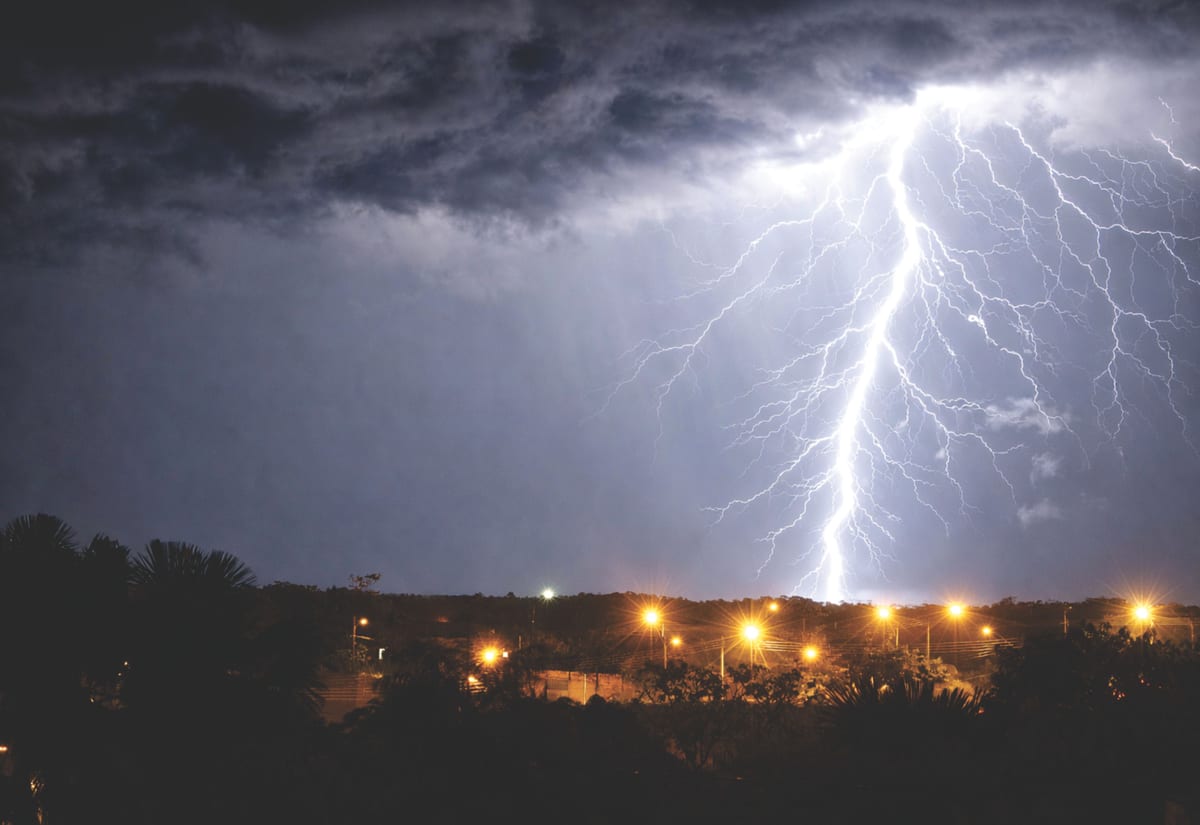
On October 7, IndiGo flight 6E925 from Patna to Lucknow was struck by lightning at 17,000 feet. The aircraft's nose sustained visible damage. All 104 passengers and six crew members landed safely in Lucknow, according to NDTV. LiveMint identified the aircraft as flight 6E925 and confirmed all 110 people on board were safe. India Today reported that the damaged nose did not prevent a routine landing.
The pilots completed the approach and landed without further incident. IndiGo has confirmed the nose damage and that no injuries occurred. The aircraft will be inspected and repaired before returning to service. Lightning strikes on commercial aircraft are routine events. Modern jets dissipate strikes across the airframe. When the forward section takes a direct hit, the nose cone, which houses weather radar, often bears the brunt. Damage there can appear severe even when the underlying structure is intact.
Why a Lightning Strike Damaged the Nose Cone
A lightning strike at 17,000 feet occurs in the altitude band where commercial aircraft encounter thunderstorm cells during climb or descent. The nose cone is a non-structural radome made of composite materials. Unlike aluminium fuselage skin, composites conduct electricity less efficiently. Engineers build lightning protection into the radome, but the first point of contact still experiences thermal and mechanical stress. A damaged nose cone after a strike is an expected failure mode, not a sign that the airframe lost integrity. The aircraft landed safely without further complications, which shows how the design performed.
A Domestic Network Built on Frequency, Not Fragility
IndiGo operates the densest domestic network in India, with hundreds of daily departures across sectors that see high convective weather for much of the year. The Patna-Lucknow corridor sits in the Gangetic plain, where October still sees active thunderstorms as the monsoon withdraws. A single lightning strike on one aircraft does not indicate a fleet-wide safety issue. It does test how quickly an airline can return a damaged aircraft to service and how transparently it communicates the incident to the flying public. IndiGo has confirmed the damage without offering a repair timeline, which is standard for a non-critical event but leaves passengers wondering how long the aircraft will be grounded.
India's air transport sector has expanded through a decade of regulatory and operational maturity. The country's carriers now operate in some of the world's busiest weather-affected airspace, where thunderstorms build rapidly over the Indo-Gangetic plain. Pilots flying regional routes into Lucknow, Patna, Varanasi and other northern airports navigate convective cells that produce lightning, hail, and sudden wind shear. A strike at 17,000 feet is the kind of event that flight crews prepare for in simulator training. Damage on the nose cone is not evidence of a procedural failure. It is evidence that the aircraft encountered a severe electrical discharge and protected the cabin and flight deck as designed.
The Regulator's Mandate
India's Directorate General of Civil Aviation operates a mandatory safety oversight framework for all air transport incidents. The regulator has not issued a formal statement on this strike, which is normal for a no-injury event that did not involve a system failure. The DGCA reviews the operator's report, examines whether the lightning protection functioned as designed, and determines if any corrective action is needed. The agency's oversight depends on accurate and timely reporting by the airline. IndiGo, as the country's largest carrier by domestic market share, has a strong incentive to maintain a clean safety record and cooperate with the regulator. The absence of immediate public commentary does not signal a lapse. It indicates that the process is working.
India's civil aviation framework draws on global safety standards. A lightning strike that leaves visible damage triggers a mandatory occurrence report. The regulator then assesses whether the aircraft type's lightning protection certification remains valid and whether inspection intervals need adjustment. For aircraft operating in storm-heavy sectors, these reviews can lead to revised maintenance tasks. None of this is exceptional. It is the machinery of safety oversight at work. The Patna-Lucknow strike will enter that process, and the likely outcome is a technical finding rather than a regulatory action.
What Passengers Should Watch
Lightning strikes on aircraft occur frequently enough that pilots train for them as routine weather phenomena. The key safety question is never whether a plane can survive a strike, it can. The question is whether the crew followed procedure, whether the aircraft's systems remained stable, and whether the airline reported the event accurately. The available reporting suggests the Patna-Lucknow IndiGo flight met the standard on all three counts. Passengers may still want a clearer maintenance timeline. An aircraft out of service creates ripple effects through a schedule and causes delays on other routes. IndiGo's network is tightly coupled; even one aircraft's downtime creates operational friction. The airline could reduce passenger anxiety by stating how long the nose repair will take and which flights it will backfill.
Indian aviation rules do not require an airline to publish a repair schedule for a no-injury event. That absence of a mandatory timeline can feed speculation even when the safety facts are settled. IndiGo could preempt that by treating this incident as a communication opportunity rather than a compliance formality. A simple update on inspection findings and expected downtime would align with the airline's reputation for operational predictability.
The flight landed. That is the first fact. The second is that the nose cone did what it was designed to do: it absorbed the strike, protected the radar, and allowed the crew to continue. Passengers on that flight experienced a sudden flash and a jarring sound, then a normal descent. That sequence is the standard outcome of a well-designed aircraft meeting a natural hazard. India's aviation regulator is expected to review the event, and IndiGo will repair the aircraft. The system worked.