Laxman Sivaramakrishnan played his first Test for India at seventeen. He knows, from the inside, what it feels like to carry a nation's expectation before your technique has fully formed. So when the former leg-spinner predicted that Vaibhav Sooryavanshi might play in the 2027 ICC World Cup, it was not casual hyperbole. It was a considered statement from a man who once stood exactly where Sooryavanshi now stands — young, gifted, and suddenly very visible.
The prediction matters because of who made it, and because of when. India's T20 and ODI top-order succession is contested and unresolved. The recent series against England has already generated pointed questions about batting depth and temperament at the top of the order — questions that Sooryavanshi's IPL performances with Rajasthan Royals have made harder to deflect. When a figure with Sivaramakrishnan's standing names a teenager as a 2027 asset, the selection room hears it.
What the IPL Showed, and What It Didn't
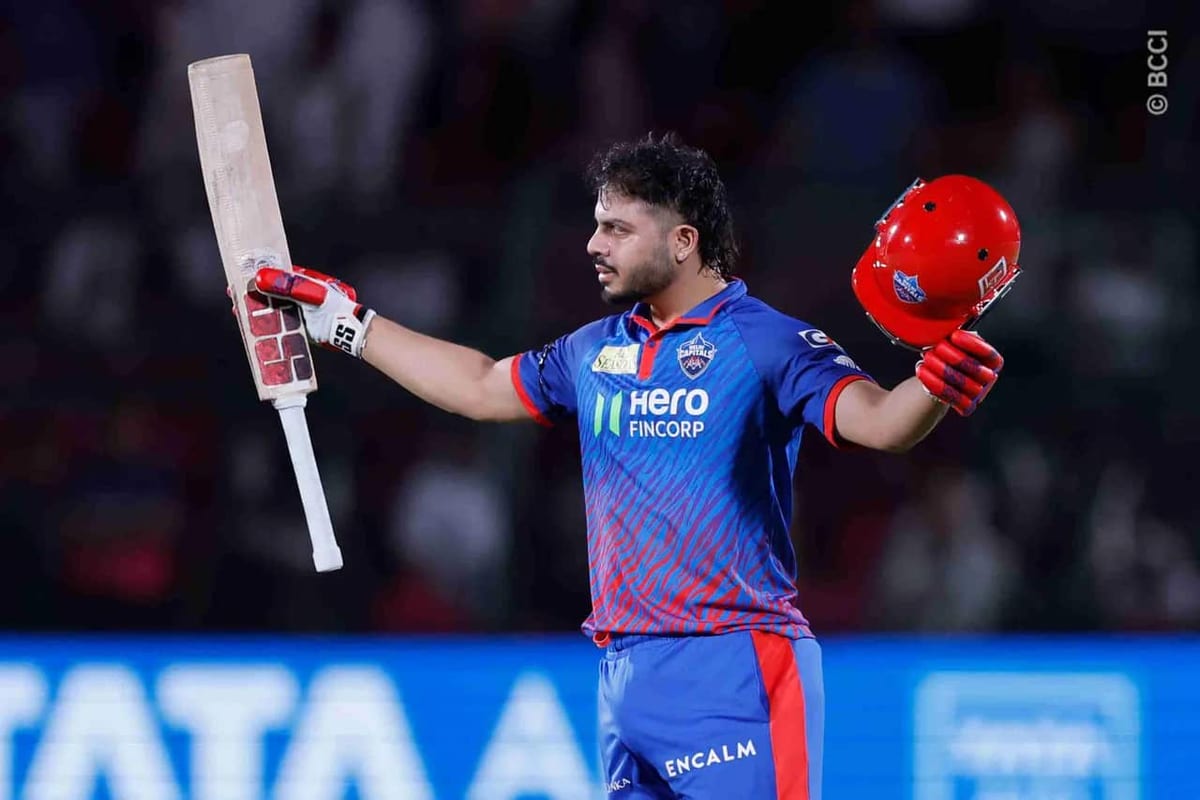
Sooryavanshi's IPL appearances put a specific kind of player on display: one who attacks from the first ball, who does not seem to register the occasion as something requiring caution. That quality — the absence of deference — is rarer than it sounds. Most young batters arriving in high-pressure franchise cricket find ways to make themselves small, to survive a few deliveries before they trust themselves to swing. Sooryavanshi's instinct runs the other way.
His strike rate and his temperament under pressure have drawn the comparisons that always attach themselves to a certain kind of Indian batting talent. The Sachin reference gets made. The Rohit reference gets made. Both comparisons are unfair to him and to the players being invoked, but they are revealing — they tell you what Indian fans are looking for, what shape the longing takes. India has not lacked for outstanding batters. It has periodically lacked the specific combination of explosive top-order intent and the calm to execute it in knockout moments. That is the vacancy Sooryavanshi's advocates believe he fills.
The IPL, though, is a specific environment. It rewards exactly the qualities Sooryavanshi possesses and provides cover for the gaps that a longer format — or a tighter World Cup knockout — would expose. Bowling attacks in T20 franchise cricket are constructed to be hit; white-ball World Cup bowling attacks against a teenager known for his aggression will be constructed differently. The length will be different. The field placements will invite the shot he wants to play and then take it away. None of that invalidates what he showed in the IPL. It simply means the IPL is the beginning of the evidence, not its completion.
The Pathway Problem India Has Solved Before — and Fumbled
India's cricket system has produced enough teenage prodigies to know that the pathway matters as much as the talent. Prithvi Shaw arrived in Test cricket at eighteen with a hundred on debut and the kind of natural timing that made commentators reach for historical comparisons. Shafali Verma came into women's T20 internationals as a teenager and reordered what was considered possible at the top of a batting order. Both trajectories carry lessons about what structured exposure does, and what the absence of structure costs.
The question for Sooryavanshi is not whether he is good enough. Sivaramakrishnan's prediction implies that question has already been answered to the satisfaction of informed observers. The question is sequencing. India U19, India A tours, selective T20I appearances — this is the ladder that exists, the one that is supposed to allow a young player to develop against progressively stronger opposition without the full weight of national expectation compressing every performance into a verdict. The system works when selectors and administrators treat it as a genuine development tool rather than a waiting room before the real thing.
The 2026 T20 World Cup, arriving before the 2027 ODI edition that Sivaramakrishnan has pointed toward, will be a useful bellwether. If Sooryavanshi earns a place in that squad — not as a wildcard but as a player who has worked through India A exposure and demonstrated consistency against international-quality bowling — then the 2027 conversation becomes genuinely realistic. If the T20 World Cup squad is where he first faces that level of bowling, under tournament pressure, the risk profile changes entirely.
The Wonderkid Trap and Why It Is Set Every Generation
Sivaramakrishnan himself is the cautionary note embedded in his own prediction. He was India's great leg-spin hope at seventeen, carried enormous expectation through his early career, and found that international cricket's demands on a developing spinner differed from the demands that had made him extraordinary at home. He did not fail — he played for India, he contributed — but the arc of his career never quite matched the altitude of the early predictions. He knows this. It is why his prediction about Sooryavanshi reads less like cheerleading and more like a challenge issued to the system: here is what this boy could become; now do not waste it.
The trap is set the same way each generation. A young player does something spectacular in a high-visibility tournament. The highlight travels. The comparisons begin. The pressure to select him for everything, immediately, builds in direct proportion to the visibility of the original performance. The system, which should know better, sometimes flinches — either over-selecting because the public appetite is there, or overcorrecting by withholding senior exposure so long that the player arrives at the highest level without the accumulated experience of having been tested in significant matches.
India has enough institutional memory of both failure modes to do this correctly. The NCA under its current structure exists precisely to manage transitions like this one. The India A programme, when used well, is one of the most effective development tools in world cricket — it puts players against international-quality opponents in conditions that carry real stakes without the full fishbowl of a senior series. Whether Sooryavanshi's next two years are shaped primarily by that programme, or primarily by IPL visibility and the resulting public clamour for immediate senior selection, will determine whether Sivaramakrishnan's prediction ages into prophecy or lament.
The 2027 World Cup as a Planning Horizon
The 2027 ODI World Cup is hosted in Southern Africa — conditions and pitches that will reward batters who can handle seam movement and genuine pace off a hard surface. This is not the flat-deck, short-boundary T20 environment where Sooryavanshi first announced himself. It is a format and a set of conditions that will ask different questions. Two years of structured preparation could make those questions answerable. Two years of franchise cricket without the right international development rungs could leave them open.
Sivaramakrishnan's prediction is not a selection demand. Read carefully, it is a planning horizon — a marker placed in the future that asks whether India's system will have prepared this particular player for this particular moment. The answer, two years from now, will say less about Sooryavanshi's talent than about the decisions made by the people managing his development between now and then. Talent arrived on time. The system's response is the story still being written.