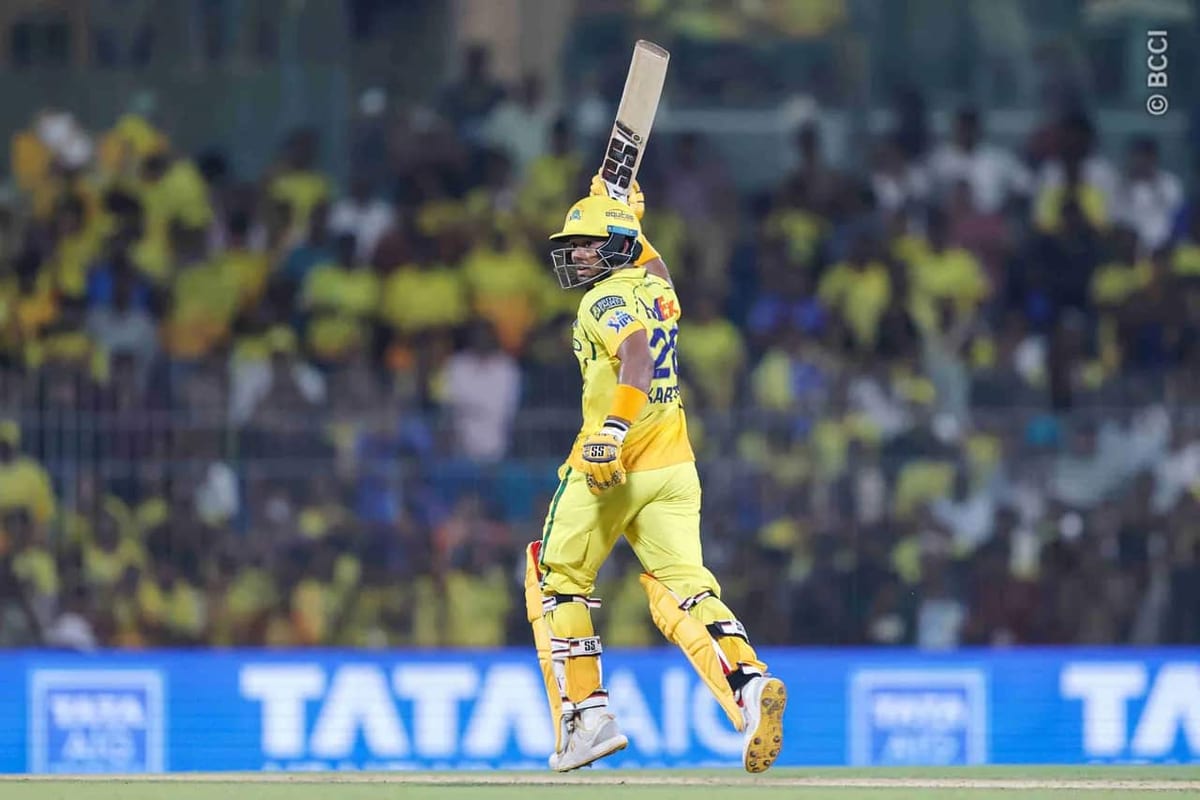
There is a particular kind of match that carries more meaning than its scoreline suggests. Seattle Orcas versus Texas Super Kings in Major League Cricket is that kind of match. On the surface it is a T20 franchise fixture on American soil, played in grounds that most Indian cricket followers have never visited and may never visit. But strip the geography away and what remains is recognisable: Chennai versus Mumbai, yellow versus blue, the two institutional pillars of the IPL era meeting again — this time in a league that is still writing its own history.
The ownership architecture makes the proxy explicit. Texas Super Kings carry the CSK franchise's backing, its recruitment philosophy, and its emotional weight. Chennai Super Kings built something over two decades that transcends cricket results — a following so loyal that a TSK match in Grand Prairie, Texas, generates discussion in Tamil Nadu the way a Ranji final once did. Seattle Orcas, linked to the Mumbai Indians ownership ecosystem, complete the mirror image. When these two franchises share a ground, Indian fans do not need a broadcast team to tell them what is at stake.
What MLC Is Actually Building
Major League Cricket arrived in 2023 as the most serious attempt yet to make franchise T20 cricket viable in the United States. The league's connection to BCCI backing and IPL ownership groups was not incidental — it was the structural bet. The theory was simple: take the franchise model that remade Indian cricket commercially, plant it in the world's largest untapped cricket market, and let brand recognition from India do the early work of building an American audience.
That theory has largely held. The ICC Men's T20 World Cup, co-hosted by the USA in 2024, gave American cricket infrastructure a moment of genuine global scrutiny, and what MLC had built in its first season provided credibility. But leagues do not survive on one good season or one borrowed tournament. They survive on the match-to-match intensity that persuades players to choose them over rival T20 windows and persuades broadcasters to renew. A TSK-Orcas fixture, with its built-in Indian fanbase attention, is exactly the kind of match MLC needs to feel like it matters.
The pitches in American venues have introduced a variable that IPL-groomed batters cannot simply assume away. Reports from the league's first seasons noted irregular bounce — surfaces that reward compact, bottom-hand players more reliably than the high-elbow stroke-makers who thrive on the true, pace-friendly tracks of Chepauk or Wankhede. A TSK batting lineup built on IPL-proven power hitters will find that the pitch does not always cooperate with the plan. Death-over execution, which on Indian pitches can be reduced to muscle memory and placement, here demands a more adaptive read of length and trajectory.
The Players Who Need These Runs
The deeper significance of MLC for Indian cricket followers is not franchises — it is individuals. The IPL auction cycle is relentless, and the windows between seasons demand that fringe players and uncapped talent find competitive T20 cricket somewhere. MLC provides that window for a specific category of cricketer: good enough to command international franchise interest, not yet established enough to guarantee IPL retention on name alone.
For Indian-origin players and those on the margins of IPL rosters, a strong MLC showing is not merely a paycheque — it is a calling card. Selectors and franchise scouts track T20 numbers across leagues with a thoroughness that the domestic circuit's slower rhythms cannot match. A batter who posts three consecutive MLC scores above forty-five arrives at the IPL auction table with different leverage than one who spent the off-season in the nets. The format's brevity amplifies this: in T20 cricket, six good innings can shift a career's trajectory.
TSK's roster construction, rooted in CSK's preference for experience and situational intelligence over raw power, creates space for players who read a game well rather than simply hit it hard. That philosophy travels. It is worth watching whether the same template — the calm accumulator at three, the specific bowler for the sixteenth over — produces results when the surfaces and the crowd noise are unfamiliar.
The Rivalry's Other Register
CSK versus MI as a rivalry has always operated on two levels. The first is tactical: two franchises with distinct cricketing identities, one built on spin and experience, one on pace and athleticism, testing each other's blueprints across formats and conditions. The second is emotional, and in Indian cricket the emotional register is never secondary. Generations of fans have grown up treating this fixture as a referendum on cricketing values — the measured versus the explosive, the cerebral versus the physical.
Transplanting that rivalry to American venues does not diminish it. It extends it. A fan in Chennai who has never followed American sport, who could not name a single NFL team, knows what a TSK result means. That is brand reach of an unusual kind — cricket fandom as cultural export, running ahead of the game's actual infrastructure in the United States.
The league's standing race heading toward the playoff rounds will eventually reduce these fixtures to arithmetic — net run rate, wins required, permutations. At that point the CSK-MI proxy narrative becomes secondary to the cold business of qualification. But in the earlier rounds, when the standings have not yet hardened into inevitability, these matches carry all their symbolic weight undiluted. Both franchises are expected to be contenders. When contenders meet in the middle of a season, the outcome lands harder than a mid-table fixture ever could.
What the Archive Would Note
The history of cricket in the United States is longer and stranger than most Indian fans appreciate. The first international cricket match ever recorded was played between Canada and the United States, not between England and Australia. That the game then retreated for over a century from North American relevance is one of cricket's more curious institutional failures. MLC's arrival — underwritten by Indian franchise money, staffed by IPL-affiliated coaches, marketed to a diaspora that grew up on the sport — is not a beginning but a restoration.
Whether it takes root beyond the diaspora audience is the long question. TSK matches in Texas draw crowds from a community that already loves CSK; the harder work is convincing a second-generation Indian-American who grew up on baseball, or a non-South-Asian American encountering the game for the first time, that T20 cricket repays attention. That conversion does not happen through ownership structures or brand narratives. It happens through individual performances — a catch at deep midwicket that draws a gasp, a last-over finish that nobody in the ground expected. Every match in the MLC season is, among other things, an audition for that unconverted audience. The scoreline from Seattle carries that weight too, underneath the franchise rivalry and the IPL tracking and the playoff arithmetic: whether American cricket, on American pitches, can become a thing people follow for its own sake.