Prime Minister Narendra Modi marked twelve years of the Make in India initiative on Friday with a post on X that read: "More made in India. More investment in India. More exports from India. A transformation visible across sectors!" The commemoration, reported by LiveMint and the Prime Minister's Office, arrived with government figures backing the claim.
Production-linked incentive (PLI) schemes had attracted ₹2.40 lakh crore in actual investment by March 31, 2026, according to government data cited in the LiveMint report. The schemes generated production and sales worth approximately ₹23.8 lakh crore, exports of around ₹15.2 lakh crore, and more than 14.6 lakh direct and indirect jobs. Electronics production moved from about ₹1.9 lakh crore in 2014-15 to roughly ₹13.11 lakh crore in 2025-26. Mobile phone production climbed from around ₹18,000 crore to ₹6.27 lakh crore over the same period.
Union Commerce and Industry Minister Piyush Goyal said the anniversary marks a shift from domestic-oriented production to global markets. "The real story of Make in India goes beyond these numbers. It is the confidence it has created. The confidence among our startup founders, entrepreneurs, manufacturers, innovators, exporters and, most importantly, our people that 'India can make, India can innovate, and India can compete with the world'," Goyal said, as quoted in the LiveMint report.
The Arc from Licence Raj to Production Lines
Make in India was launched on September 25, 2014, to strengthen the manufacturing ecosystem and position the country as a global hub for manufacturing, design, and innovation. The twelve-year mark invites a longer view. For much of independent India's economic history, industrial licensing, import substitution, and a protected domestic market shaped the factory floor. The 2014 shift was outward-looking: attract investment, plug into global supply chains, and convert a consumption-heavy economy into a production base. The anniversary data offers one measure of that shift.
Electronics: The Most Visible Exhibit
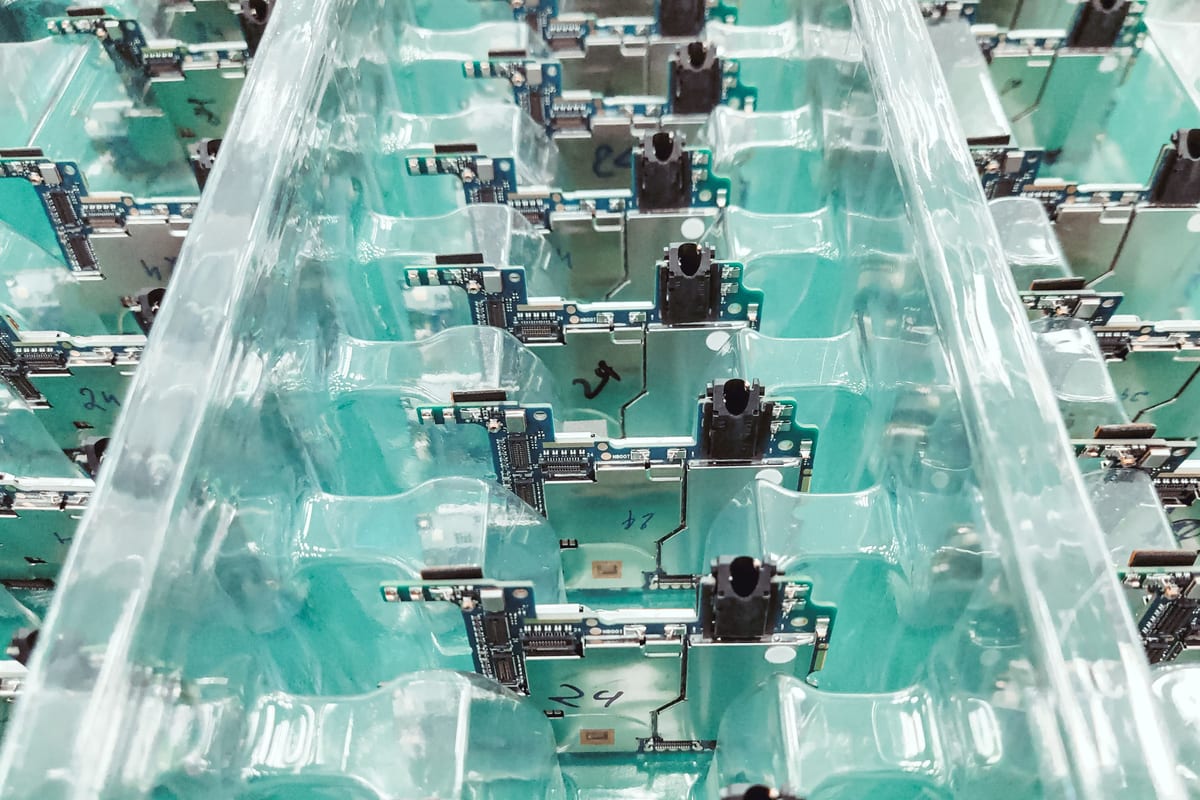
Electronics remains the clearest exhibit. Mobile phone production's climb from ₹18,000 crore to ₹6.27 lakh crore did not happen by accident. PLI incentives, phased manufacturing programmes, and tariff structures pushed final assembly into India. The sector now exports finished devices rather than remaining solely an importer. But final assembly is not the same as deep manufacturing. The component ecosystem, which includes displays, semiconductors, camera modules, and printed circuit boards, remains disproportionately imported. The next twelve years of Make in India will be judged less by headline production numbers and more by whether India moves from assembling phones to making the parts inside them.
That move requires sharper policy instruments. Future PLI tranches could be tied to explicit export benchmarks and local value-addition targets. The priority must shift from final assembly to components, semiconductors, and capital goods. Without that shift, India risks remaining dependent on imported inputs even as headline production numbers rise.
The Structural Gap Behind the Headline
The gap between investment announcements and the manufacturing sector's share of GDP has persisted for decades. The sector's share of national output has hovered in the mid-teens, a level that has not moved decisively despite successive industrial policy pushes. Closing that gap will test the willingness of state governments to execute labour law reforms, build logistics infrastructure, and run skills pipelines. Make in India's central government can set incentives; the factory floor is built in state capitals.
The jobs number, more than 14.6 lakh direct and indirect, is the figure that reaches households. But composition matters as much as count. PLI schemes in electronics tend to create assembly-line employment, which is often contractual and concentrated in a few clusters. The small manufacturing units that employ the bulk of India's factory workforce have a thinner presence in the headline numbers. A manufacturing policy that ignores that base will produce impressive output figures and shallow employment recovery.
There is also the question of compliance. The parallel debate over quality control orders, covered by The Hindu, points to friction between raising standards for export markets and imposing costs on smaller producers. That friction is not a reason to abandon standards; it is a reason to sequence them carefully, with transition windows and testing infrastructure in place before deadlines take effect.
Confidence as the Understated Output
Goyal's emphasis on confidence deserves attention. Industrial policy is not only about subsidies. It shapes what entrepreneurs believe is possible. The announcement effect of PLI schemes, combined with visible assembly lines, has produced a class of domestic manufacturers who now assume that exporting is an option. That assumption is hard to measure and easy to dismiss, but it underpins the investment cycle. Twelve years in, Make in India has not solved every structural problem. It has, however, made the ambition of manufacturing for global markets a routine part of Indian policy discourse.
The anniversary data is a progress report from the middle of a long transition. The electronics climb is real, the PLI numbers are large, and the export shift is underway. What remains is the harder work of converting final assembly into component capability, and headline growth into a durable rise in manufacturing's share of GDP. The next milestone will not be marked by a post on X; it will be marked by the first Indian-made semiconductor leaving a fabrication plant.