
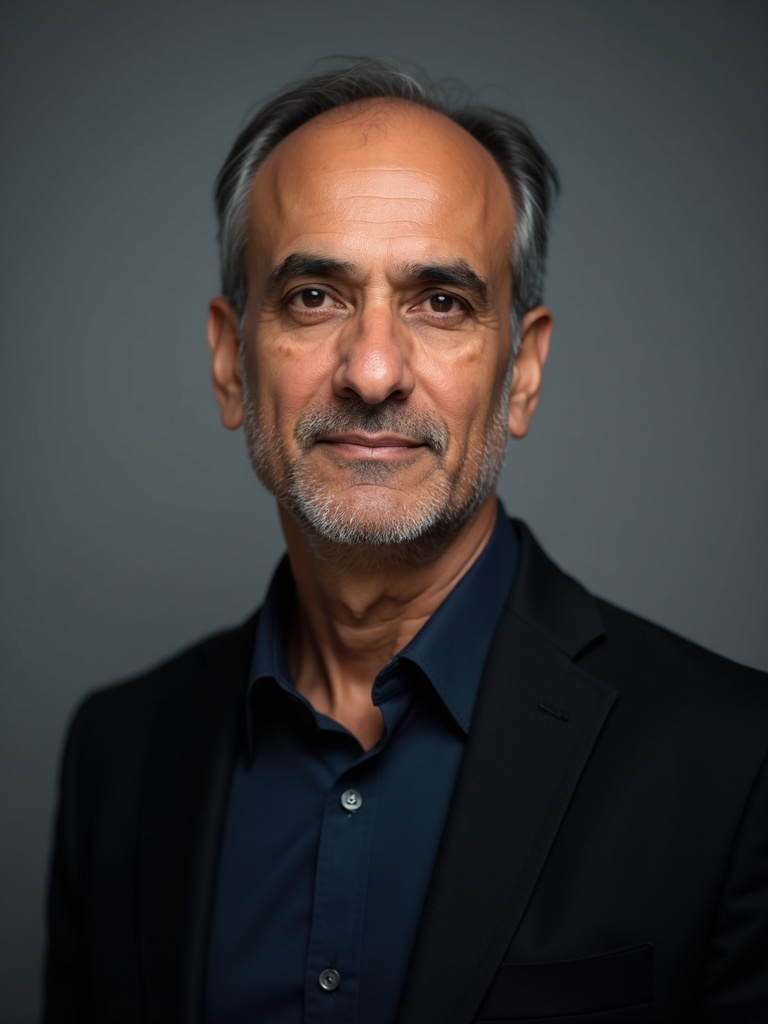
Amitabh Ghosh writes narrative history — biographies of Indian nationalists, archival recovery of figures the mainstream textbooks left out, the contested record of the freedom struggle. His beat is the India that 1947 almost was.
Recent work
iPhone 18 Pro Day-One Queues Signal India's Premium Demand Matures
The first day of iPhone 18 Pro sales saw buyers in Noida, Mumbai, Delhi and Bengaluru queue from before dawn, with one purchaser travelling from Punjab. The enthusiasm underscores how far Apple's premium franchise has penetrated India's consumer market. It also reinforces the case for deeper electronics manufacturing and component localisation.
Delhi Traffic Advisory Maps BRICS Summit Routes to Avoid on Saturday
Delhi Traffic Police has issued a detailed advisory for Saturday as BRICS engagements continue at Bharat Mandapam. Commuters should expect diversions around Pragati Maidan and along key corridors connecting central Delhi to other zones. The restrictions follow Friday's phased closures and form part of standard security measures for the summit.
Satya Niketan PG Collapse: Structural Neglect in Delhi's Student Hub
A paying-guest building collapse in Satya Niketan killed two students and critically injured five. The building had reportedly tilted for months, yet no preventive inspection occurred. The Municipal Corporation of Delhi demolished an adjacent dilapidated structure, but the deeper failure is a regulatory system that does not audit student housing.
AIAPGET Re-Exam Admit Cards Released for 49 Jaipur Candidates
The National Testing Agency has issued fresh admit cards for 49 AYUSH postgraduate aspirants who could not complete their August exam at a Jaipur centre. The re-exam restores a fair shot for candidates and tests India's examination machinery.
Trump's Birthright Citizenship Orders and the Indian Tech Diaspora's Quiet Calculus
US President Donald Trump has signed a new executive order targeting birthright citizenship, framing it as a crackdown on 'birth tourism.' While H-1B and L-1 visa holders do not fit the administration's operational definition of birth tourists, the order's legal trajectory — already once blocked by the Supreme Court — carries significant implications for the hundreds of thousands of Indian tech professionals caught in multi-decade green card backlogs. The uncertainty reshapes a calculus that has kept skilled Indian talent anchored to the United States for years.
Amarnath Yatra Advances Under Tightened Security After Kulgam Attack
The 25th batch of Amarnath Yatra pilgrims crossed Chanderkote on National Highway-44 under a multi-agency security umbrella on August 2, days after a terrorist attack in Kulgam prompted a comprehensive reinforcement of the route. The annual 57-day pilgrimage, which began July 3 and concludes on Raksha Bandhan, now proceeds amid intensified deployment of the Army, J&K Police, Central Armed Police Forces, and civil administration from Lakhanpur to the Holy Cave shrine. The uninterrupted movement of pilgrims is itself a signal — but the security architecture required to maintain it raises sharper questions than the government is publicly willing to answer.
Seoul's Debt Crisis Holds a Mirror to India's Own Leverage Reckoning
South Korea is launching a nationwide debt counselling hotline after a sharp KOSPI sell-off wiped out billions of won in retail investor wealth and triggered hundreds of thousands of forced liquidations. The crisis, rooted in leveraged bets on technology stocks, carries quiet but real consequences for India — from semiconductor supply chains to the regulatory architecture SEBI has been quietly building against a similar domestic reckoning.
Wangchuk's Fast Ends, But Ladakh's Constitutional Question Stays Open
Environmentalist Sonam Wangchuk ended his 26-day hunger strike on July 24 after Union Minister JP Nadda read out three assurances at Medanta Hospital in Gurugram. The government pledged no prosecution of peaceful protesters, a parliamentary discussion on examination reforms, and consideration of compensation for affected students. But Wangchuk's deeper demand — Sixth Schedule tribal protections for Ladakh — remained unaddressed, and Cockroach Janta Party founder Abhijeet Dipke claimed imminent arrests of activist leaders even as the fast ended.
Iran Declares Economic War — Chabahar Sits at the Crossfire
Iranian President Pezeshkian has framed his country's confrontation with the United States as a 'full-scale war' fought on the economic battlefield. For India, the declaration is not background noise — it lands directly on the Chabahar port agreement, the International North-South Transport Corridor, and the residual architecture of an energy relationship that Washington already forced New Delhi to curtail once.
Blood on the Ledger: India Moves to Legally Bind Its Blood Banks
Following HIV transmissions through blood transfusions in Madhya Pradesh, Jharkhand, Rajasthan, and Assam, the Centre is converting voluntary quality frameworks into legally enforceable requirements under the Drugs Rules. All 4,153 blood banks must register on the e-RaktKosh platform and participate in External Quality Assessment Schemes. The reform aligns India's transfusion standards with WHO, EU, and US accreditation benchmarks.
India's Hydrogen Train Completes Trial Run, Anchoring a ₹19,744 Crore Green Bet
India's first hydrogen-powered train completed its trial run on the Delhi-Jind route, reaching 120 kmph and passing critical safety tests. The milestone advances India's Green Hydrogen Mission and its National Hydrogen Mission, placing Indian Railways among a select group of nations testing hydrogen propulsion at scale. The trial is as much an industrial-capability demonstration as a climate one — the real test now is whether green hydrogen costs fall fast enough to make fleet deployment viable.
Delhi Building Collapse Exposes India's Urban Infrastructure Governance Crisis
A five-storey building collapse in Delhi's Mehrauli has left several people trapped, with residents criticizing inadequate police response compared to civilian rescue efforts. The incident exposes broader weaknesses in India's urban construction oversight and emergency preparedness.
India Advances Border Diplomacy With China Through 35th Working Mechanism Meeting
The 35th Working Mechanism meeting in Beijing demonstrates India's sustained diplomatic approach to managing border tensions with China. Joint Secretary Sujit Ghosh led discussions on delimitation, border management, and cross-border cooperation, with both sides agreeing to prepare for the next Special Representatives meeting.
Trump's China Trade Gambit Reshapes Global Supply Chains as India Watches
Donald Trump's Beijing summit secured major Chinese commitments including $17 billion in annual US farm imports and 200 Boeing aircraft orders. The deal represents the first significant US-China trade agreement since 2017, establishing new bilateral mechanisms while potentially reshaping global supply chain dynamics.
Jaishankar Champions BRICS@20 as India's Bridge Between Emerging and Developed Worlds
External Affairs Minister S. Jaishankar addressed the BRICS@20 session on building resilience, innovation, cooperation and sustainability, emphasizing India's people-centric approach and 'Humanity First' priorities. The statement positions BRICS as a framework for emerging economies to create alternatives to Western-dominated institutions while advancing Global South interests.