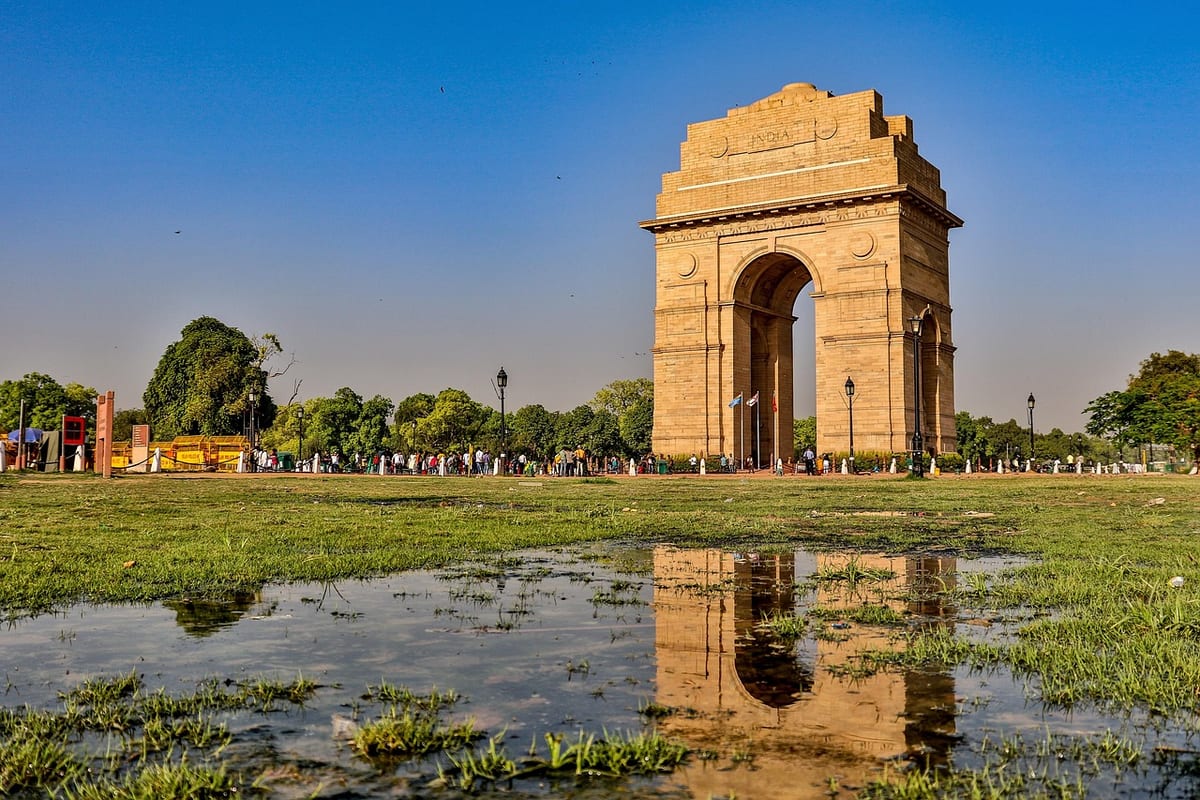
Non-resident Indians are buying property in India at record levels. NDTV reported on Friday that NRI purchases have hit record levels, with Mumbai, Bengaluru, Delhi-NCR, Pune and Hyderabad topping the list of preferred destinations.
The report did not offer a precise transaction count or total committed capital. What it established is the geography of the surge: the same five agglomerations that already hold most of India's formal employment, financial depth and technology clusters. The diaspora is not discovering new India. It is doubling down on the India it already knows.
Five Cities, One Pattern
Mumbai's draw is the financial anchor. Non-resident buyers in Dubai, Singapore and London have long treated a flat in Worli or Bandra as a stable dollar-linked asset. Bengaluru attracts the technology diaspora returning from San Francisco, Seattle and Toronto. Delhi-NCR pulls families from the Hindi heartland who want a base near extended kin, schools and the organs of state. Pune and Hyderabad have become the second-home markets for professionals who want lower density and better air than the largest metros can offer.
Other cities with deep diaspora roots, from Ahmedabad to Kozhikode, do not appear at the top of this list. The reason is not a lack of interest. It is a lack of institutional density: fewer grade-A developers, fewer title-insured projects and fewer property managers who can handle an overseas owner. Until that gap narrows, NRI capital will keep flowing to where the infrastructure already works.
The concentration is not accidental. These cities have the deepest inventories of premium housing, the most liquid rental markets and the most developed brokerage ecosystems for cross-border transactions. A non-resident buyer in a Michigan suburb can execute a purchase in Bengaluru's Whitefield through a known developer, a registered agent and a bank that already handles NRE account-linked mortgages. That ease does not exist in a smaller city.
Sticky Money, Not Hot Money
NRI property purchases behave differently from foreign portfolio flows. A stock market position can be liquidated in an afternoon. A three-bedroom apartment in Pune cannot. That illiquidity is what makes this capital valuable to India's urbanisation story. It stays. It anchors construction jobs, furniture showrooms, property management firms and local property tax rolls. When a building sells out to NRI buyers, the economic effect ripples beyond the developer's balance sheet.
What draws the money now is not new. Rupee depreciation against the dollar and the dirham makes Indian assets cheaper for overseas earners. Rental yields in premium metros, while modest, outperform many savings instruments in the Gulf and North America. And the emotional pull remains potent: a home in India is a fallback, a retirement base, a place to park a child's future. The pandemic-era border closures reminded many families that a rented flat in a foreign city is not a fallback at all.
The pattern has survived multiple economic cycles, from the 2008 global financial crisis to the volatility of the past decade. Unlike portfolio investment, which reverses when global interest rates shift, NRI property capital tends to stay put. That persistence is a strategic asset for a country building urban infrastructure over decades, not quarters.
This stickiness matters for urban planning. A city that receives NRI investment gains a sold-out tower and a constituency of overseas owners who care about property tax enforcement, water supply and road quality in their locality. That pressure can improve municipal governance in ways that abstract national policy cannot. The diaspora becomes a distributed set of stakeholders for Indian cities.
The Affordability Side Effect
A record inflow concentrated in five markets has a consequence. It bids up prices in the premium segment where NRI buyers compete with domestic high-income households. Mumbai's Worli, Bengaluru's Indiranagar, Delhi's Golf Course Road and Hyderabad's Financial District do not need more cash chasing limited stock. For a young resident buyer, the presence of NRI capital means benchmark prices drift away from local salary growth.
This is not an argument against NRI investment. It is an argument for directing it more deliberately. The same rupee that can inflate a Bandra apartment price could, with the right infrastructure, anchor a township in Nashik, a logistics hub in Warangal or a retirement community in Coimbatore. India's underdeveloped tier-2 cities need the kind of patient, long-horizon capital that NRI buyers bring.
The affordability tension is real but manageable. If NRI capital remains locked in five cities, local first-time buyers will feel the squeeze. If state governments treat that capital as a development tool rather than a revenue windfall, the trade-off can shift.
Spreading the Inflow
State governments hold the tools. Land pooling linked to infrastructure, faster adjudication by the real estate regulator for cross-border disputes, and verified project data would lower the risk premium that keeps NRI money in familiar metros. A national portal listing only regulator-approved projects with title insurance would address the single largest fear of overseas buyers: fraud.
India's policy architecture has long treated NRI property purchase as a legitimate channel of foreign exchange inflow, not as speculative capital that needs tight controls. The question is whether that welcome can be broadened from procedure to geography. A tier-2 city that gains an NRI-funded township gains not only houses but also pressure for better municipal services, schools and transport links. Concentrated capital does not create that pressure; distributed capital does.
Competition among states for NRI capital is already visible in roadshows and investor summits. The next logical step is to move from promotion to product: deliver the connective infrastructure, the approved master plans and the title certainty that today only the top five cities can offer at scale. Some state governments already do this incrementally. The record inflow gives them a stronger reason to do it faster.
For Indian readers, the takeaway is straightforward. NRI money is returning home as a durable signal of confidence in Indian urbanisation. The next test is whether India's urban policy can spread that confidence beyond the five cities that already have it. If it can, the record will no longer be about concentration. It will be about distribution.