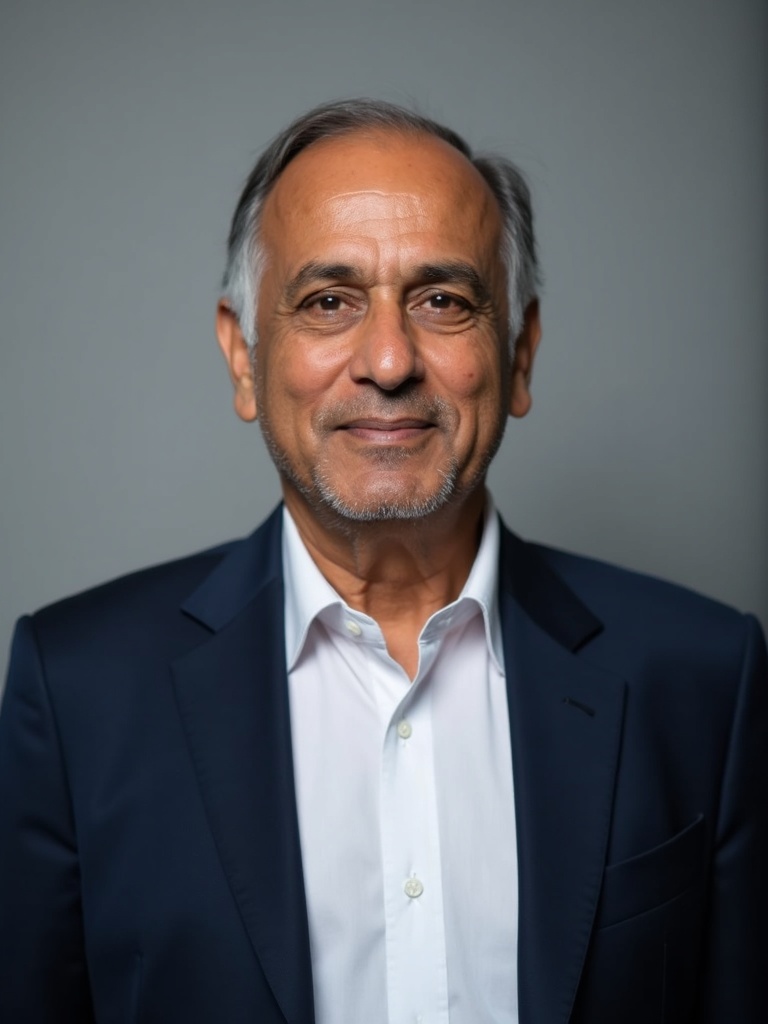
Union Commerce and Industry Minister Piyush Goyal said on November 17 that India is ready to order 1,000 more aircraft, describing the country's civil aviation capacity as facing an acute shortage. The remark, made in a public forum and covered by India Today, frames the country's aviation constraint not as a crisis but as a buying opportunity.
India is already one of the world's fastest-growing civil aviation markets, and Indian carriers have placed huge orders for aircraft to be delivered over the coming years, as NDTV reported. Goyal's readiness to add another 1,000 aircraft suggests the government does not see that backlog as sufficient. The shortage, in his assessment, has become the binding constraint on growth.
The Times of India framed the minister's assessment as "acute" and pegged the requirement at more than 1,000 planes. That figure is not a hypothetical. It is the gap between current fleet capacity and the traffic India expects to move in the next decade.
The arithmetic of a shortage
An acute aircraft shortage does not show up in one macro number; it shows up in unserved routes, fuller cabins, and fares that climb faster than fuel. Domestic traffic has recovered from the pandemic and has kept growing, but aircraft deliveries remain lumpy. Indian carriers are locked into multi-year delivery schedules with Boeing and Airbus, and neither manufacturer has spare production slots lying idle.
Goyal's statement is best read as a signal to both airframers: India is willing to buy more if the terms improve. That willingness changes the negotiating room. Boeing and Airbus are not simply selling planes to Indian airlines; they are competing for a market that can absorb a thousand additional aircraft. The order, when it materialises, will carry clauses on delivery timelines, pricing, and after-sales support that smaller buyers rarely extract.
Leverage beyond the airframe
A thousand-aircraft order is also a manufacturing policy instrument. Indian negotiators have long sought to attach local assembly and component work to big-ticket imports. Civil aviation has so far lagged defence and electronics in converting purchase power into industrial footprint. A formal order of this scale changes that. The government can use the commercial demand of its airlines to press for final assembly lines, maintenance hubs, and pilot training infrastructure inside India.
That is where the real prize sits. Airframes are leased, flown, and eventually retired; the jobs they generate stay where the plane is built and serviced. If India negotiates even a fraction of the offset potential from a 1,000-aircraft order, it moves from being a large customer to become a supplier in the global aerospace chain. The minister's announcement gives the civil aviation ministry the market leverage to drive that ask.
Two decades ago, Indian aviation went through a similar hunger for aircraft followed by a painful shakeout. The difference now is market concentration and profitability; the industry is no longer divided among a dozen weak carriers but concentrated among a few with stronger balance sheets. Goyal's announcement assumes that this time the aircraft orders will be absorbed by a healthier industry. That assumption will be tested not by the order announcement but by delivery slots, fuel prices, and route economics.
The demand behind the shortage is not confined to metro routes. India's smaller cities have become the new growth frontier for airlines, but aircraft availability dictates which cities get daily frequencies and which get skipped. The government's regional connectivity push has made thin routes commercially viable in principle; without a larger fleet, that principle stays on paper. The 1,000-aircraft target is, in effect, a bet on a wider aviation geography.
The order also carries a cargo and tourism dimension. India's e-commerce and perishables trade need belly capacity; passenger aircraft provide it. A larger fleet means more routes and more frequencies, which helps freight rates and makes Indian tourism more accessible to foreign visitors. That matters at a time when the government is pitching India as a safe investment destination, as DD News reported in a separate Goyal speech the same week.
The diplomatic dividend
Boeing and Airbus are based in the United States and Europe. A purchase of this size gives Indian negotiators a concrete item to discuss in trade and technology dialogues. Washington and Brussels both watch India's aircraft orders closely because they support tens of thousands of high-skilled jobs at home. India's market scale across civil aviation, defence, and electronics means aircraft procurement never stays confined to aviation ministry files; it spills into trade negotiations, tariff discussions, and supply-chain agreements. The minister's readiness to order 1,000 more aircraft is therefore not only a commercial signal but a diplomatic one.
The infrastructure question
Yet the announcement also exposes a sequencing problem. Aircraft do not land where there are no gates, no air traffic controllers, and no trained pilots. India's airport expansion has accelerated, but the pipeline of skilled crew and maintenance engineers has not kept pace. A fleet that grows too fast can outrun the ecosystem meant to support it, creating delays and cost overruns that erode the very connectivity the order is supposed to deliver.
This is not an argument against buying more aircraft. It is an argument for treating the order as one part of a wider aviation push. Pilot training academies, MRO capacity, and regional airports all need parallel investment. The government's own regional connectivity ambitions, which rely on smaller aircraft and thinner routes, will benefit only if the supporting infrastructure is built alongside the fleet expansion.
The pilot pipeline is the sharpest constraint. An aircraft parked at Delhi or Mumbai generates no revenue. The lead time to train a commercial pilot from zero hours to A320 command runs into years. India's flight training capacity has grown but not at the pace of its order books. Unless the regulatory and financing environment for flight schools and simulator centres improves in parallel, new aircraft will arrive before the crews to fly them. That is a solvable problem, but it requires the same urgency currently being applied to aircraft acquisition.
What the statement signals is unmistakable: India intends to use its market demand as a strategic asset, not just a consumption statistic. The next step is to convert readiness into binding contracts that include the offsets and delivery guarantees the country needs.
For Indian flyers, the practical consequence arrives years from now, when the ordered aircraft begin entering service. That is when the arithmetic of today's announcement will be tested against the reality of airport queues, ticket prices, and route maps. The number of planes ordered matters less than how well the country absorbs them.