
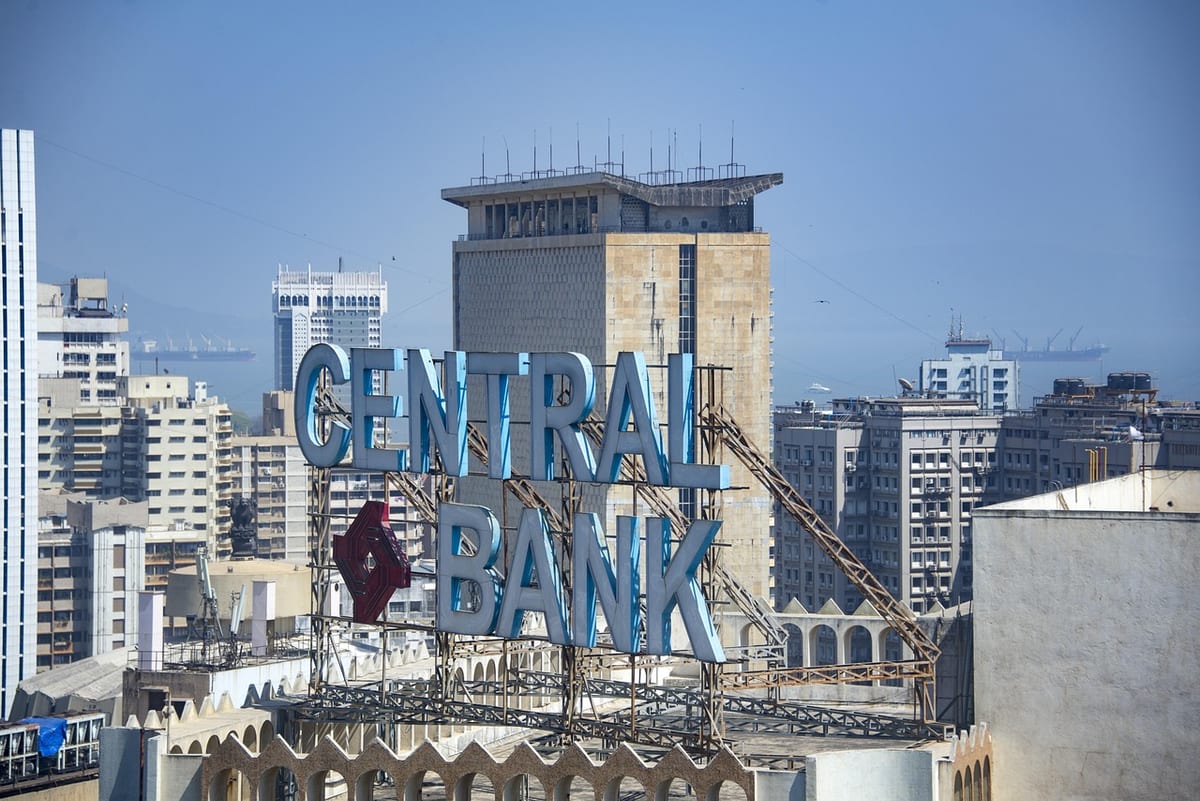
Every August, the Reserve Bank of India reopens nominations for a prize scheme that awards three academics ₹1,25,000 each for writing original books on economics, banking, or finance in Hindi. The 2025-26 cycle closes August 31, 2026. The sum is modest. The institutional logic behind it is not.
India's financial regulatory architecture—its central banking doctrine, its monetary policy frameworks, its credit market rules—is documented almost exclusively in English. The RBI's own circulars, annual reports, and policy statements are drafted in English first. University curricula in economics across the Hindi belt largely rely on English-language textbooks, many of them imports or translations. The gap this creates is not merely linguistic. It is a knowledge-access gap that runs along the same fault lines as financial exclusion itself.
What the Scheme Actually Does
Under the RBI's scheme for original Hindi writing on economics and banking subjects, working and retired professors—including assistant and associate professors—at UGC-recognised Indian universities are eligible. Three prizes of ₹1,25,000 each are awarded per annual cycle. Nominations and book copies go to the Chief General Manager of RBI's Rajbhasha Department at the Central Office in Bandra Kurla Complex, Mumbai, with this year's deadline at 5 PM on August 31.
The scheme operates within the RBI's Rajbhasha compliance obligations under the Official Languages Act, 1963, and flows from policy directives issued by the Department of Official Language under the Ministry of Home Affairs. This is not a new political initiative; it is a standing institutional commitment, renewed each year through the Rajbhasha Department that Chief General Manager Brij Raj heads. Its year-after-year recurrence signals that original technical scholarship in Hindi carries institutional value.
The distinction between original writing and translation matters. India has no shortage of translated economics textbooks in Hindi. Translations of Paul Samuelson or Gregory Mankiw exist. What the RBI scheme specifically rewards is original scholarship—new arguments, new frameworks, new syntheses—produced in Hindi rather than rendered into it. That distinction is the difference between a derivative knowledge ecosystem and a generative one.
The Career Disincentive Problem
For academics at Hindi-medium universities—Banaras Hindu University, Lucknow University, and dozens of state universities across Uttar Pradesh, Bihar, Madhya Pradesh, and Rajasthan—the career incentive structure runs almost entirely against writing in Hindi. University Grants Commission performance metrics, journal rankings, and the citation infrastructure that determines academic promotion all privilege English-language publication. A professor who writes a rigorous original monograph on monetary transmission in Hindi earns less career credit than one who publishes a middling English-language paper in a ranked journal.
₹1,25,000 does not fix that structural problem. But it performs a different function: it converts institutional recognition into a replicable signal. When the RBI—India's apex monetary authority—awards a prize for Hindi scholarship, it communicates to a department head in Varanasi or Bhopal that this work counts, that it has been evaluated and found worthy by a credible institution. The prize amount is almost beside the point. The imprimatur is the prize.
Even so, the quantum has limitations. Academic publishing in English, particularly for economists who can place work with international publishers or consultancies, can yield multiples of ₹1,25,000 in advances and royalties. If the RBI wants the scheme to attract the best Hindi-medium economists—not merely those for whom the English-language market is inaccessible—the prize architecture needs to scale. A tiered system that provides additional recognition for books adopted into university curricula would create demand-side pull that a one-time prize cannot.
A Canon the Country Hasn't Built Yet
Consider what a mature Hindi financial canon would contain: original treatments of monetary policy, credit market design, development finance, behavioural economics, and public debt management—written not as translations of English frameworks but as analyses that start from the Indian financial system's specific features: the prevalence of informal credit, the role of agricultural cycles in rural banking, the dynamics of small-finance-bank penetration in underserved districts. None of this exists in any depth in Hindi today.
The downstream consequence is not merely academic. Financial journalism, financial literacy campaigns, and public policy communication all draw on the technical vocabulary that academic writing establishes. English-medium financial journalism in India has, over three decades, built a dense technical lexicon that its readers navigate with fluency. Hindi financial journalism has not had the same foundation. The result is that complex monetary or regulatory developments reach Hindi-speaking audiences either late, imprecisely, or not at all.
This is the communication gap beneath the financial inclusion agenda. The RBI, the Finance Ministry, and the banking sector have invested heavily in expanding the physical and digital reach of financial services into underserved populations. But financial inclusion is not just about account ownership or credit access; it is about the capacity to understand, evaluate, and act on financial information. That capacity is built through a vernacular knowledge infrastructure—and that infrastructure begins with books.
Article 343 and the Longer Arc
India's Constitution, under Article 343, designates Hindi as the official language of the Union. That constitutional commitment has generated decades of Rajbhasha policy—translation mandates, Hindi fortnight celebrations, official language implementation committees—much of which has produced compliance rather than vitality. The RBI scheme is different because it targets original intellectual production, not administrative translation. It asks: can Hindi become a language in which new ideas about money, banking, and economic organisation are first conceived and expressed?
The Parliamentary Committee on Official Language has periodically reviewed the RBI's Rajbhasha performance and recommended stronger incentives for original technical writing in Hindi. That legislative nudge gives the scheme backing beyond internal RBI policy. But legislative recommendation and institutional follow-through are different things. The scheme's annual renewal is encouraging; its resourcing remains insufficient for the scale of the gap it addresses.
The JioStar pivot to regional and vernacular content—documented in IWE's recent coverage of its Bhojpuri and Hindi-belt streaming strategy—reflects a commercial recognition that India's linguistic diversity is an economic reality. The RBI's prize scheme reaches the same conclusion from another direction: not because there is money in Hindi financial scholarship, but because there is a democratic and developmental obligation to ensure that financial knowledge circulates in the languages its citizens use.
India is building the institutional architecture of a developed economy—deeper capital markets, a maturing insolvency framework, a sophisticated central banking apparatus. The question the Rajbhasha prize forces into view is whether that architecture will be legible only to the English-educated minority, or whether it will eventually become common property. ₹1,25,000 at a time, the RBI is betting on the latter. The bet is correct. The stake needs to be larger.