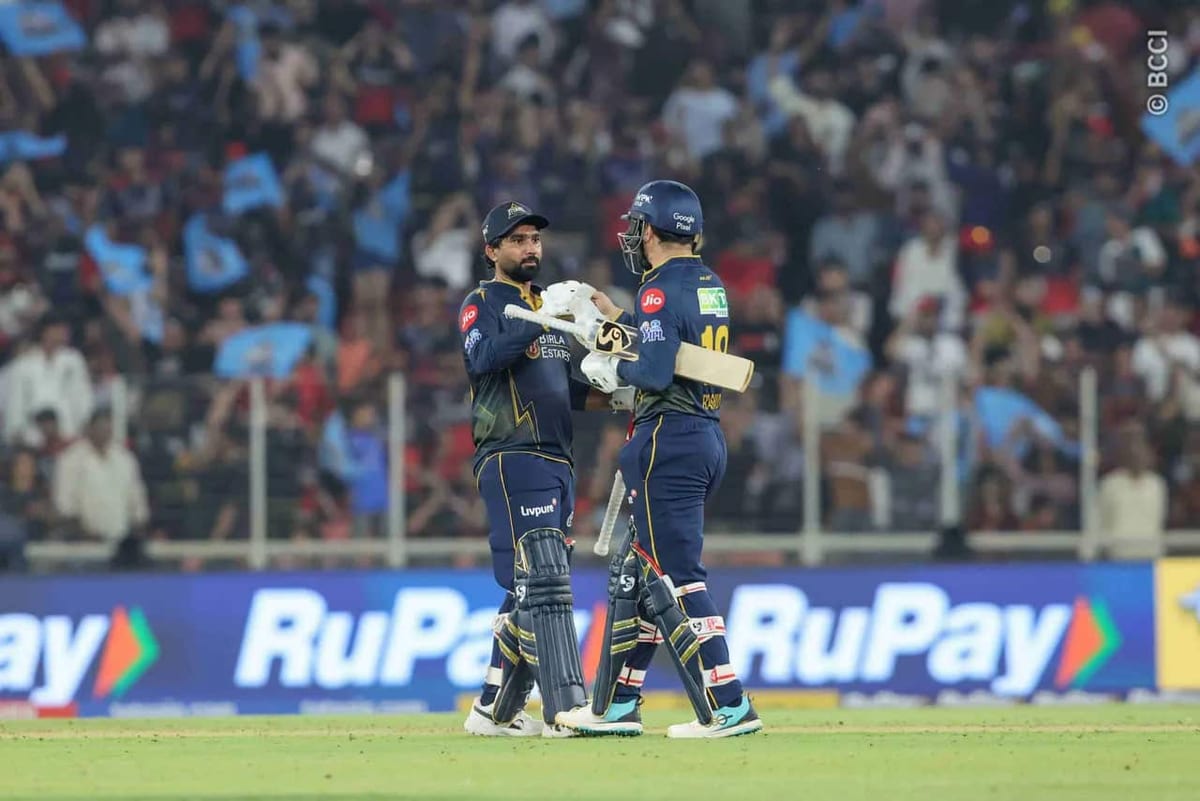
Cricket's most tortured love story reaches its climax under gathering storm clouds. The IPL 2026 final between Royal Challengers Bengaluru and Gujarat Titans at Ahmedabad faces weather disruption, with meteorological authorities issuing yellow weather alerts that could affect cricket's most anticipated showdown and test contingency planning.
After nineteen seasons of title defeats and near-misses, RCB is ninety minutes away from their first IPL title. For millions of supporters who have endured the franchise's history of losses, the prospect of weather intervention adds a harsh twist to an already dramatic narrative. The yellow alert issued for Ahmedabad signals meteorological uncertainty that has derailed countless sporting events during India's unpredictable monsoon transition period.
Stadium Spectacle Meets Monsoon Reality
The Narendra Modi Stadium, with its 132,000 capacity making it the world's largest cricket venue, transforms into a cathedral of anticipation for Sunday's final. Yet the same geographic positioning that makes Ahmedabad central to India's cricket infrastructure also places it within monsoon influence patterns that meteorologists struggle to predict beyond 24-hour windows.
Weather forecasting during India's pre-monsoon period resembles cricket itself—part science, part instinct, entirely unpredictable. The yellow alert classification indicates moderate rainfall possibility, enough to disrupt play but not severe enough to guarantee cancellation. This meteorological middle ground creates the worst possible scenario for tournament organizers: uncertainty that prevents decisive action.
The IPL's reserve day protocol provides a Monday fallback, but this contingency raises its own complications. Television viewership patterns shift dramatically between weekends and weekdays, potentially affecting the commercial spectacle that has made the IPL India's most valuable sporting property. Stadium attendance faces similar challenges, as Monday's working-day reality conflicts with the festival atmosphere that defines IPL finals.
Championship Psychology Under Pressure
Gujarat Titans enter as defending champions with the psychological advantage of home conditions and championship experience. Their 2025 title victory demonstrated their ability to perform under pressure, particularly at their Ahmedabad fortress where crowd support becomes a tactical weapon. Weather delays could either amplify this advantage by building crowd intensity or dilute it by fragmenting the emotional arc that defines great finals.
RCB's mental state presents the tournament's most fascinating subplot. This franchise has mastered the art of spectacular failure, turning disappointment into a brand identity that somehow makes them more beloved rather than less. The weight of expectation that has crushed previous RCB finals campaigns now becomes liberation—they have nothing left to prove except their ability to win when it matters most.
Weather interruptions historically favor teams with deeper bowling attacks and superior tactical flexibility. Both franchises possess these qualities, but GT's home advantage becomes magnified if conditions deteriorate. Local knowledge of how Ahmedabad pitches behave under moisture becomes crucial intelligence that visiting teams cannot replicate through preparation alone.
Tournament Scheduling Under Scrutiny
The weather threat illuminates broader questions about IPL scheduling during India's transitional climate periods. The tournament's April-May window represents commercial optimization—avoiding cricket season conflicts while maximizing television prime time—but places the competition within pre-monsoon uncertainty.
Indian cricket administrators face an impossible equation. March scheduling conflicts with international cricket calendars and board examinations. June pushes into monsoon season proper, when weather becomes genuinely unpredictable. The current April-May window represents the least problematic option, not the perfect one.
The IPL's commercial success has made weather contingency planning more sophisticated than ever before. Revenue implications of postponement or cancellation run into hundreds of crores, affecting broadcasting contracts, advertising commitments, and venue arrangements. These financial pressures create institutional momentum toward completing matches under marginal conditions that might have caused cancellations in earlier tournaments.
Fanbase Emotions and National Engagement
RCB's support base represents Indian cricket's most intriguing demographic phenomenon. Despite their titleless history, they command social media engagement that rivals successful franchises and generate television ratings that make broadcasters salivate. Their fans have elevated suffering into an art form, finding meaning in near-misses that would devastate supporters of other teams.
A rain-affected final would test this emotional resilience in unprecedented ways. Weather delays create narrative tension that transforms sporting events into national experiences, but they also risk anticlimactic conclusions that leave psychological wounds for supporters who have invested decades in title hopes.
The broader Indian cricket audience approaches this final with unusual investment regardless of franchise loyalty. RCB's title drought has become cricket's most compelling narrative thread, creating neutral support that transcends regional boundaries. Weather intervention threatens to rob this storyline of its deserved conclusion, whether triumphant or tragic.
Tactical Implications of Disrupted Play
Weather-affected matches favor teams with tactical flexibility and bench strength. Both RCB and GT possess international-quality squads capable of adapting to changing conditions, but the specifics of weather intervention could determine tactical approaches that seem counterintuitive under normal circumstances.
Reduced overs typically favor batting-heavy lineups with power-hitting capabilities. RCB's top-order batting, anchored by established international stars, theoretically benefits from shortened formats. However, GT's bowling depth and death-bowling expertise become magnified advantages when weather compresses scoring opportunities into brief windows.
The reserve day scenario presents its own tactical complexity. Teams must balance squad rotation to manage player fatigue while maintaining peak performance levels across potential back-to-back high-intensity matches. The mental toll of preparation, interruption, and renewed preparation tests professional athletes in ways that pure cricket skill cannot address.
This final represents Indian cricket's capacity to generate narrative tension that transcends sport itself. Whether completed on Sunday under cloudy skies or Monday under clearer conditions, the match will either crown RCB's first champions or confirm GT's championship dynasty.