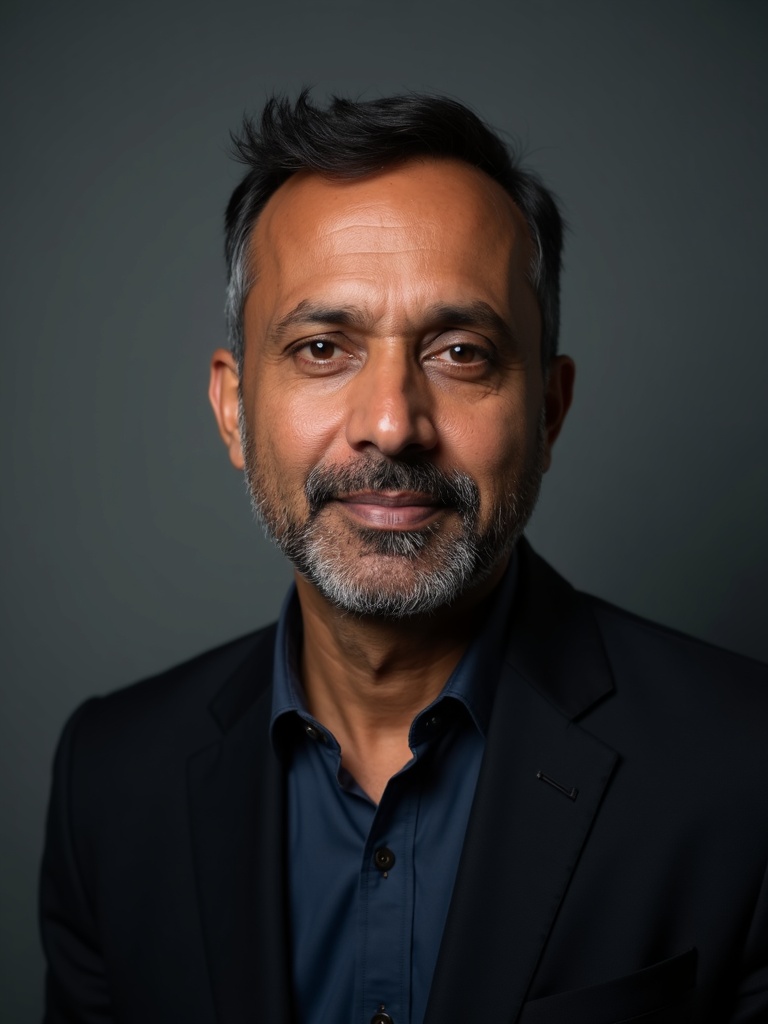
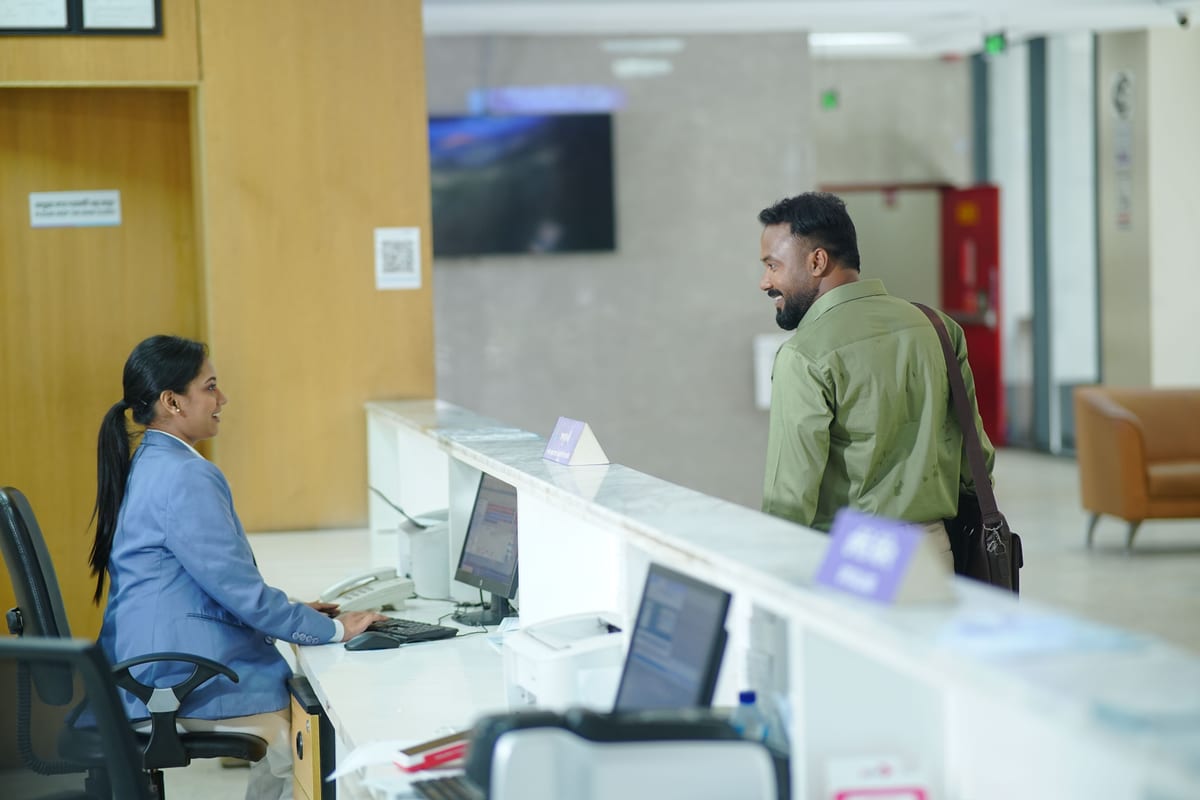
Picture the call that rings out, the email that vanishes into a government inbox, the applicant who has driven three hours from upstate New York or rural New Jersey to stand in a queue, documents in hand, only to learn the process changed last Tuesday. For decades, that friction — the gap between a diaspora's legitimate need and a consulate's institutional capacity — came bundled with the cost of living abroad as an Indian national. Amb. Binaya Srikanta Pradhan, who took charge as Consul General of India in New York in January 2024, has decided the gap can close.
The instrument he wields is called Pramit.
The digital query portal, launched under his watch and accessible through the Consulate General of India in New York's official website, gives applicants a structured channel to raise questions about visa applications, passport renewals, and Overseas Citizen of India card processing before they ever step into the building on East 64th Street. The logic is simple and transformative: answer the question at the inquiry stage, and you eliminate the confusion that breeds failed appointments, incomplete submissions, and the long human tail of follow-up calls that clogs a consular operation serving 2.3 million people across ten states.
The Jurisdiction in Full
To grasp why modernisation matters here, consider the geometry. The Consulate General in New York is more than a large post — it ranks, by any reasonable measure, among the most consequential Indian diplomatic missions in the world. Its ten-state jurisdiction on the U.S. East Coast encompasses a diaspora of more than 2.3 million Indians, a student population of roughly 117,000, and a commercial corridor through which approximately one-third of India–U.S. merchandise trade moves. The applicant base defies any single description. It includes a software engineer in Jersey City renewing a passport, a textile executive in Manhattan processing a business visa, a grandmother in Connecticut applying for an OCI card so she can visit her grandchildren without the annual visa ritual, and a graduate student at a Boston-area university untangling a travel document question weeks before a critical conference. Each brings a different need, a different level of digital literacy, a different tolerance for ambiguity.
Pradhan, a 2002-batch Indian Foreign Service officer who speaks English, Russian, Hindi, and Odia, came to this assignment with a biography built on complexity. He served in Moscow. He managed portfolios covering Afghanistan and Iran. He spent five years as Chief of Staff to India's Petroleum Minister, an education in institutional machinery at high speed. Before New York, he served as High Commissioner to Tanzania, where he helped elevate the India–Tanzania relationship to a Strategic Partnership and supported the establishment of IIT Madras's first overseas campus, in Zanzibar — a project that demanded he weave together academic, governmental, and diplomatic threads across two countries. A man at ease with complexity, then, arriving at the most complex Indian consular jurisdiction in the world.
The Pramit Difference
The name Pramit carries a sense of precision, of something measured and intentional — and the portal delivers on the name. Where applicants once wondered whether a query would reach a human being in time to matter, Pramit provides a tracked pathway. The consulate has been direct about its purpose: reduce dependence on intermediaries, reduce misinformation, and put the applicant in direct contact with authoritative guidance.
That last point cuts to a harder edge of the modernisation push. The Indian Express recently reported that the Indian Consulate in New York cautioned the community against using unscrupulous agents for consular services — a warning that reflects a real vulnerability in any large diaspora population. When official information is hard to find or slow to arrive, fixers rush into the vacuum, charging for access they do not exclusively possess. Pramit is, among other things, a structural answer to that problem: if the consulate's own digital channel is fast, reliable, and clear, the unscrupulous agent loses his margin.
Pradhan has also pushed on the processing side — the back end that Pramit's front-end queries feed into. Faster turnaround on visa applications, passport renewals, and OCI cards is no mere administrative convenience. For the Indian student about to miss a semester-start travel window, for the business executive whose client meeting is in three weeks, for the elderly applicant whose mobility turns every additional trip into a hardship, processing speed shapes the material conditions of life. The consulate's citizen-first framing — a phrase that in lesser hands dissolves into slogan — here carries operational weight.
Warning and Welfare
The caution against unscrupulous agents belongs to a broader welfare posture Pradhan has built into the consulate's work. His tenure has included one-time legal aid initiatives, free counselling with community lawyers and doctors, and explicit outreach urging community associations to prioritise women's welfare — efforts that answer the range of vulnerabilities in any diaspora of 2.3 million people, not all of whom arrived with resources or networks intact.
The consular modernisation and the welfare work express, at their core, the same governing idea: that the Indian state owes its citizens presence and competence wherever they live. In New York, where the consulate's jurisdiction stretches from the Hudson Valley to the Maine border, presence does not come automatic — it has to be built, system by system.
What Comes Next
The work is not finished, and Pradhan would be the first to say so. A digital portal serves only the applicants who know it exists and trust it enough to use it. Building that trust — across generations, across the full linguistic range of a diaspora that includes speakers of dozens of Indian languages, across a population that runs from the digitally native to the digitally excluded — is the long project that lies ahead.
But the direction is set. Pradhan has placed modernisation at the centre of what India's largest American consular post does and how it thinks about its obligations. The Pramit portal is a beginning, not a destination. For 2.3 million Indians across ten states, that beginning is already changing what it feels like to reach their government from three thousand miles away — not a minor thing, and not an accident.