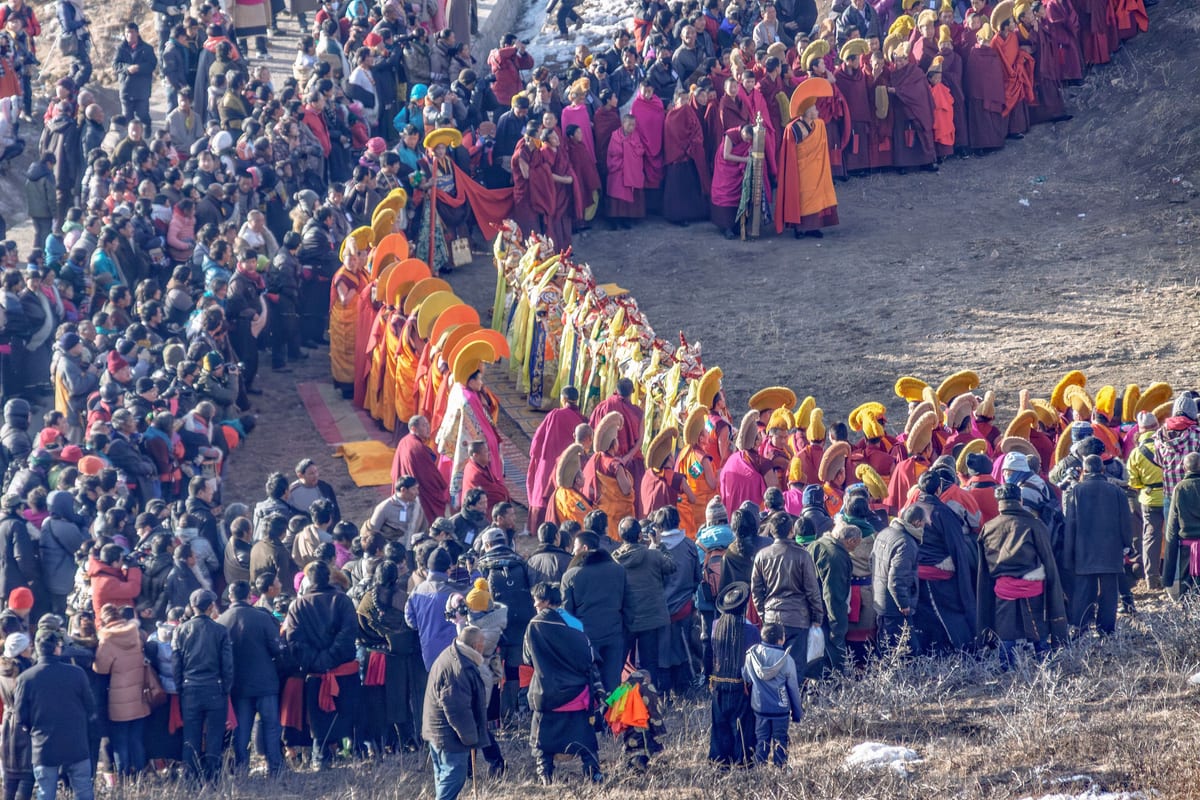
There is a moment, usually somewhere between the third tunnel on the toy train and the first clear view of snow-wrapped peaks, when Shimla stops being a destination and becomes a feeling. The air changes. The light softens. Something older than tourism — older even than the British sahibs who built their summer capital here — seems to breathe through the deodar forests. This is Shimla, the Queen of the Hills, and it has been receiving guests for centuries.
A City That Carries Two Worlds on One Ridge
Shimla sits at an elevation of roughly 2,200 metres in the Shivalik range of the outer Himalayas, surrounded by peaks that rise well beyond the clouds. It became the summer capital of British India in the nineteenth century, and that colonial chapter left unmistakable marks: the Viceregal Lodge, the mock-Tudor Gaiety Heritage Cultural Complex, Gothic churches, and the broad promenade of the Mall. But to read Shimla only through a colonial lens is to miss the deeper story entirely.
Long before the first British officer arrived gasping for cool air, these hills were sacred Himachali land — a landscape dotted with temples, traversed by pilgrims, and humming with the traditions of mountain communities whose culture stretches back millennia. What makes Shimla remarkable is that neither layer erased the other. The town holds both simultaneously, without apology and without confusion.
The Heritage Walk: Reading a Town Like a Book
The best way to understand Shimla's layered identity is to walk it. The town's Heritage Walk moves past colonial-era buildings whose facades mask very Indian stories, through bazaars where Himachali handicrafts sit beside Punjabi street food stalls, and up to viewpoints where the Himalayan panorama fills the view.
The Gaiety Heritage Cultural Complex, now more than 120 years old, is a five-storey Victorian building of remarkable historical and cultural weight. It has hosted theatrical performances, political gatherings, and artistic events across its long life — and it continues to do so today. The building remains alive and purposeful across changing centuries.
The Himachal State Museum and Library deserves unhurried hours. Its collection of rare manuscripts, ancient coins, miniature paintings, traditional textiles, sculptures, and the doll gallery is a treasure chest of regional memory — evidence of how richly varied and deeply rooted Himachali civilisation truly is.
The Ridge and the Mall: Shimla's Living Room
Every town has a space that functions as its collective living room. In Shimla, that space is the Ridge — a broad, open esplanade set against a backdrop of Himalayan peaks. Festivals happen here. Live music performances fill the mountain air. Celebrations mark every season.
Below it, the Mall buzzes with shops, eateries, and the particular energy of a town that is simultaneously a local hub and a national favourite. Wander it in the evening when the lights come on and the mountains go blue-grey in the dusk, and you will understand why generations of Indians — long before Instagram made hill stations fashionable — chose Shimla as the place they most wanted to be.
Spiritual Shimla: Temples and Sacred Ground
The spiritual geography of Shimla is ancient and active. The Tara Devi Temple, perched on a hilltop on the western edge of the town, is one of the most revered shrines in the region — dedicated to the goddess Tara, a figure of protection and grace in Himachali and Tantric traditions. The energy at Tara Devi differs from the town's colonial buildings: quieter, older, and rooted in the subcontinent's own spiritual vocabulary.
Across the town, temples and churches coexist without friction, each drawing their own faithful. This civilisational tolerance — organic, unremarkable, and centuries-old — is one of Shimla's quietest gifts to any visitor paying attention.
The Toy Train: A UNESCO Journey Through Living Landscape
The Kalka-Shimla Railway is a UNESCO World Heritage Site and one of the great slow-travel experiences on earth. The narrow-gauge line winds through more than a hundred tunnels and across dozens of bridges, climbing steadily from the plains into the mountains over roughly 96 kilometres. The toy train is a working railway that has connected this mountain town to the rest of India for well over a century. Riding it is not nostalgic; it is participation in a living institution.
Best Time to Visit and How to Get Here
Shimla is a year-round destination, and each season offers something distinct. Summer (March to June) brings temperatures ranging from 2°C to 29°C at its peak — ideal for those escaping the heat of the plains. Winter (December to February) drops to lows of around -2°C, and snowfall transforms the town into something from a storybook. The monsoon months of July and August bring lush greenery and misty valleys, though landslides can occasionally affect road access.
By air, the nearest major airport is Shaheed Bhagat Singh International Airport, Chandigarh (IXC), from which Shimla is roughly three hours by road. The town also has its own Shimla Airport (SLV) for smaller aircraft. By rail, Shimla Railway Station (SML) is the terminus of the heritage Kalka-Shimla line — arriving this way is the right way to begin the journey. By road, Shimla is well connected to Delhi, Chandigarh, and other Himachal destinations by national and state highways.
Why Shimla Matters Beyond Its Beauty
India's civilisational story is layered, contradictory, absorptive, and alive — and Shimla is one of its most eloquent chapters. A town built by colonisers has been so thoroughly claimed by India that it now stands as a symbol of the nation's mountain heart. Its museums carry Himachali memory. Its theatre sustains living art. Its trains run on time through UNESCO-recognised hills. Its temples draw pilgrims who have been coming long before any tourist board existed.
Shimla does not choose between its colonial architecture and its ancient temples, between its Victorian theatre and its Himalayan festivals. It holds all of it, as India holds all of its own contradictions — not as problems to resolve, but as evidence of a civilisation vast enough to contain multitudes.
For full destination details, travel planning resources, and official tourism information, visit the Shimla page on Incredible India, the official tourism portal of the Ministry of Tourism, Government of India.
Come for the mountains. Stay for the story.