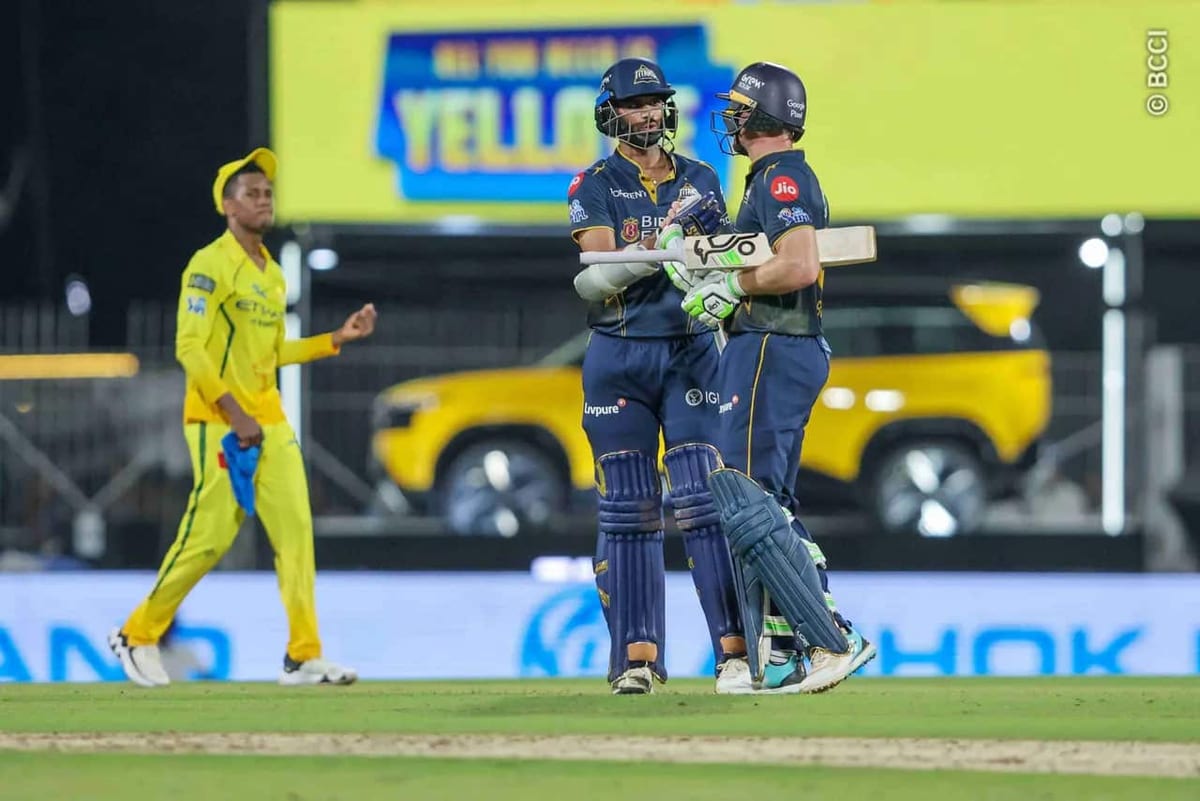
The yellow jersey left Chennai and landed in Texas. Somewhere in that journey, the Chennai Super Kings brand became something larger than a cricket franchise — a test of whether Indian cricket's most recognisable identity could survive transplantation to a country where cricket still competes for attention with baseball, basketball, and the NFL. The Texas Super Kings versus Washington Freedom fixture in Major League Cricket is the latest chapter in that experiment.
MLC is young, loud, and deliberately built on borrowed equity. The Super Kings name carries it far. For the millions of Indian fans who grew up watching MS Dhoni finish games at Chepauk, the Texas franchise registers as an extension of something they already own emotionally. That emotional ownership is the league's most valuable asset, and also its most complicated one.
Brand Across the Atlantic
The CSK ownership group's decision to plant its flag in Texas was never purely about American cricket. It was about the Indian diaspora in the southern United States — Dallas, Houston, Austin — and about anchoring a global brand at a moment when T20 franchise cricket is replicating the European football club model. When Arsenal plays a pre-season friendly in Los Angeles, it is not primarily for American football fans. The Super Kings in Texas operate on the same logic.
What distinguishes MLC from other franchise experiments is the depth of its Indian commercial roots. The Super Kings brand arrives in Texas with decades of accumulated loyalty — Thala chants, the yellow sea in the stands, the Dhoni mythology. Washington Freedom has to build its identity from scratch. That asymmetry defines the fixture before a ball is bowled: one side carries a legacy, the other carries ambition. In T20 cricket, both can win on any given day.
The toss, the powerplay bowling strategy, and the death-over batting decisions are not merely local tactics. They are data points. IPL franchise analysts and scouts working the fringes of national selection conversations watch how players perform under this specific pressure: short boundaries, drop-in pitches, unfamiliar crowd acoustics, and the psychological weight of representing a brand that expects to win.
The BCCI Question Nobody Wants to Answer Out Loud
Here is where the fixture becomes genuinely consequential for Indian cricket's governance structure. The BCCI has not permitted Indian players contracted to IPL franchises to participate in overseas T20 leagues, including MLC. The logic is defensible: protecting the IPL's exclusivity preserves its commercial supremacy. But as MLC grows — and the Super Kings' presence accelerates that growth — the policy faces a slow, structural pressure it cannot ignore indefinitely.
The comparison worth making is not to the Caribbean Premier League or the SA20, both of which have operated for years without cracking open the BCCI's position. MLC is different because it has American scale behind it, venture capital at its foundation, and the Super Kings brand as its marquee draw. If the league sustains its current growth arc, the question of Indian player availability will eventually shift from a governance preference to a commercial negotiation — and those negotiations tend to produce different outcomes than policy statements.
Analysts working on the intersection of cricket governance and franchise economics have noted that BCCI-affiliated entities holding indirect stakes in MLC's expansion creates an inherent tension. The board benefits commercially from the league's success but restricts the talent pipeline that would accelerate that success. That contradiction will surface at a board meeting, or in an ICC governance discussion, or through a player contract dispute — and when it does, the Super Kings' performance in their first US season will form part of the evidentiary record.
Watching the Edges of the Talent Pool
What makes the Texas versus Washington fixture analytically interesting — beyond the brand drama — is what it reveals about players operating outside the established T20 hierarchy. MLC has drawn cricketers with IPL connections or national squad histories across multiple boards. A batter who handles the powerplay with discipline against a quality pace attack in a high-pressure fixture does not go unnoticed. IPL auction cycles are long, but the memory of a match-winning cameo is longer.
The tactical mirroring between MLC and the IPL is not accidental. The T20 template refined across a decade and a half of IPL cricket — field restrictions, spin in the middle overs, pace at the death, the geometry of the reverse sweep and the ramp — has become a global export. Coaches who learned their trade in the IPL system bring those frameworks to MLC dugouts. Players who apprenticed in IPL nets recognise the language. The result is a league that looks and feels recognisably like Indian franchise cricket, even when played in Dallas.
For franchise analysts, this convergence matters. A player who performs in an IPL-adjacent tactical environment demonstrates transferable skills. One who struggles reveals a gap that extended development might close. The Super Kings' batting lineup's response to Washington's pace attack — whether it trusts the process through a difficult powerplay or panics into reckless strokeplay — generates the kind of information that influences auction valuations.
Silverware and the Storyline It Would Create
The CSK ownership group understands narrative. The Chennai Super Kings have built their brand on resilience — the two-year suspension, the returns to form, the Dhoni-era finishes — as much as on trophies. Transporting that narrative architecture to Texas requires a new chapter, and the most satisfying one available is a maiden MLC title in the franchise's first season.
Whether that outcome materialises depends on squad depth, tactical flexibility, and the kind of knockout-stage composure that CSK teams have historically produced. But the storyline is already written in broad strokes: a famous Indian brand, a new frontier, a league trying to prove itself, and a first season that could end in silverware or in a useful lesson about what it takes to rebuild from nothing. Indian fans following the Super Kings across time zones know both endings well. They have lived both, and they will watch the Texas version with the same forensic attention they bring to Chepauk in April.
What MLC's second and third seasons look like will depend significantly on whether the first generates the kind of marquee moments that justify sustained broadcast attention and diaspora investment. The Super Kings, by the sheer gravity of their brand, are the league's best argument that those moments are possible. The Washington Freedom, competing without that inherited mythology, are the league's best argument that they can be manufactured from scratch. Both propositions need to be true for MLC to become what its founders want it to be. The Texas versus Washington fixture, however it ends, is evidence accumulating on both sides of that bet — and the BCCI, watching from a careful distance, is taking notes on all of it.