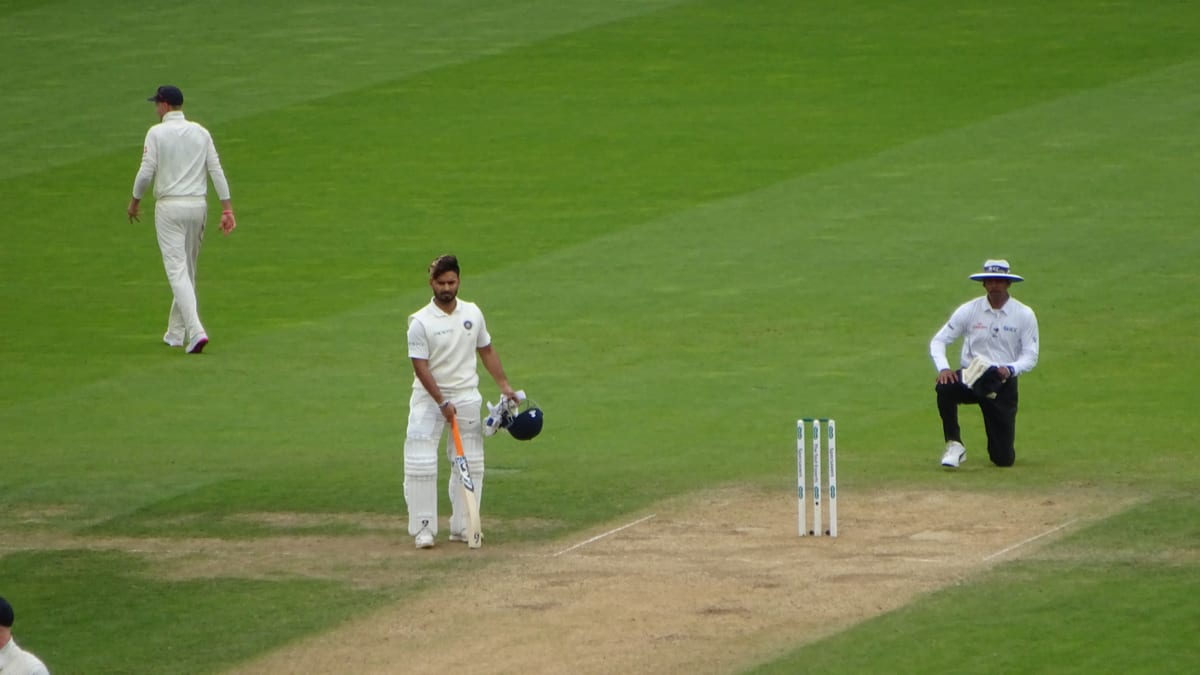

At Bristol, on a ground that offers early movement to pace bowlers and tends to slow as the evening deepens, India and England meet for the 4th T20I of their five-match series. The match has a series context: depending on where the scoreline stands heading into this fixture, one side is pressing to close out and the other is fighting to stay alive. But the question that has consumed the preceding days of commentary and selection talk has little to do with strategy at the macro level. It concerns one left-hander from Hyderabad, and whether his name appears on the teamsheet when the covers come off at Bristol.
Tilak Varma's position in India's T20 middle order — typically No. 5 or No. 6 — has been a recurring subplot across this series. He has shown the flashes that made selectors take notice: the wrists that work the ball through the leg side with minimal backlift, the composure that reads as unusual in a batter of his age and experience, the willingness to absorb a dot ball and then attack the next three. But flashes are not the same as evidence, and India's selectors are in the business of evidence at this stage of the squad's evolution.
The Slot That Defines India's Batting Architecture
The No. 5 position in T20 cricket is the most demanding slot in the order. A batter arriving there can face a powerplay hangover — wickets gone early, field still up, the asking rate manageable. Or they can arrive with twelve overs left, a target of 180 on the board, and two set batters already in. The skill required is not just hitting; it is reading which version of the innings you have walked into and recalibrating within the span of two deliveries.
India have historically struggled to find a settled occupant for that slot. The years when Yuvraj Singh or MS Dhoni filled it were years when the position itself seemed to shrink in difficulty — because the batter was bigger than the moment. The search for who fills that function in the current generation has been ongoing, and Varma is one of the more credible answers that Indian domestic cricket has produced in recent cycles.
What makes Bristol a particularly pointed audition is the pitch and the bowling combination England are likely to deploy. A ground that assists pace in the first six overs tests whether a middle-order batter can hold his shape when the ball is doing something and the scoreboard pressure has not yet fully arrived. England's left-arm pace options create a specific technical puzzle for Varma — how he handles deliveries angling into his body and then straightening off the seam will tell observers considerably more than a boundary struck off a length ball on a flat deck.
Selection Pressure as a Form of Trust
There is a version of this story that frames Varma's uncertain XI status as a vote of no-confidence. That reading is too simple. India's T20 batting depth is formidable at the moment, and competition for the lower-middle slots is real. Being in contention at No. 5 in a touring India side is itself a marker of where Varma stands in the national pecking order.
The more instructive question is what the team management signals through the specifics of how they use him. If Varma bats at No. 4 at any point in this series — pushed up when an early wicket falls in the powerplay — that is a statement of elevated trust, the kind that does not appear in press conferences but is immediately legible to anyone who follows India's selection architecture. A batter trusted to absorb early pressure and set the platform is a different proposition from one trusted only to accelerate in the final five overs.
If Varma is omitted from the XI entirely at Bristol, the selectors are not abandoning him. They are running a parallel track, checking whether alternatives can make the slot look easier than Varma has made it look. That is a process, not a verdict. Young batters who have gone through exactly this kind of on-off selection pattern have emerged as automatic picks eighteen months later, once the sample size expanded and the picture clarified. The archive of Indian cricket is full of these trajectories: players who looked like rotation-fodder in one series and indispensable in the next.
Bristol's Conditions and the Toss Variable
The toss at Bristol carries genuine weight. India's think-tank, per the available pre-match reading of conditions, will be influenced by whether the pitch offers early pace assistance that dries up as the innings progresses, or whether dew in the evening overs makes chasing the higher-percentage call. A side that bats first at Bristol and posts 175-plus on a surface that has done something in the first six overs has usually earned that total through resolute batting under difficulty. A side that bats first and reaches only 155 has often gifted the chasing team a target that the conditions make achievable.
For Varma specifically, batting first is the more demanding test and therefore the more revealing one. Chasing a target at a clear required run rate allows a middle-order batter to calibrate their innings against a known number. Setting a target requires a different read: how quickly to accelerate, when to absorb, whether a boundary off the seventh over is a scoring stroke or a risk taken ten balls too early.
What Selectors Are Actually Watching
India's selection panel heading into this series is not watching T20Is purely for their entertainment value. Every middle-over partnership, every dismissal, every recovery from a difficult position is a data point in a longer assessment. The T20 format's brevity makes this concentrated: a batter can face twenty balls in a T20I and still tell a selector almost everything they need to know about his technique, his temperament, and his understanding of the match situation.
Varma has the temperament. That is the one quality that is hardest to develop and the one quality that experience in India's domestic circuit — where the crowds and the pressure are not modest, even at Ranji or Syed Mushtaq Ali level — tends to either build or expose. What the selectors are now asking is whether the temperament translates consistently at the international level, against bowling attacks that have had time to study him, and whether the technique holds when England's bowlers come around the wicket or alter their lengths in response to what they have seen from him in previous innings of this series.
If Varma holds his place at Bristol and plays a defining innings — not necessarily a match-winning one, but an innings that shows he understood the situation and made the right decisions under pressure — the narrative entering the 5th T20I changes in ways that selections committees cannot ignore. The final match of a series is where reputations receive a legible verdict. A strong Bristol showing makes the 5th T20I a confirmation, not a trial. A failure or an omission makes it the last chance to lodge an answer before the squad conversation moves on.
India's middle-order history in the T20 format has been a story of brief certainties followed by prolonged debates. Bristol offers a narrow window, but cricket's archive is full of moments that looked minor at the time and turned out to be the turn in a longer story.