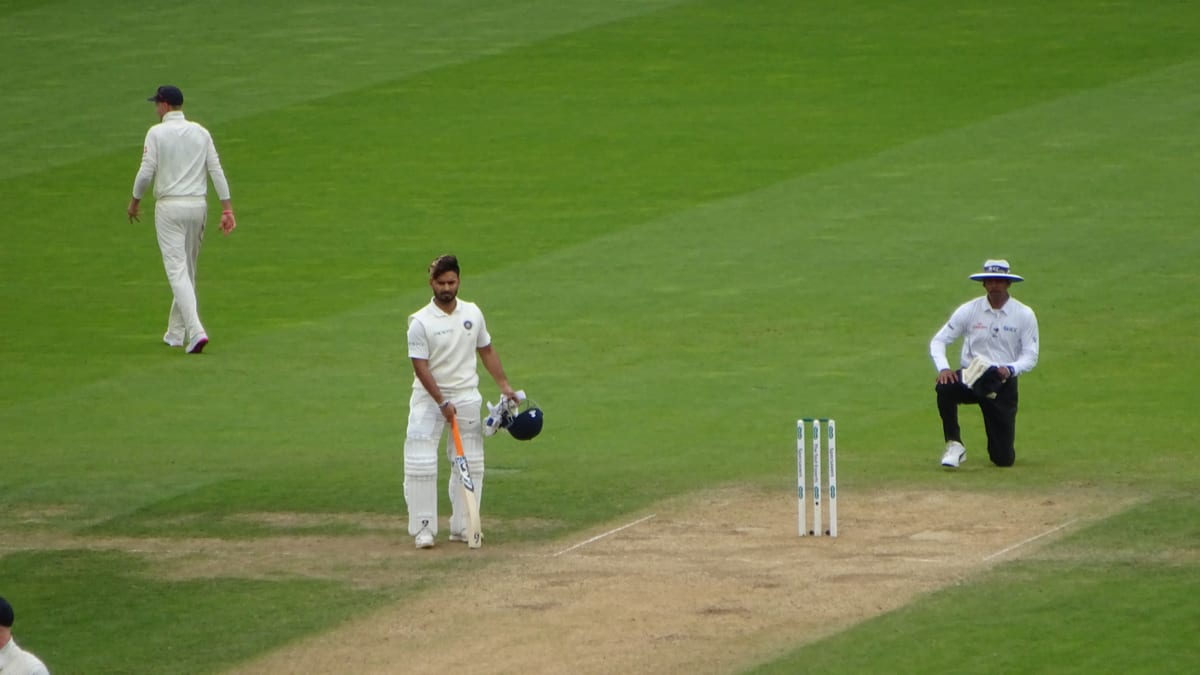
There is a number that has sat in Indian cricket like a fixed star for over three decades: 16 years and 205 days. That was Sachin Tendulkar's age when he walked out for India against Pakistan in Karachi in 1989, a debut that carried enormous expectation. On a grey afternoon in Manchester, Vaibhav Sooryavanshi walked that fixed star right off the chart.
Sooryavanshi, younger than Tendulkar was on that Karachi day, took guard in the 2nd T20I against England to become the youngest player ever to represent India internationally. His innings ended at 14 runs — not the stuff of legend on a scorecard, but entirely beside the point. The record is the story, and the record belongs to him now.
The Weight of the Number
Tendulkar's debut age was never merely a statistic. It became a cultural marker for the ceiling of Indian cricketing precocity — the point beyond which no selector dared venture, and beyond which no teenager was presumed ready. For fans who grew up watching Tendulkar as the gold standard of Indian youth, that 16-year-205-day figure carried an almost talismanic quality. It measured not just one man's youth but the audacity of the system that sent him out.
Sooryavanshi's selection dismantles that ceiling without ceremony. England had recalled Jofra Archer to their eleven and handed Josh Tongue his white-ball international debut, meaning Sooryavanshi's first international outing came against a seam attack built for English conditions. The selectors did not engineer a soft landing. They put him in the fire.
Gambhir's Gamble — and What It Reveals
Head coach Gautam Gambhir has spoken in broad terms about wanting India to play with aggression and without sentiment. The selection of Sooryavanshi is the sharpest expression yet of what that philosophy means in practice. Indian cricket has historically treated domestic seasoning as a prerequisite — the Ranji hundreds, the IPL campaign that proves the teenager can handle pressure before the Indian cap arrives. Sooryavanshi's call-up suggests Gambhir and the selection panel are willing to compress that timeline when the talent is singular enough.
This is not recklessness. It is a calculated read of what T20 internationals now are: high-visibility, low-consequence arenas relative to Tests, where a teenager's exposure to international pace and pressure can be calibrated without staking a Test series result on his development. Placing Sooryavanshi in the powerplay batting role reveals exactly how much trust the dressing room is placing in him — and how clearly they have thought about where his value lies. In powerplay cricket, the margin for error is wide for aggressive batters; the instruction is to play your game.
The management now carries the harder burden. The debut is done. The record is broken. What follows — how many games he plays in the remainder of the England series, whether he is rested or rotated, whether a poor sequence triggers a recall to domestic cricket or a vote of continued confidence — will define the template India uses for every young talent that comes after him. The record-breaking moment is the easy part to narrate. The selection philosophy that follows it is the actual test of the coaching staff's nerve.
Rajasthan's Pipeline and the IPL Effect
Sooryavanshi arrived here through Rajasthan's cricket system and the attention the IPL's franchise ecosystem now directs at teenage batters with extraordinary strike rates. The IPL's Next Gen pathways have fundamentally altered the exposure calculus for young Indian cricketers. A teenager who performs in high-stakes franchise cricket in front of broadcast audiences of tens of millions is no longer an unknown quantity when a selector's pen hovers over a squad sheet. The old apprenticeship model — obscurity, then Ranji, then A tours, then the cap — has been disrupted by a format that makes prodigies visible years earlier than the previous system allowed.
Sooryavanshi is the purest product of that disruption. His Rajasthan domestic grounding gave him the technical foundation; the IPL spotlight gave him the pressure-testing and the visibility. The combination produced someone the selectors felt comfortable sending into an England powerplay in Manchester before he could legally vote in India. Whether that production line is replicable — or whether Sooryavanshi is a singular outlier who happened to arrive at the right moment in the right format — is the question that every state association and franchise academy will be quietly asking.
The Tendulkar Question
Tendulkar's response to having his record broken will be the most-watched reaction in the country. Whatever he says — almost certainly generous, almost certainly on social media within hours of the innings — will itself become part of the story's texture. Indian cricket has a particular gift for these moments of generational baton-passing, where the established figure graciously blesses the new arrival. The ritual is real, the emotion is genuine, and the effect on the new record-holder's public standing is enormous.
But beneath the sentiment lies a structural question that Tendulkar's magnanimity cannot answer: does breaking his debut-age record mean Sooryavanshi carries the same generational weight? Almost certainly not, at least not yet. Tendulkar's record was not just that he debuted young — it was that he debuted young and then spent the next 24 years justifying every gram of faith placed in him. Sooryavanshi has broken the age record on day one. The rest of the comparison will take a decade to even begin writing.
14 Runs and the Long Game
Fourteen runs is not a failure in any meaningful sense when a teenager faces international-quality seam bowling on his first day in an England Test-match city. The Indian cricketing public knows this, even if the predictable cycle of social media commentary will briefly treat it otherwise. What matters is what happens next — whether Sooryavanshi gets another game in this series, whether the management backs him through an inevitable rough patch, whether the selectors treat his development as a multi-year project rather than a verdict delivered by a single innings.
The broader pipeline argument actually runs in India's favour here. Recent Under-19 performances have demonstrated the collective depth of India's youth cricket, and Sooryavanshi's emergence is best understood not as an isolated prodigy but as the sharpest point of a generation that is arriving faster and better-prepared than any that preceded it. The IPL infrastructure, the state systems, the coaching structures — they are producing cricketers at a pace and quality that makes selections like this one possible. That is not an accident of talent; it is the output of deliberate institutional investment in the sport at every level.
The record that stood for 36 years is gone. What India does with the player who broke it — how it manages his workload, nurtures his confidence, and resists the pressure to turn a teenager into a symbol before he has become a cricketer — is the only question that matters now. The selectors bought themselves the right to answer it. How they do so will say more about Indian cricket's maturity than any debut innings can.