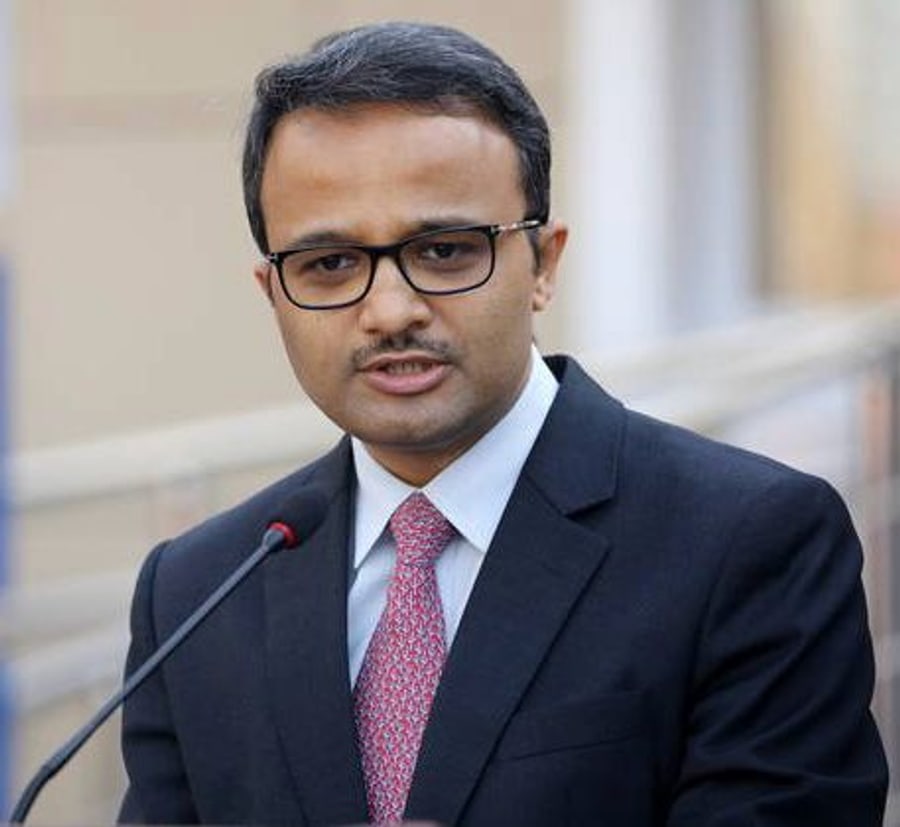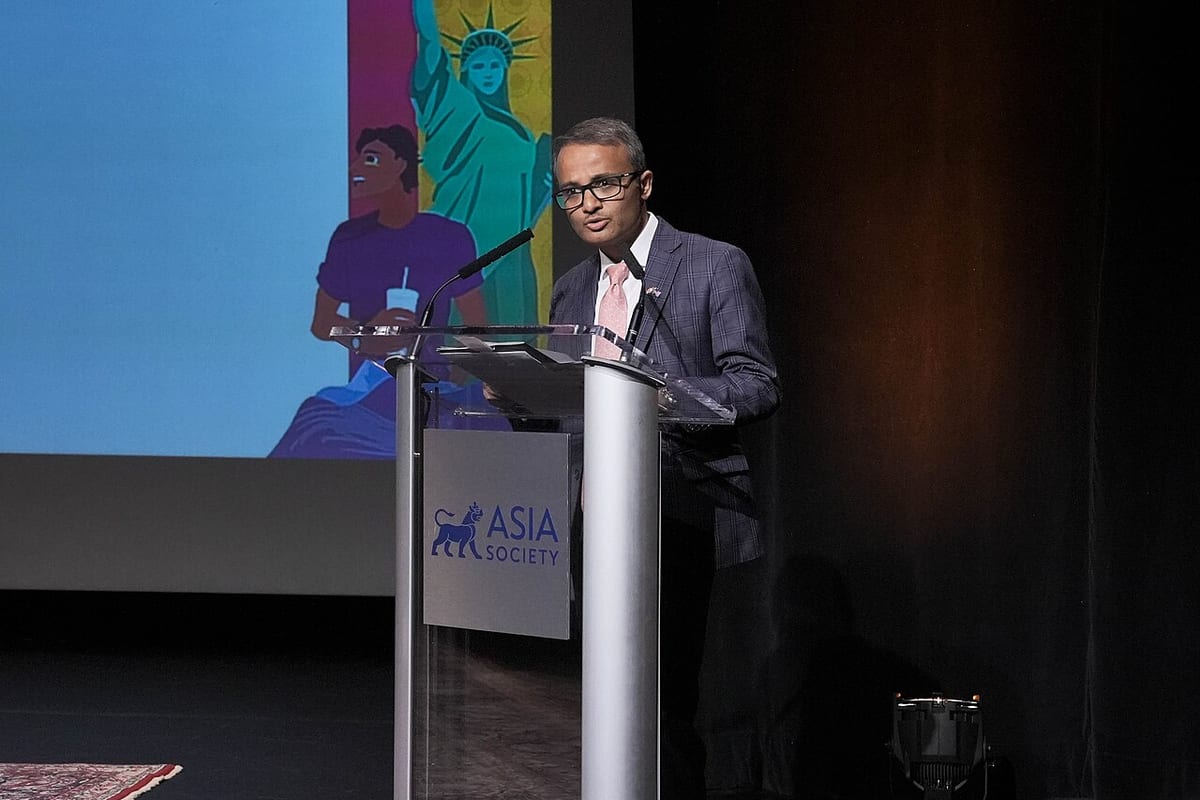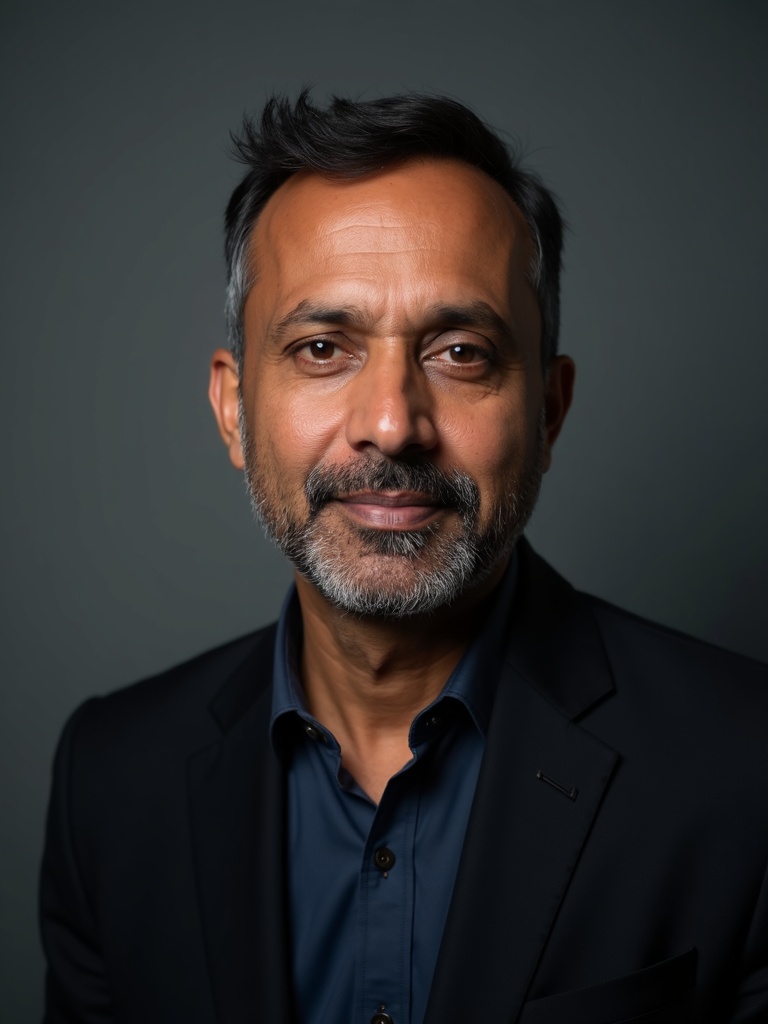
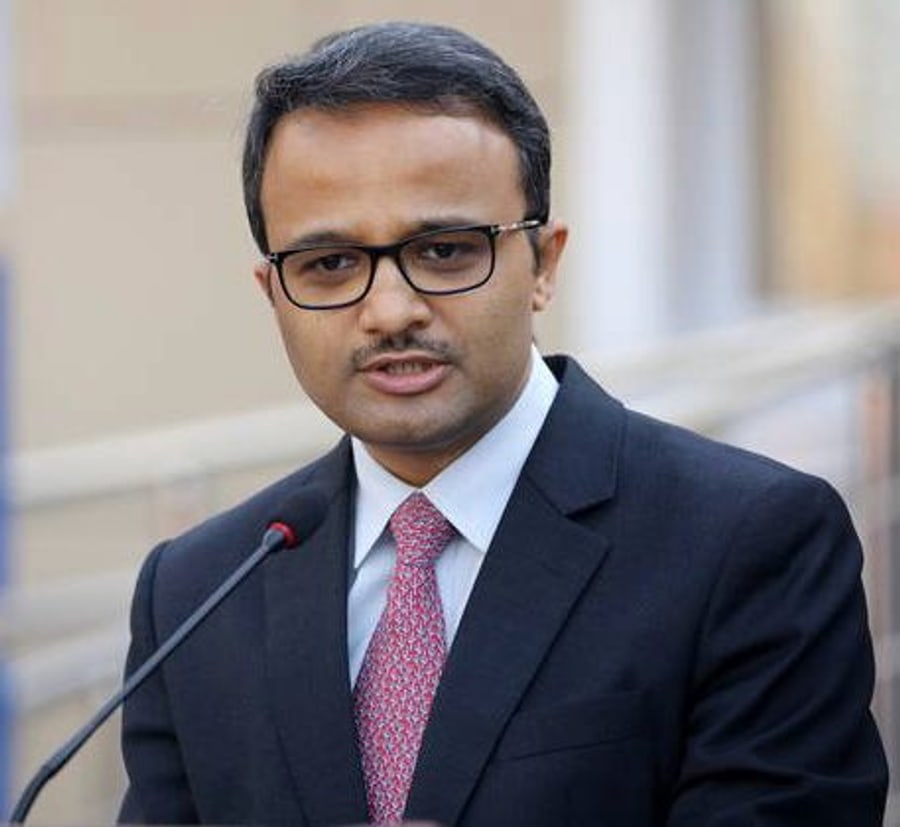
The meeting room on Capitol Hill does not care who you are until you have been there before. Protocol gets you through the door once. What brings you back — what turns a courtesy call into a conversation a lawmaker's staff prepares for — is a record of showing up, knowing the file, and making the relationship feel like something other than a transaction. Amb. Binaya Srikanta Pradhan, Consul General of India in New York since January 2024, has spent his first year building that record, one office visit at a time.
The Consulate General of India in New York sits at the intersection of several large facts. Its jurisdiction covers ten U.S. East Coast states. The Indian diaspora within those borders numbers more than 2.3 million people. Roughly 117,000 Indian students attend universities and colleges across the region. And about one-third of all India–U.S. merchandise trade originates here. A diplomat who takes the posting seriously cannot treat political engagement as a sideline. Pradhan does not.
The Logic of Legislative Outreach
In the popular imagination, India's diplomatic presence in the United States runs through Washington — the Embassy, the think-tank circuit, the state dinner calendar. But the consular network does something the Embassy cannot: it works the states. Governors' offices, state legislatures, county executives, city councils — these institutions shape the daily reality of diaspora life, regulate professional licensing for Indian-trained doctors and engineers, and set the terms on which Indian businesses invest. A Consul General who confines himself to federal interlocutors leaves most of the board unplayed.
Pradhan arrived in New York with a biography built on the kind of complexity that prepares an officer for multi-track engagement. His earlier postings took him to Moscow, Turkmenistan, and Pakistan. He handled the Afghanistan and Iran desks. He served as Chief of Staff to India's Petroleum Minister from 2014 to 2019 — a role that demanded he read a room not just for diplomatic temperature but for legislative and regulatory consequence. Before New York, he was India's High Commissioner to Tanzania, where he helped elevate the bilateral relationship to a Strategic Partnership and contributed to the establishment of IIT Madras's first overseas campus, in Zanzibar. That campus required him to navigate a foreign government's regulatory apparatus, recruit political champions on the Tanzanian side, and sustain momentum across election cycles. The skills transfer.
Congress: Relationships Over Transactions
Pradhan's engagement with the U.S. Congress, as his public record and the Consulate's official communications reflect, rests on steady, substantive contact rather than episodic high-profile visits. Members of Congress who represent large Indian-American constituencies are natural interlocutors — their constituents' concerns about visa processing times, OCI card delays, and bilateral trade conditions are legitimate legislative interests, not diplomatic courtesies. Pradhan has worked that overlap, meeting members and their senior staff to surface issues that sit at the boundary between consular administration and U.S. policy.
The approach reflects a philosophy visible across his tenure: the Consulate's credibility with American political figures depends on its credibility with the diaspora it serves. If the Indian-American community trusts the Consulate — if it sees an institution that solves problems, hears grievances, and shows up at community events for more than the photograph — then the officials elected by that community have reason to take the Consul General's calls. The two tracks reinforce each other.
State Legislatures: Where the Jurisdiction Lives
The more distinctive dimension of Pradhan's political outreach unfolds at the state level. Ten states means ten governors, ten legislatures, dozens of major cities — each with its own political calendar, its own priorities, and its own concentration of Indian-American residents and institutions.
One marker of that engagement reached public view when the New York State Senate moved to officially recognise India Independence Day — a development reported by Moneycontrol and grounded in the kind of sustained relationship-building between the Consulate and state legislators that demands prior investment. Recognition in a state legislature is a small act in the grand sweep of diplomacy, but not a trivial one. It requires a sponsor who cares enough to introduce the measure, colleagues willing to back it, and a Consulate that has earned the ask by walking the corridors where such asks get heard.
The New York State Senate's own records document Indian community events in constituencies like Hicksville — the 11th India Day Parade celebrating India's Independence Day, gatherings that draw state legislators as participants, not observers. Such events do not spring up on their own. They exist because a diaspora of 2.3 million people has built institutions over decades, and because a Consul General who treats those institutions as diplomatic assets rather than photo opportunities keeps the relationships warm.
The Pradhan Method
What distinguishes Pradhan's approach is a refusal to wall off the political from the people-facing. His legislative engagement does not live in a silo apart from his consular modernisation work, his student outreach, or his welfare programming for vulnerable members of the diaspora. Each feeds the others. When he urges community associations to put women's welfare first, or when the Consulate offers one-time legal aid and free counselling through community lawyers and doctors, he builds the institutional credibility that makes an American politician's endorsement of India-related legislation feel like genuine constituency service rather than foreign-government lobbying.
The Pramit digital query portal — the Consulate's tool for handling the volume of service requests a 2.3-million-strong diaspora generates — belongs to the same logic. A Consul General who cannot answer the phone loses the trust of the community. A Consul General who holds that trust walks into a state senator's office with something few foreign diplomats carry: a demonstrated record of delivering for the people the senator was elected to represent.
Looking Ahead
The India–U.S. relationship is in a period of structural deepening, and the consular tier matters more than the foreign-policy conversation tends to admit. Trade, talent, technology, and the political organisation of a 2.3-million-strong diaspora — all of it moves through the states and the districts as much as through Washington. Pradhan's legislative engagement is a bet that the Consulate can be a player in that terrain, not a spectator.
He is a 2002-batch IFS officer who speaks English, Russian, Hindi, and Odia — a linguistic range that hints at the range of rooms he has had to work. New York is the largest room yet. He is working it with the method he honed in Dar es Salaam and Zanzibar: build the political relationships, deliver something tangible, let the credibility compound.
The next legislative session is already on the calendar. So, one expects, is Pradhan.
The Consulate General of India in New York can be reached at indiainnewyork.gov.in. Follow the Consulate on X at @IndiaInNewYork and Amb. Pradhan at @binaysrikant76.