
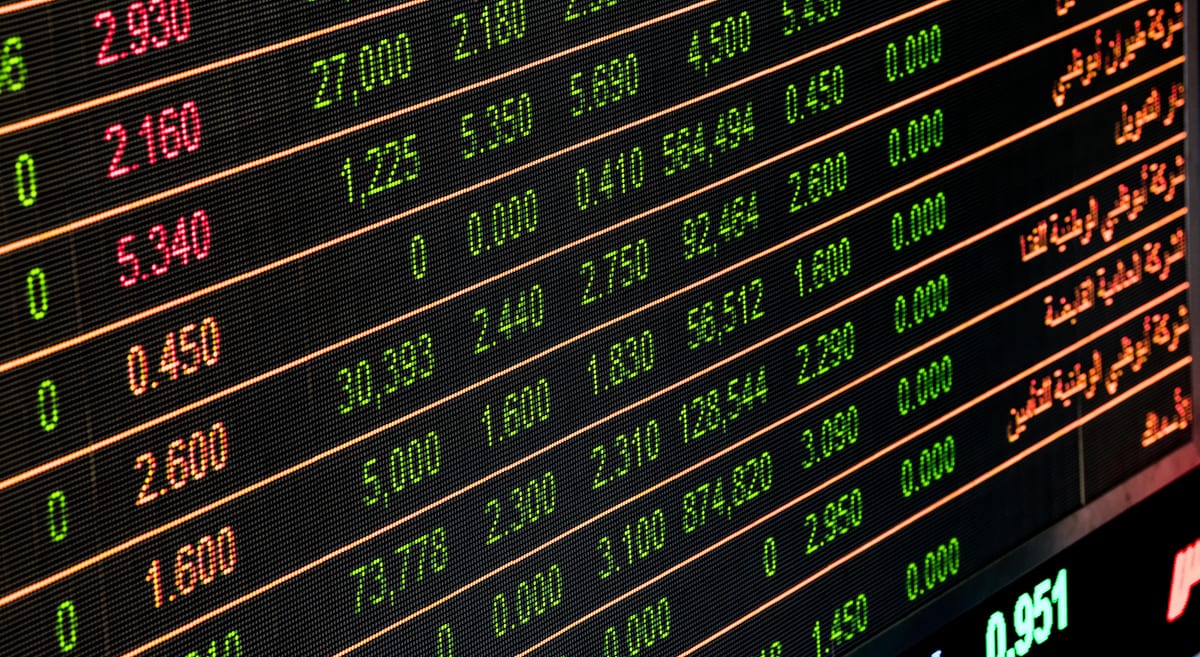
On 6 November, Wall Street logged its worst session since 2020 as anxiety over returns from artificial-intelligence spending triggered a selloff in Nvidia and other technology shares. The Nasdaq led the decline, and pressure moved through Asian markets in the next time zone: Seoul's Kospi fell, and regional indices opened lower. Indian benchmarks opened steady and stayed there.
The divergence caught attention precisely because it was not supposed to happen. For much of the past two years, Indian technology stocks have moved in sympathy with the Nasdaq; when American investors soured on AI, the risk was that an emerging market with large IT exporters would follow. That did not occur. The reason, as NDTV's business desk reported, was the sudden return of foreign institutional investors.
"Perhaps the biggest reason behind India's market resilience is the sudden return of foreign institutional investors."
That single sentence carries weight. Foreign institutional investors set marginal prices in Indian large caps. Their return changes the character of the trading day, not just its direction. When global capital turns risk-averse, markets with thin domestic ownership buffers crack first; India has spent years cultivating a retail and mutual-fund base that can absorb part of the shock, even if it cannot fully replace foreign flows.
Domestic mutual fund flows through systematic investment plans have changed Indian market participation over the past decade. These are sticky, contractual flows that continue through short-term volatility; they do not reverse on a single overnight selloff in New York. This is one reason Indian indices can absorb a Wall Street shock more easily than markets where retail participation is thinner or more momentum-driven. The presence of domestic institutional buyers does not eliminate dependence on foreign capital, but it reduces the amplitude of panic.
India's benchmark indices lean toward domestic-facing sectors: banks, capital goods, consumer staples, and energy. These are not the semiconductor and platform companies that have carried the US market upward and are now dragging it down. A fall in Nvidia's share price hits the Nasdaq disproportionately because Nvidia and its peers occupy an unusual share of that index; no equivalent concentration exists in the Indian market. India does have a large IT services sector, but services firms trade on different logic. They sell project delivery and labour; they are not valued on the promise of exponential AI capital expenditure returns. A selloff in Nvidia does not directly reprice Indian IT services stocks the way it reprices the Nasdaq.
Still, the decoupling is real but incomplete. The Indian IT pack is exposed to the same global AI-spending sentiment that rattled Wall Street, because these companies earn much of their revenue from American clients. If US firms cut technology budgets because AI returns look uncertain, Indian IT earnings expectations will take a knock even if the broad indices hold up. The resilience at the index level is a resilience of weights, not of sectors. A broad technology correction would eventually find its way into Indian IT order books, and from there into earnings estimates. The current calm is not a guarantee that the sector can ignore what is happening in Silicon Valley.
The underlying macro setting helps explain why foreign institutional investors returned at this moment. Growth in India has stayed above most emerging-market peers, inflation remains within a manageable band, and the current account is not flashing stress. These are not new facts, but they matter more when US technology valuations look stretched and the AI trade appears vulnerable. A foreign institutional investor facing volatility in the Nasdaq does not have to move capital to India; but if it is going to move capital anywhere in Asia, Indian equities now look less risky than markets whose export engines are tied more directly to US tech demand. The NDTV report does not specify the scale of the FII return, and neither the Reserve Bank of India nor the Securities and Exchange Board of India has issued a statement on the flows. None is needed. The resilience is an effect of private capital allocation, not official direction.
Sustained foreign inflows also support the rupee and help finance India's current account deficit, which matters when crude oil prices and remittance flows move in the wrong direction. A stable currency lowers imported inflation and gives the central bank room to manage domestic rates without chasing offshore sentiment.
The IT overhang
The information technology pack cannot fully decouple from the Nasdaq. Its order books run on the same AI-spending cycle that just rattled Wall Street. A sustained pullback in US technology budgets would work through Indian IT earnings with a lag, even if the benchmark indices remain insulated by their financial and domestic sectors. The index-level calm is not a clean bill of health for the entire market; it is a weighted average that hides sectoral vulnerability. Investors who treat the Nifty's stability on Thursday as proof that India has no AI exposure are making a category error. The exposure is narrow but present.
Building a deeper floor
India should use this window of foreign institutional confidence to widen its domestic equity base. Provident funds, insurers, and mutual funds have room to increase their equity exposure within existing prudential limits; that shift would cushion the next global shock. The Securities and Exchange Board of India and the Reserve Bank of India already monitor concentration in derivative and cash markets. The task is to ensure that if foreign flows reverse, the reversal is orderly rather than sudden. A self-sustaining domestic capital base remains the structural goal; foreign capital is welcome, but it should not be the only buyer that matters.
The test will come not on a day like Thursday, when Indian markets shrug off a Wall Street shock, but over the next quarter, when the durability of FII inflows becomes visible. If this is the start of a structural reallocation away from expensive US technology assets and toward relatively cheaper Indian growth, the decoupling could persist. If it is merely a tactical hedge, the next AI-related selloff will find Indian indices less insulated. Indian investors should watch the composition of flows, not just their direction; what has returned can leave, and the task of policy is to make sure the exit, when it comes, does not become a rout.