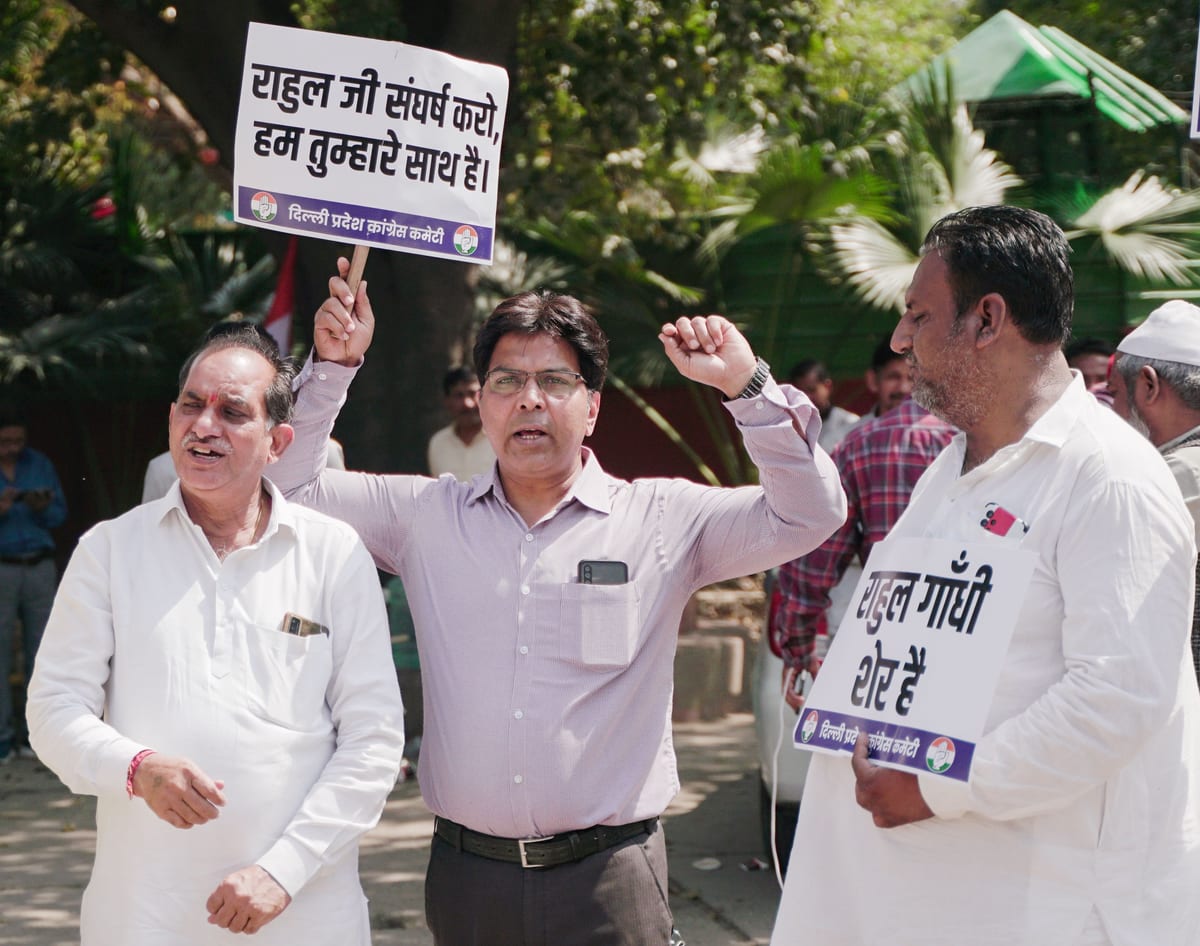
When students marched in Delhi against alleged irregularities in the NEET undergraduate examination, the pressure landed not just on regulators and politicians but on a generation of content creators whose audiences — young, digitally native, politically alert — expected them to respond. Some spoke. Some didn't. Both choices had costs. The episode raised a question that India's ₹2,200-crore creator economy has been quietly avoiding: when commercial incentives and civic responsibility point in opposite directions, which one wins?
So far, the answer is usually commerce. The implications run well beyond any individual creator's follower count.
The Double Bind
Industry observers note that creators occupy a different position today than they did five years ago. Audiences no longer follow creators purely for content — they follow them because they feel connected to the individual behind it. That intimacy creates an expectation: that creators will have opinions on issues that matter.
Fashion and lifestyle creator Jigisha Joshi, who spoke out during the protests, described the calculus plainly. She lost followers. Some people disagreed with her. Her brand partners, she said, understood the difference between spreading hate and expressing an honest opinion. But she was careful to note that the outcome depends on the specific brands involved — not every creator works with brands that draw that distinction.
Shivani Wagh, another fashion and lifestyle creator, framed it in civic terms: creators are citizens first, and having a political opinion is part of that citizenship. The commercial consequence depends on whether a creator's stance aligns with — or disrupts — the risk profile of the brand paying for the collaboration.
That last phrase is where the structural problem lies. Brand risk profiles tilt toward silence on anything contested. A consumer goods company selling biscuits to 400 million households does not want its face associated with commentary on examination fraud. The incentive runs entirely one direction: say nothing, collect the fee.
Samay Kirad's Point About Distribution Channels
Samay Kirad, co-founder of B.I.G Media Co, told Mint that creators are no longer merely distribution channels — they have become something more complex, with credibility as a commercial asset. Brands now evaluate long-term credibility, consistency and fit alongside reach and engagement metrics.
This matters. If brand managers price creator credibility into their partnership decisions, then a creator who stays silent on an issue their audience cares about may erode that credibility over time — and therefore depreciate the commercial asset the brand thought it was purchasing. The logic of silence-as-brand-safety is less stable than it appears.
What Kirad's observation doesn't resolve is the timing mismatch. Credibility erodes slowly. Brand deal revenue arrives immediately. For a creator operating month to month on partnership income, the short-term arithmetic still favours discretion over candour.
What the NEET Case Actually Tests
The NEET controversy — involving alleged paper leaks in an examination that 24 lakh candidates sat for — was not a marginal political controversy. It was a policy failure at the heart of India's education system, touching every family with a child preparing for medicine. It triggered CBI investigations and prompted restructuring at the National Testing Agency. The government's handling of the episode became a matter of active public contention.
In that context, creator silence was not neutral. It was a choice with measurable social cost: delayed and diluted public pressure on institutional accountability, precisely when the audience most dependent on that accountability — young, exam-sitting, social-media-consuming Indians — was watching creators for cues on how to think about what had happened to them.
This is where the creator economy's commercial logic collides most sharply with the functions traditionally performed by journalism. A newspaper editor deciding whether to run an editorial on the NEET crisis operates inside an institutional framework with its own norms, editorial independence protections, and accountability mechanisms. A creator making the same decision operates inside a framework where the only accountability is to the brand manager who might pull the next deal.
India's regulatory architecture for creators — built primarily around the ASCI code's disclosure requirements and the IT Rules 2021's content governance provisions — addresses what creators say when paid. It says nothing about the civic cost of what they choose not to say. The Observer Research Foundation's Digital Economy programme has flagged that India's influencer regulation framework lags behind the scale of the creator economy, leaving no clear liability or responsibility norms for creators who suppress public interest content. This is a governance gap, not just a commercial one.
The Advertising Market's Quiet Veto
India is building one of the world's larger digital advertising markets. The incentive architecture of that market — where edtech companies, fast-moving consumer goods brands, and financial services firms are among the heaviest spenders — structurally disadvantages political commentary. Edtech companies in particular occupy a peculiar position: they advertise on the same platforms where creators were commenting on NEET, selling exam preparation products to the very students affected by the irregularities. The commercial relationship between edtech advertisers and creators commenting on examination integrity is not merely awkward. It is a direct conflict of interest, quietly resolved each time a creator chooses not to post.
No regulation currently requires a creator to disclose that commercial relationships shaped their editorial silence. The ASCI framework mandates disclosure of paid content. It creates no equivalent obligation for undisclosed non-content — for the post that was never made because a brand manager sent an informal note. That asymmetry deserves examination as India's creator economy matures into a primary news-consumption infrastructure for young citizens.
The Press Council Parallel
India's Press Council — imperfect and underpowered, but structurally present — establishes the principle that journalism operates within a civic responsibility framework that coexists with commercial imperatives. No equivalent norm applies to creators, even those with audiences that dwarf regional newspapers. Analysts working on platform governance have suggested a tiered civic responsibility standard for creators above defined follower or revenue thresholds: not a state licensing regime, which would carry obvious risks, but a self-regulatory framework modelled loosely on how broadcast media operates under the News Broadcasting and Digital Standards Authority.
Whether such a framework is politically viable is a separate question. What is analytically clear is that the current architecture — disclosure rules for commercial content, nothing for civic silence — systematically undervalues the public interest functions that high-reach creators now perform, whether they intend to or not.
What Audiences Already Know
The creators who stayed silent during the NEET protests were not let off the hook by their audiences. Joshi noted that creators who chose silence were questioned, criticised, and sometimes unfollowed. The audience is already performing a rough accountability function — penalising silence on issues they consider nationally significant.
That audience pressure is probably the most immediate disciplining mechanism available. It works imperfectly and asymmetrically: audiences with strong political views punish silence on their issues while ignoring silence on others. But the underlying dynamic — that civic credibility is now a component of creator commercial value — suggests the market is beginning to price in what regulation has not yet codified.
The NEET episode is a useful stress test because the issue was not ideologically ambiguous. Examination integrity affects students across every demographic and political persuasion. A creator commenting on it was not taking a partisan position; they were performing the basic accountability function that any journalist covering education would perform. The fact that even this relatively uncontroversial civic engagement triggered commercial anxiety among creators reveals how far the pendulum has swung toward brand safety as the dominant logic of India's digital information ecosystem.
India is building its digital public sphere at extraordinary speed, with a young population that receives more of its civic information from creators than from legacy media institutions. The structural question that deserves a policy answer — not just a market answer — is whether a ₹30,000-crore advertising market whose incentive architecture discourages accountability journalism can coexist with the kind of informed citizenry that a country at India's stage of democratic maturation actually needs.