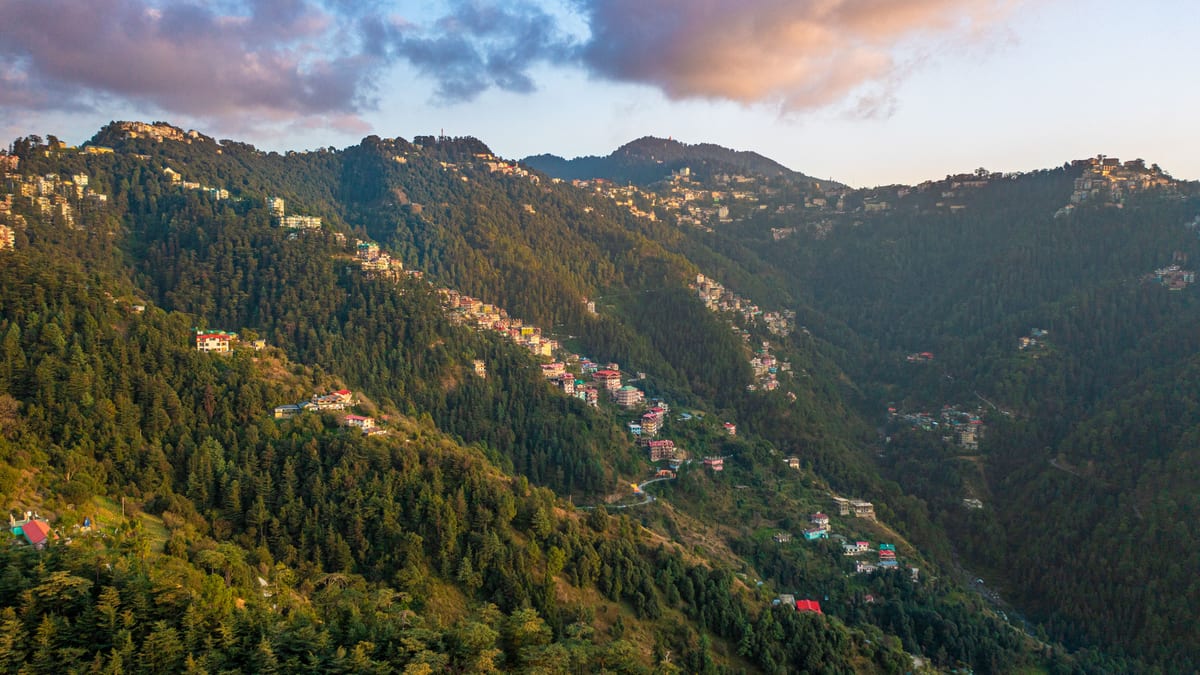
There are places in India that do not ask you to imagine the past. They simply place you inside it. The Hidimba Devi Temple in Manali, Himachal Pradesh, is one such place. Standing in a clearing of ancient deodar cedar trees, with the Kullu valley's mountain walls rising on all sides and prayer flags trembling in the cold air, you feel less like a tourist and more like a visitor who has arrived at a conversation that began long before you were born and will continue long after you leave.
A Goddess Older Than Temples
To understand Hidimba Temple, you must first understand Hidimba herself. In the Mahabharata, she is the rakshasi — a forest-dwelling demoness — who falls in love with Bhima, the second of the Pandava brothers, during their forest exile. She becomes his wife and bears him a son, Ghatotkacha, who later fought in the Kurukshetra war. In most readings of the epic, Hidimba is a figure of transformation: a being from the wild who chooses dharma, love, and sacrifice over the nature she was born into.
The people of the Kullu valley have venerated her not as a minor character in someone else's story, but as their own goddess, their own ancestor, their own protector. She is Hidimba Devi — the divine mother of these mountains. This distinction matters enormously. This is not a temple built to commemorate a myth. It is a temple built because a goddess is believed to be present here, in this forest, in this valley, right now.
The Architecture: A Pagoda That Belongs to the Himalayas
The temple was built in 1553 CE by Raja Bahadur Singh, the ruler of Kullu, and its design announces that the Himalayas operate by their own architectural grammar. The structure rises in four tiered, sloping rooftops stacked like a wooden pagoda — each layer smaller than the one below, each covered with timber shingles in the traditional hill style. The topmost tier is crowned with a brass finial. The entire tower is constructed from timber and stone, materials pulled from the very landscape that surrounds it.
The entrance doorway is remarkably ornate, with carved wooden panels depicting gods, goddesses, animals, and foliage in detailed work. These carvings are not decorative flourish. They are scripture in wood, encoding stories and symbols that the literate and illiterate alike could read through visual devotion. Inside the sanctum, the deity is not represented through a sculpted idol in the conventional sense; instead, the footprints of Hidimba Devi, carved into a rock, form the sacred focus of worship. In India's oldest traditions, the divine does not always require an anthropomorphic form to be fully, achingly present.
The Living Temple: Ritual, Festival, and Community
What separates Hidimba Temple from a heritage site frozen in amber is the pulse of living faith that moves through it daily. The temple is an active place of worship. The surrounding Dhungri Van Vihar — the protected forest in which it stands — is itself considered sacred. Devotees arrive in the early mornings, offerings are made, bells are rung, and the cycle of puja continues as it has for centuries.
The grandest expression of this living faith is the Hidimba Devi Festival, held annually in May, when the goddess is celebrated with traditional music, dance, and ceremonial processions. The Kullu Dussehra, one of Himachal Pradesh's most celebrated festivals, also connects to this tradition. Hidimba Devi's chariot is among those that process through the valley, affirming her place as a presiding spirit of the entire region's cultural life.
The Civilisational Moment: Why This Temple Matters
India has no shortage of ancient temples. What makes Hidimba's shrine remarkable is what it demonstrates about how Indian civilisation carries its stories forward. The Mahabharata is not studied here as literature — it is lived as living memory. A woman from an epic composed over two thousand years ago is worshipped as a real, present deity by real, present people. The forest she was said to inhabit is protected because it is her forest. Her footprints are touched because she walked here.
This is the civilisational continuity that India's heritage embodies: not preservation, but perpetuation. The story did not end. It simply moved into the next generation, and the next, and the next — until it arrived, still warm, at this morning, in this forest, with these prayer bells.
Planning Your Visit: Practical Notes for the Thoughtful Traveller
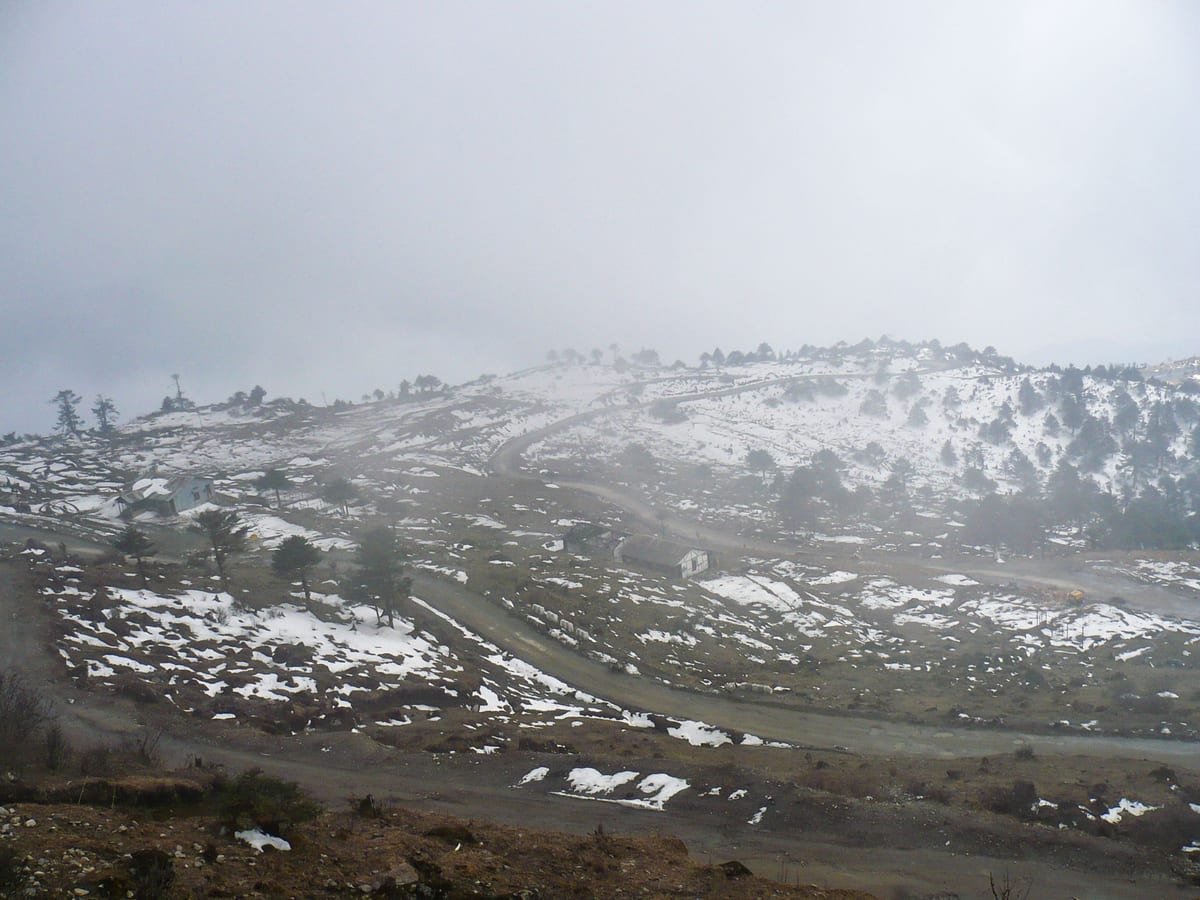
Best Season: The temple is accessible year-round, but the most rewarding visits come between May and June, when the forests are lush and the Hidimba Devi Festival brings the valley to ceremonial life. The post-monsoon months of September and October offer crisp mountain air and clear skies. Winter visits (December to February) bring heavy snowfall that transforms the deodar forest into something otherworldly, though access can be restricted.
How to Reach: The temple is located approximately 2.5 kilometres from Manali town centre in the Dhungri area and is easily reachable by taxi, auto-rickshaw, or a pleasant walk. Manali itself is well connected by road from Chandigarh (approximately 310 km) and Shimla (approximately 270 km). The nearest airport is Bhuntar (Kullu-Manali Airport), about 50 kilometres away, with flights from Delhi and other major cities.
Nearby Attractions: The temple's immediate surroundings offer their own rewards. The Dhungri Van Vihar forest is ideal for quiet walks. Nearby, the Manu Temple dedicated to the sage Manu, considered the progenitor of humankind in Hindu tradition, sits just a short walk away. Club House, Van Vihar National Park, and the old town of Manali with its Tibetan monasteries are all within easy reach. For those willing to venture further, the Rohtang Pass and Solang Valley offer dramatic high-altitude landscapes.
Visitor Etiquette: As with all active temples in India, visitors are expected to remove footwear before entering the shrine, dress modestly, and maintain a respectful quietude inside the sanctum. Photography is generally permitted in the outer precincts, but be attentive to the mood of the space and the presence of worshippers at prayer.
A Final Word: Come Ready to Listen
Hidimba Temple will not overwhelm you with grandeur the way a cathedral might. It will not dazzle you with scale. What it offers is something rarer: a genuine sense of continuity. Standing here, in the cold-scented air beneath trees that have watched centuries of devotion, you feel connected to something that has never been interrupted. India's sacred heritage is not behind glass. At Hidimba, it is right here, breathing beside you.