
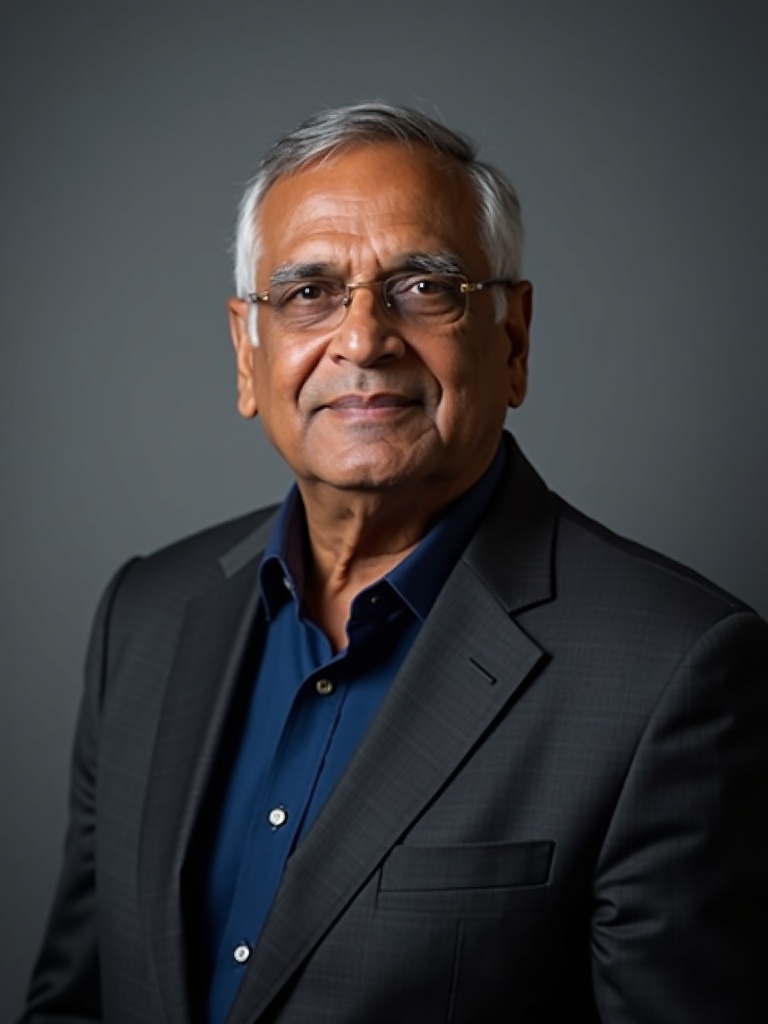
Rajiv Kulkarni has covered Indian politics for three decades, moving between Delhi's corridors and the country's state capitals. His column is read for its institutional memory — the ability to place today's political contests inside longer arcs that most daily reporting cannot see.
Recent work
Indigenous Fleet Support Ship Launch Advances Navy's Blue-Water Reach
Defence Minister Rajnath Singh launched India's first indigenously built 43,500-tonne fleet support ship at Hindustan Shipyard Limited in Visakhapatnam on Tuesday. The vessel will refuel and resupply warships at sea, allowing the Navy to operate longer and farther across the Indian Ocean Region. The launch advances the Atmanirbhar Bharat and Make in India programmes in defence shipbuilding.
RSS Revives Nationwide NRC Call; Owaisi Warns of Disproportionate Burden
The RSS has demanded a nationwide National Register of Citizens, linking it to population imbalance and national security. Hyderabad MP Asaduddin Owaisi calls the proposal '100 times worse' than the Special Intensive Review, and the debate lands amid an Opposition push to remove the Chief Election Commissioner.
Bank Strike Deferred: Public Sector Banks Buy a Bargaining Window
The United Forum of Bank Unions deferred its 28–30 September strike after the Indian Banks' Association agreed to form a high-level committee. The move averts a shutdown during quarter-end tax remittance and salary credit. Core differences over a five-day banking week, performance-linked incentives, and wage revision remain unresolved.
IIT Bombay Suicide: Faculty Chief Says Professor 'Did His Job', Rejects Caste Claim
IIT Bombay's faculty forum chief has publicly defended the professor at the centre of Sahil Wakode's death, dismissing caste-discrimination allegations and pointing to the student's non-approach to the SC/ST cell. The defence raises questions about institutional redress in India's premier technical institutes.
Election Commission Hands Mamata Faction Football Player, Rebels Envelope After TMC Freeze
The Election Commission of India allotted separate names and symbols to the rival Trinamool Congress factions on Friday, a day after freezing the party's original identity. Mamata Banerjee's group gets 'Mamata All India Trinamool Congress' and a Football Player; Arup Roy's rebels get 'Democratic Trinamool Congress' and an Envelope. Both groups are recognised in West Bengal, Meghalaya and Tripura until the leadership dispute is resolved.
Trump EPA Ends Climate Rules for Power Plants, Dismantling Federal Emissions Effort
The Environmental Protection Agency has finalized a rule rescinding carbon controls on coal and gas power plants, and proposed repealing the finding that their greenhouse gases are dangerous. The move ends federal regulation of the largest industrial source of US emissions, with lawsuits expected.
Iran President’s BRICS Visit and the India-China Thaw Converge in Delhi
Iran's president is in New Delhi for the BRICS summit, speaking on West Asia and bilateral ties with India, while China Southern Airlines announces the resumption of Guangzhou-Delhi flights after a six-year gap. The parallel developments show India hosting a grouping that spans contentious neighbours and active conflicts.
MEA Condemns Houthi Strikes in Saudi Arabia as Bab-el-Mandeb Faces New Threat
India has formally condemned Iran-backed Houthi attacks on Saudi territory that injured 73 civilians, warning that strikes threaten freedom of navigation in the Bab-el-Mandeb. The escalation raises stakes for Indian expatriates and energy flows through the Red Sea.
ISRO's GSLV-F17 Puts EOS-05 in Orbit, Sharpening India's Disaster and Surveillance Edge
ISRO launched GSLV-F17 carrying the EOS-05 earth-observation satellite from Sriharikota on Friday. The mission places India's first geo imaging satellite in orbit to support disaster management and surveillance. The launch strengthens sovereign data capability for India's disaster-prone coasts and Himalayan belts.
India-Uzbekistan Uranium Deal Adds New Link to Nuclear Fuel Chain
Prime Minister Narendra Modi confirmed on Sunday that India and Uzbekistan will establish a long-term uranium supply arrangement. The move adds a Central Asian source to India's nuclear fuel chain at a moment when energy security and diversification are central to the country's power expansion plans.
A Napkin in Glasgow Carries the Weight of India's Northeast
When Olympic medallist Lovlina Borgohain noticed that napkins at a Glasgow restaurant had printed a map of India without its Northeast, she spoke out — calmly, pointedly, and on camera. The episode, unfolding just after India's most successful-ever boxing campaign at the 2026 Commonwealth Games, illuminates a pattern of geographic omission that carries implications far beyond a printing error. The restaurant apologised. The deeper question lingers.
Parliament Passes Anti-Paper Leak Law: Criminalising Exam Fraud Is Only Half the Battle
Parliament has passed the Public Examinations (Prevention of Unfair Means) Amendment Bill, 2026, with PM Modi hailing it as a decisive strike against exam mafias. The legislation introduces stringent penalties for organised examination fraud. But closing the law-enforcement gap is only one part of fixing a system whose structural vulnerabilities enabled the 2024 NEET scandal in the first place.
BHAVYA Chemical Parks: India Bets Rs 3,030 Crore on Breaking China's Grip
The Union Cabinet has approved the BHAVYA scheme, allocating Rs 3,030 crore to establish three dedicated Chemical Parks through a Challenge Route mechanism that pits state governments against each other for central funding. The scheme targets India's structural dependence on Chinese chemical imports and aims to create plug-and-play manufacturing clusters for specialty, bulk, and downstream chemicals. Whether it delivers depends less on the funding envelope and more on governance design at the state level.
Parliament Street, 118 Injuries, and the Protocol India Has Never Written
Delhi Police reported 118 security personnel injured and 70 protesters detained during the Cockroach Janta Party's 'Sansad Chalo' march on July 21, with five FIRs filed for rioting and assault on public servants. The confrontation, triggered by demands over the NEET paper leak controversy, has reopened a persistent institutional question: India has no publicly codified framework governing how political marches near Parliament are managed, leaving every such incident hostage to competing narratives. The gap hurts both law enforcement legitimacy and India's democratic credentials.
Ram Mandir Donation Row Exposes the Governance Gap in India's Religious Trusts
Allegations of donation misappropriation at the Shri Ram Janmabhoomi Teerth Kshetra Trust have triggered a political storm, with Opposition parties demanding an independent probe and BJP accusing its rivals of targeting Hindu faith. The trust convened an emergency meeting at 3 pm on July 6 inside the temple complex. Beyond the political theatre, the episode surfaces a structural problem India has deferred for decades: the absence of a unified, enforceable governance framework for large religious endowments.
Guardian of the Blue Horizon: How Seychelles Validated India's Indian Ocean Strategy
Prime Minister Modi received Seychelles' highest environmental honour, the 'Guardian of the Blue Horizon', during a three-day state visit. The award recognises his climate and sustainable development leadership. Beyond the ceremony, it marks a meaningful validation of India's sustained engagement with Indian Ocean island states — and raises the question of whether New Delhi can convert symbolic capital into durable maritime governance architecture.
Modi-Macron Partnership Advances India's Innovation Sovereignty Through Strategic Alliance
Prime Minister Modi and French President Macron jointly inaugurated the Bharat Innovates 2026 conclave in Nice, marking a significant milestone in India-France technological cooperation. The three-day event brings together startups, innovators, and investors from across the globe, underscoring India's strategy to position itself as a global innovation hub while deepening partnerships with key Western allies.
Trump Immigration Surge Targets New York as World Cup Approaches
The Trump administration plans to flood New York City with immigration enforcement agents, escalating federal-state tensions as the city prepares to host World Cup matches. The move threatens to disrupt established immigrant communities and raises questions about enforcement priorities during major international events.
India's Power Grid Stabilises as Monsoon Onset Promises Agricultural Relief
India's power demand has cooled significantly following pre-monsoon showers and receding heatwaves, with peak demand dropping from over 260GW to 242GW. Power shortages have fallen from 16 million units to nearly zero, easing strain on the national grid ahead of the expected June 4 monsoon onset.
Netanyahu Singles Out India as Israel's Most Loyal Global Partner
Israeli Prime Minister Netanyahu described India as providing 'absolutely crazy love' for Israel, highlighting the country as his most supportive global audience. The remarks underscore the strategic partnership between the nations while raising questions about India's diplomatic positioning in West Asia.
India Reinforces BRICS Counter-Terror Framework as Platform Matures Into Decade-Long Institution
India hosted the 11th Annual BRICS Counter Terrorism Working Group meeting in New Delhi, marking 10 years since the framework's establishment. The gathering brought together senior counter-terrorism officials from all ten BRICS member countries to discuss emerging challenges and strengthen multilateral cooperation against terrorism.
India's Fuel Price Surge Exposes Energy Security Cracks as Iran Crisis Deepens
Indian oil marketing companies raised petrol and diesel prices by ₹3 per litre for the first time in four years as global crude prices surge past $100 per barrel due to US-Israeli strikes on Iran and subsequent supply disruptions through the Strait of Hormuz. Further increases of ₹2-4 per litre are expected as refiners face mounting losses.
India's BRICS Chairship Tests Multipolarity Ambitions With Iran, UAE Participation
India hosts BRICS Foreign Ministers' Meeting on May 14-15, 2026, with participation from Iran and UAE as new partners. The gathering focuses on global governance reforms and multilateral system restructuring, marking a key test of India's leadership in promoting multipolarity.