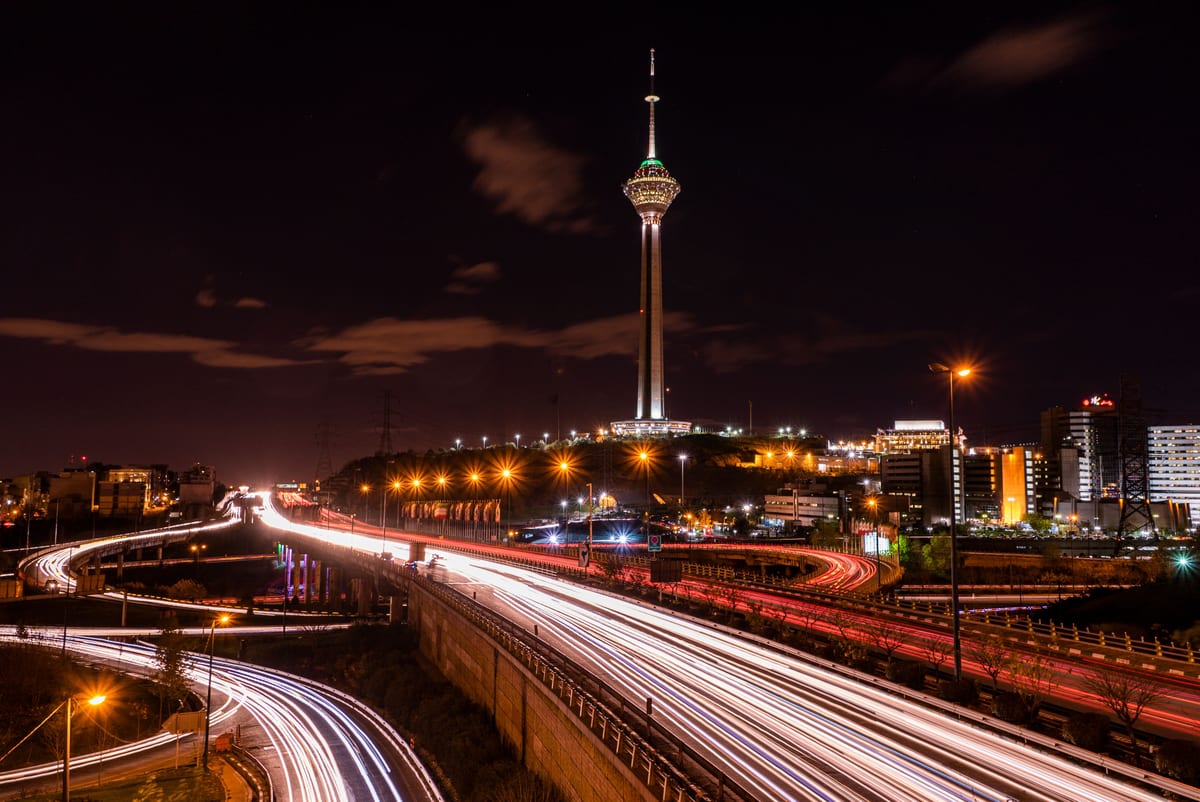
The crowd gathered at Tehran's Grand Mosalla on July 5 under a punishing summer sun, attendees doused with water from cooling vehicles as they filed through the gates for the funeral of Supreme Leader Ali Khamenei. The ceremonies were among the largest public gatherings Iran has seen since Khamenei and four members of his family were killed in Israeli airstrikes on February 28, reportedly conducted on the basis of American intelligence. Three of Khamenei's brothers stood at the bier. One figure was absent: Mojtaba Khamenei, his son and the man whom a significant constituency within the Revolutionary Guards had positioned as the natural heir to the Supreme Leadership.
That absence — unconfirmed in its cause, unexplained by Iranian state media — shapes the entire question of what comes next. In Iranian factional politics, where presence and proximity to a body carry enormous symbolic weight, Mojtaba's non-appearance at the Grand Mosalla is not minor. It signals something larger about the succession contest itself.
The Architecture of an Uncertain Succession
Iran's system of clerical governance was designed to prevent the kind of monarchical succession that Mojtaba's potential elevation would represent. The Assembly of Experts holds formal authority to select a new Supreme Leader, but the Revolutionary Guards, the intelligence services, and the senior clerical establishment in Qom each carry informal veto power over any outcome they find unacceptable. Mojtaba Khamenei had been seen by hardliners as guaranteeing ideological continuity; his absence from the funeral proceedings in Tehran has sharpened speculation that his candidacy is already encountering structural resistance.
What emerges is not simply a constitutional question about Iran. It is a geopolitical opening — and New Delhi, if it reads the moment correctly, is positioned to move through it.
Chabahar Is Not Peripheral Infrastructure
India's interest in Iranian political outcomes is not abstract. The Chabahar Port on Iran's southeastern coast represents years of investment, diplomatic capital, and strategic patience. Through Chabahar, India has built an alternative surface route to Afghanistan and Central Asia that bypasses Pakistani territory entirely. The International North-South Transport Corridor routes freight from Indian ports through Iran toward Russia and Europe, and depends on the same Iranian political scaffolding.
Analysts at Observer Research Foundation have argued — and Harsh V. Pant has made the point with particular force — that India must treat Chabahar as a red line in its Iran policy regardless of who governs in Tehran, insulating infrastructure investments from factional politics. That argument was made in calmer times. It acquires genuine urgency now. The port cannot be un-built; the route cannot be abandoned; and the succession contest unfolding in Tehran will produce a government that India must work with.
The strategic fault-line is this: every month that Tehran remains leaderless or factionally paralysed is a month in which Chabahar's full operationalisation stalls, investment decisions are deferred, and Chinese infrastructure diplomacy — already active across Central Asia and the Persian Gulf — advances into the vacuum. If a prolonged internal power struggle produces a Tehran that tilts decisively toward Beijing in exchange for political insulation, Indian interests in the INSTC framework face meaningful marginalisation. Takshashila Institution analysts have flagged precisely this risk: that post-Khamenei reconfiguration could reorder Iran's external partnerships in ways that disadvantage India structurally.
The Mojtaba Signal and What It Means for Energy
The succession outcome carries energy implications as well, though they cut in a direction that is not necessarily adverse for India. If Mojtaba — widely characterised as an ideological hardliner deeply hostile to the West — is sidelined, the emerging Iranian leadership may be more technocratic in character. A pragmatic administration in Tehran, willing to pursue a negotiated reduction in sanctions exposure, could re-open energy trade avenues that carry genuine benefit for India. India has been among Iran's largest crude oil customers, and the sanctions regimes imposed since 2018 have forced a significant restructuring of Indian energy procurement toward more expensive Gulf and Atlantic Basin suppliers.
The recent IWE analysis of India's fuel pricing noted that oil marketing companies were still processing costlier crude bought during the West Asia crisis even as global benchmarks fell following a US-Iran agreement to reopen the Strait of Hormuz. That pricing overhang is a direct consequence of the supply disruption that Khamenei's death — and the Israeli strikes that caused it — produced. A more tractable Tehran, willing to negotiate re-entry into international energy markets, would ease that pressure over time. The connection is not immediate, but the directional logic is clear.
New Delhi's Diplomatic Posture: Engagement Across Factional Lines
India's practice in transitions of this kind — and its experience with Gulf monarchies, Central Asian republics, and African governments — is to engage the successor government regardless of factional outcome, anchoring the relationship in bilateral economic deliverables rather than ideological sympathy. Vivek Katju, the former MEA secretary who handled the Pakistan-Afghanistan-Iran division, has observed that India's Iran policy is structurally driven by energy and connectivity imperatives, not by the ideological character of whoever sits in Tehran's supreme office. That instinct is correct. It is also insufficient on its own.
What the situation demands is proactive engagement, not passive continuity. India needs to signal to whichever grouping is consolidating authority in Tehran — whether a clerical consensus candidate from Qom, a technocratic figure acceptable to the Guards, or a reformed configuration that surprises current expectations — that Chabahar and INSTC remain concrete Indian commitments. That signal is most effective when delivered diplomatically, early, and without waiting for the succession to fully resolve. Iran's factional winners will take note of who came to them before the outcome was certain.
There is also an external dimension that New Delhi cannot defer. Chabahar's utility is constrained by American sanctions on Iran, and India has in the past sought and received specific carve-outs for Chabahar-related activity. Pressing Washington for a renewed and clearly defined sanctions carve-out — one that insulates Indian infrastructure investment from collateral designation risk regardless of Tehran's new political configuration — is not a favour India is asking. It is a strategic interest that aligns with American goals of keeping India actively present in a region where Chinese influence is expanding.
The Gulf Diaspora Variable
Ambassador Sujan Chinoy of IDSA has emphasised that West Asia stability constitutes a tier-one Indian foreign policy priority. The reason is not only energy. The nine million-strong Indian diaspora working across Gulf states — in construction, services, healthcare, retail — is acutely sensitive to regional security conditions. A succession struggle that produces sustained instability in Iran, and potentially draws in regional actors, raises the risk level for that diaspora even in countries not directly involved in Iranian politics. India's interest in a settled Iranian succession is a consular and humanitarian interest that sits alongside the strategic one.
The funeral at the Grand Mosalla was enormous, solemn, and politically charged in ways that the television images of water sprays and dense crowds do not fully convey. Khamenei's three brothers stood at the bier. His son did not. In Iranian political signalling, that staging communicates something about who controls the next act — and India, which has too much invested in the Iranian stage to watch from a comfortable distance, needs to be in position before the next scene begins.