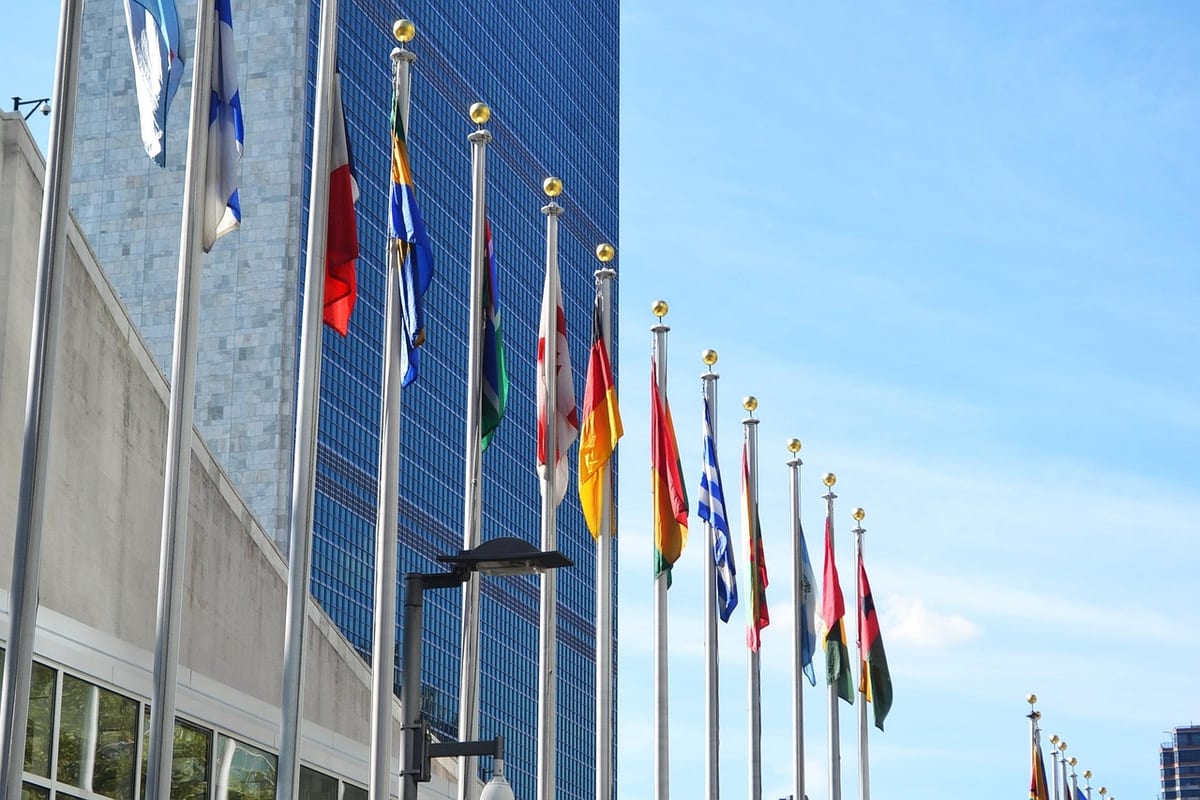
The UN Security Council convened an open debate on Tuesday on sexual violence in conflict, shaped by mounting evidence that warring parties across multiple theatres continue to deploy rape as a deliberate military instrument. The debate exposes a gap between the international community's normative vocabulary and its enforcement capacity.
The formal architecture is well established. A succession of Security Council resolutions since 2000 has created a legal and institutional framework around the Women, Peace and Security agenda — naming conflict-related sexual violence a war crime, establishing monitoring mechanisms, and calling on member states to prosecute perpetrators through national and international judicial channels. Yet reports from active conflict zones document systematic abuse with near-total impunity. The Council debates; the crimes continue. The open debate on Tuesday is both a renewed promise to survivors and an inventory of what that promise costs.
The Enforcement Gap at the Heart of the Debate
The structural problem the Council has circled for years is straightforward: sexual violence in conflict sits at the intersection of international humanitarian law, national judicial capacity, and geopolitical contestation about who gets investigated and by whom. The United Kingdom, speaking through its Deputy Permanent Representative Ambassador Kate Foster, stated that rising rates of conflict-related sexual violence are appalling — language that captures the moral register of these debates without necessarily resolving the procedural dispute beneath it.
That dispute is substantive. Western delegations have pushed for expanded mandates for UN monitoring bodies, for referrals to the International Criminal Court, and for named accountability lists. Troop-contributing countries from the Global South — and particularly states that combine normative endorsement with skepticism of extraterritorial jurisdiction — read those proposals as a risk that accountability mechanisms become instruments of selective pressure rather than universal principle: applied to adversaries of Western powers with rigor, and to allies with discretion. This concern has structural grounds. The history of international criminal law offers enough asymmetric enforcement to justify it.
Where India Sits in This Architecture
India's position in this debate carries more weight than its formal speaking slot suggests. The country deploys thousands of troops in UN peacekeeping operations across some of the world's most volatile conflict zones — theatres where conflict-related sexual violence is among the most documented human rights violations. That scale of deployment is an ongoing institutional stake in how the norms being debated at the Council are written, interpreted, and applied in the field.
India has formally endorsed the Women, Peace and Security agenda and spoken in favour of accountability at multiple Council sessions. What it has resisted is the expansion of that agenda into new enforcement bodies with broad jurisdictional reach that bypass state consent. The MEA's consistent position has been that accountability must flow through existing international humanitarian law — universal in application, anchored in state cooperation, and not repurposed as a geopolitical lever. India has not signed the Call to Action on Protection from Gender-Based Violence in Emergencies, a choice that reflects its preference for state-led implementation over externally-imposed compliance frameworks.
This posture is coherent. It also carries simultaneous leverage and obligation. A country that deploys at this scale and defends the normative architecture at the Council cannot afford to treat those two roles as parallel tracks that never intersect. The leverage India derives from being a trusted, experienced, professional peacekeeping force is inseparable from the credibility of the norms it endorses. If the norms are treated as rhetorical cover rather than operational commitment, the leverage erodes.
The Credibility Compact
Sushant Singh of the Centre for Policy Research has argued that India's peacekeeping commitments oblige it to champion Women, Peace and Security norms with substance, not just with statements. An India that speaks credibly on conflict-related sexual violence at the Council — insisting on universal, impartial accountability through existing legal frameworks — strengthens the case that the Global South can lead on humanitarian protection norms without outsourcing that leadership to Western enforcement architectures. An India that uses sovereignty concerns purely as a shield against scrutiny gives the expansionists inside the system a better argument.
The distinction matters because the debate about enforcement architecture is genuinely live. The push for new treaty bodies, expanded ICC referral pathways, and named-individual accountability lists represents a real normative evolution — one that India can shape from inside the conversation or find itself shaped by from outside it. Happymon Jacob, founder of the Council for Strategic and Defense Research, has pointed out that India's participation in UNSC debates is an opportunity to frame conflict norms from a non-Western vantage point. On conflict-related sexual violence, that means articulating what accountability looks like when it is genuinely universal — when it applies in Yemen and the Sahel as readily as it applies in Ukraine, when it is measured by legal standards rather than alliance membership.
That is a harder case to make than either automatic endorsement or automatic resistance. It requires India to come to these debates with operational specifics: what its pre-deployment training covers, what its reporting mechanisms look like in the field, what its record shows. Former Foreign Secretary Nirupama Rao has made the point that India's multilateral diplomacy must translate principled positions into operational leadership. The open debate on Tuesday is precisely the kind of moment that translation is tested.
The Deeper Structural Question
Beneath the procedural arguments lies a harder question that no Security Council session will resolve: whether international humanitarian law as currently constituted can actually deter sexual violence in conflict without stronger enforcement mechanisms, or whether stronger enforcement mechanisms will be captured by the same geopolitical asymmetries that already distort the Council's other functions. Neither aspiration — universal accountability and universal application — has yet been demonstrated to coexist in the institutions that currently exist.
What the open debate can do is move the conversation toward implementation — toward the granular architecture of national prosecution, military code reform, pre-deployment training, and field reporting that makes the normative vocabulary functional rather than ceremonial. This is precisely where India's contribution, if it chooses to make one with operational content rather than procedural caution, could carry disproportionate weight. A country that brings tens of thousands of troops to some of the world's most difficult peacekeeping environments, articulates a clear accountability standard consistent with existing IHL, and demonstrates that standard through its own institutional conduct becomes a reference point for every other troop-contributing country in the Global South navigating the same terrain.
That kind of leadership — specific, operational, sovereignty-consistent — would do more to advance accountability for conflict-related sexual violence than any number of statements expressing appalment. It would also build the multilateral credibility that India's larger ambitions at the Security Council ultimately depend on. The norms being written in open debates like Tuesday's are not abstract. They govern how the world measures the conduct of the troops that enforce its peace — including the ones wearing blue helmets with India stitched on their shoulders.