
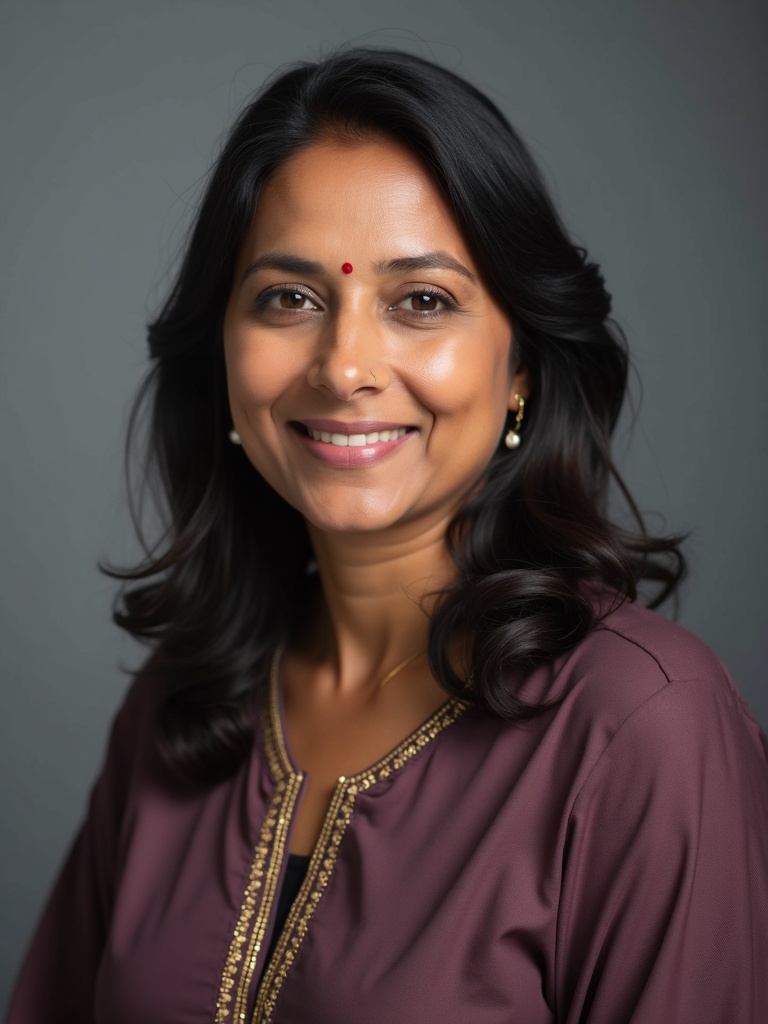
Lakshmi Iyer has reported from West Asia and North Africa for two decades. Her writing draws on a dense network of sources across the region to explain how its fault lines are moving — and why each tremor matters for India's energy, diaspora, and security interests.
Recent work
Security Council Weighs Syria's Transition as ISIS Threat Persists
The UN Security Council examines Syria's fragile transition amid reported ISIS-affiliated violence and fuel price unrest. India's counterterrorism and diaspora interests hang on whether the Syrian state can deny ungoverned space to jihadist networks.
Washington's Iran Paralysis Leaves India's Chabahar Gambit in Limbo
Reports of deep divisions among Trump's top advisers on Iran — with no consensus between hawkish military options and diplomatic tracks — have stalled US-Iran negotiations well past the timeline the White House expected. For India, the paralysis is not a spectator sport: the Chabahar Port corridor, Iranian crude supply lines, and the International North-South Transport Corridor all sit squarely in the shadow of whatever Washington decides next.
35 Million Cancers a Year by 2050: India's Burden and Its Leverage
The WHO warns that new cancer cases worldwide could reach nearly 35 million annually by 2050 without urgent action on prevention, screening, and treatment. India, already carrying one of the world's heaviest cancer burdens with oral, cervical, and breast cancers dominating a predominantly rural patient profile, sits at the sharpest edge of this projection. Yet the same country whose public health infrastructure strains under late-stage diagnoses also manufactures the affordable oncology drugs the Global South cannot do without — a tension that is, simultaneously, a strategic opening.
The Shadow War: Organized Crime Kills at the Scale of Conflict
A new UN assessment places organized crime alongside armed conflict as one of the world's deadliest threats, documenting how criminal networks now rival governments in financial power and territorial reach. The report's framing—that crime-terror convergence deserves state-level accountability, not merely law-enforcement responses—lands at a moment when India has spent years arguing precisely this case in multilateral forums. For New Delhi, the shift in global narrative is not just vindication; it is an opening.
Gaza's Shrinking Corridors and India's Expanding Diplomatic Calculus
The UN and humanitarian partners have warned that expanding Israeli control in Gaza since October's ceasefire agreement is placing civilians at greater risk and constraining aid delivery. The deterioration arrives at a moment when India's dual-track diplomacy — sustaining a deep defence partnership with Israel while publicly championing civilian protection norms — faces its sharpest test yet. How New Delhi navigates the next phase will determine whether its Global South leadership role carries substantive weight or remains rhetorical.
India Advances Global South Humanitarian Leadership Through Yemen Crisis Response
Yemen's humanitarian catastrophe deepens with 22 million needing assistance, half of them women and girls. The crisis creates diplomatic opportunities for India's Global South leadership while highlighting how New Delhi navigates humanitarian imperatives alongside strategic autonomy in the Gulf region.
Britain Expands Crisis Response Capabilities as India Shapes Global Health Governance
The UK has launched a Multi-Hazard Research Network to strengthen outbreak response and crisis preparedness, committing £5 million for Ebola research. This Western-led initiative emerges as India advances South-South cooperation in global health governance through BRICS and multilateral platforms.
Hiroshima Art Project Confronts Nuclear Memory as India Navigates Deterrence Diplomacy
Eighty years after Hiroshima, artist Sandy Walker's memorial project raises questions about how nuclear powers like India balance historical memory with strategic deterrence doctrines. The artistic work transforms atomic catastrophe into intimate remembrance, creating friction with contemporary nuclear diplomacy.
UN Peacekeepers Face Drone Threats as Lebanon Security Deteriorates
The UN Interim Force in Lebanon reports that drone activity and explosions involving Hezbollah and Israeli forces are endangering peacekeeping personnel in southern Lebanon. India, as a major troop contributor to UNIFIL, faces direct risks to its military personnel while balancing its peacekeeping commitments with personnel safety concerns.
India Elevates Vietnam Partnership as South China Sea Tensions Rise
India has upgraded its relationship with Vietnam to an Enhanced Comprehensive Strategic Partnership, the highest level of bilateral engagement, during Vietnamese President To Lam's state visit. The elevation reflects India's strategic push to counter Chinese influence in the South China Sea and strengthen maritime security cooperation in the Indo-Pacific region.