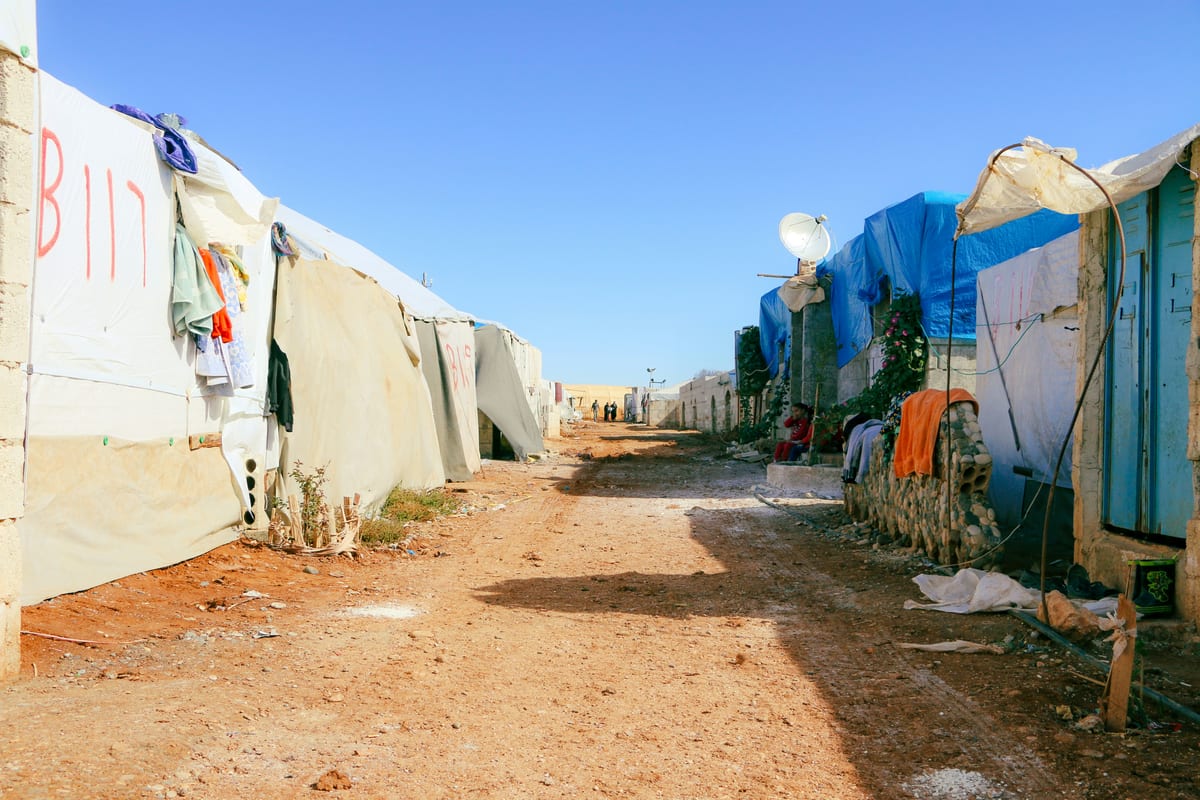
At a UN pledging conference in New York on 30 June 2026, the British government announced £23 million for the United Nations Relief and Works Agency for Palestine Refugees, known as UNRWA — the principal delivery mechanism for humanitarian assistance across Gaza and the region that now hosts refugees stretching from Jordan to Lebanon. The funding will support primary healthcare, basic education, social services, emergency food, and shelter for up to 5.9 million Palestinian refugees.
The announcement is not routine generosity. It arrives as UNRWA operates under severe constraints. 392 of the agency's staff have been killed since October 2023. In January 2026, its headquarters in East Jerusalem was demolished. Israeli legislation introduced in 2024 has restricted the agency's operational footprint, and access constraints on the humanitarian corridor into Gaza persist. The UK's pledge, made alongside support from other international partners, signals that the Western donor consensus behind UNRWA — fractured after allegations of staff involvement in the October 2023 attacks led several countries to temporarily suspend funding — has not collapsed entirely.
What UNRWA's Survival Actually Requires
UNRWA is not merely a relief operation. It is, in the Gaza context, a substitute state — running schools, clinics, and civil registration for a population that has no functioning government infrastructure. The UK's statement describes the agency as "uniquely placed" to deliver assistance "at the scale required." No other international body has UNRWA's local networks, language capacity, and institutional memory in Gaza. Rebuilding an equivalent would take years that displaced families do not have.
The funding crisis UNRWA faced since early 2024 — when the United States, one of its largest donors, suspended contributions — demonstrated how fragile an agency of this scale can be when its legitimacy is politically contested rather than operationally questioned. The UK's continued support, now formalised through this pledging conference, is structural as much as humanitarian: it keeps the institutional infrastructure standing while the political arguments continue.
India's Quiet Stake in the Scaffolding
India occupies an unusual position in this story. It has contributed to UNRWA — including a contribution to Palestinian humanitarian relief after the Gaza conflict intensified — and has consistently voted in favour of UNRWA-supporting resolutions at the UN General Assembly. The MEA has called for immediate humanitarian access and a negotiated two-state solution. None of this is secret. Yet India rarely publicises these contributions, and the result is a country that pays for soft power and then declines to collect it.
The structural reason for this reticence is straightforward. India's foreign policy on the Gaza conflict runs along three tracks simultaneously: maintaining the defence and technology relationship with Israel built over decades, preserving the deep economic and people-to-people ties with Gulf Arab states whose remittance flows sustain millions of Indian households, and upholding the long-standing rhetorical commitment to Palestinian statehood that dates to the Non-Aligned Movement era. Analysts tracking India's UN voting record have noted a recalibration in recent years — more abstentions, more qualified language — but the public humanitarian signalling has remained consistent.
The tension this produces is real but manageable. India is not being squeezed between competing pressures; it is making deliberate choices about emphasis and visibility. The question is whether those choices are optimally calibrated.
The Global South Leadership Premium
When India hosted the 3rd Voice of Global South Summit in August 2024, drawing participation from 123 countries and framing the gathering under the principle of Vasudhaiva Kutumbakam — one earth, one family — it asserted something specific: that developing nations deserve institutional voice proportionate to their populations and their share of global suffering. Palestinian refugees, at 5.9 million, represent precisely the constituency that framing encompasses.
The UK's £23 million pledge creates an opening India rarely exploits. When Western donors visibly sustain UNRWA, the pressure on India to choose between its Israeli relationship and its Arab solidarity diminishes — the humanitarian floor is being held by others. But visibility on humanitarian architecture is also a currency in Global South diplomacy. Countries in Africa, Southeast Asia, and Latin America that follow India's lead on multilateral questions notice where New Delhi acts. Co-sponsoring or amplifying a UNGA resolution reaffirming UNRWA's mandate would cost India nothing diplomatically that it has not already spent — and it would convert a quiet contribution into a public one.
The Indian diaspora in the Gulf — concentrated in the UAE, Saudi Arabia, Kuwait, Qatar, and Oman — has a direct material stake in regional stability. Humanitarian deterioration in Gaza ripples into Arab public sentiment, which shapes the political environment in which those workers live and earn. Remittances from this diaspora form one of the largest inward financial flows India receives. De-escalation of humanitarian crisis, even partial, protects a pipeline that millions of Indian families depend on every month. This is not a moral argument for a harder India line on Gaza; it is a practical argument for India taking its existing humanitarian commitments more seriously as a public posture.
The India-UK Axis Beyond the Headline
The UK's UNRWA pledge lands at a moment when the India-UK Free Trade Agreement — long delayed and periodically revived — remains a live diplomatic project. Trade negotiations rarely unfold in isolation; they accumulate goodwill or drain it across multiple issue areas simultaneously. Britain's willingness to sustain a multilateral humanitarian commitment that India formally endorses creates a small but real reservoir of diplomatic convergence. It does not accelerate an FTA negotiation on its own, but it is the kind of alignment that foreign ministries register and remember when the harder arguments begin.
More broadly, the UK's announcement reflects a European recalibration on UNRWA that India should read carefully. After the funding suspension of 2024, the return of Western donors to the agency's financing base signals that the political campaign to delegitimise UNRWA through allegations — real and contested — did not achieve its strategic objective. The agency survives. India's early decision to maintain its own support through that period now looks correct.
The Soft-Power Credit That Goes Unclaimed
There is a pattern in Indian multilateral diplomacy that this story illuminates. India contributes — to UNRWA, to peacekeeping, to the WHO, to climate finance mechanisms — at levels that are substantive relative to its per-capita income and significant relative to peer economies in the Global South. It then systematically underpublicises those contributions, treating them as obligations rather than assets.
The result is that the soft-power ledger India has actually built through fiscal commitment remains largely invisible to the international audiences that matter most: African capitals deciding which major power to trust on multilateral questions, Gulf governments assessing India's seriousness as a partner, Global South blocs calculating whether Indian leadership at summits translates into operational solidarity. A country that contributes to UNRWA but does not say so loudly forfeits the diplomatic dividend of having done so.
The UK's £23 million pledge will be cited in UN proceedings, in donor coordination meetings, and in the public record of which countries sustained UNRWA through its worst operational crisis. India's own contributions deserve the same visibility. The architecture of Palestinian humanitarian relief is not a Western project that India monitors from a distance — it is a structure India has helped fund, and the 3rd Voice of Global South Summit was precisely the platform from which to have said so at scale. The next such moment will come at the UN General Assembly. Whether India chooses to use it is a choice about what kind of major power it intends to be.