
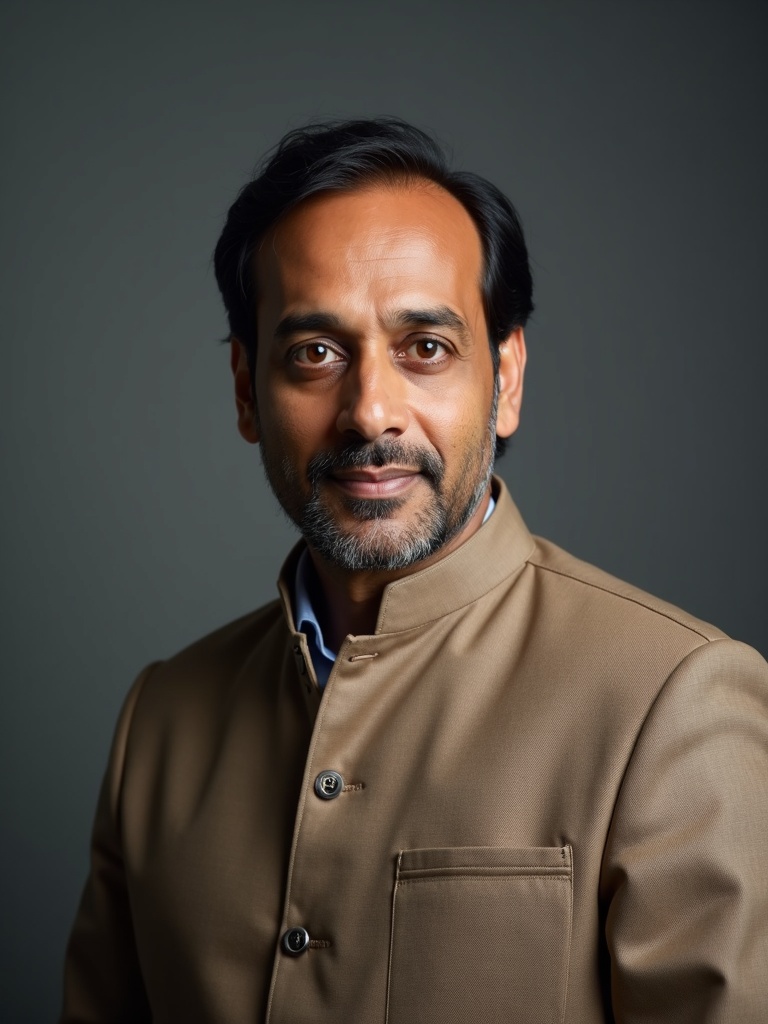
Kunal Banerjee writes on the new world disorder — the fraying of the rules-based system the West built between 1945 and 2001, and what an India with genuine agency does inside the wreckage. His essays are long-form and argumentative.
Recent work
Kathmandu Blinks: Nepal's Tibet Conference Cancellation Reveals Beijing's Academic Reach
Kathmandu University cancelled an International Association for Tibetan Studies conference, citing an official order Nepal's government subsequently denied issuing. The episode lays bare how deeply Chinese political influence has penetrated Nepal's institutional life — and what that means for the Himalayan buffer India has long taken for granted.
Ukraine Rebuilds Slowly — and India Has a Commercial Stake in the Outcome
Four years into the war, Ukraine is showing signs of social and institutional recovery even as fighting continues. The story has moved from emergency evacuation to long-term reconstruction — a shift that carries real commercial and diplomatic stakes for India, which evacuated over 22,000 nationals in 2022 and has since maintained a non-sanctions posture that now looks less like fence-sitting and more like strategic preparation.
A Murder in Jerusalem Exposes India's Labor Export Blind Spot
An Indian migrant worker was found dead in a Jerusalem flat, with a 31-year-old Israeli man arrested on suspicion of murder. The case throws into sharp relief the structural vulnerabilities of Indian workers deployed to Israel under the 2023 bilateral labor agreement — workers who often arrive with limited legal awareness, informal housing arrangements, and thin consular support. India's credibility as an organized labor exporter rests partly on its ability to close that gap.
When the Court Wobbles: India's Moment to Shape Accountability's Future
The Security Council's July 2026 briefing on ICC proceedings in Sudan's Darfur region coincides with a US campaign to dismantle the Court entirely. The collision of atrocity documentation and institutional attack illuminates a structural fault-line in international criminal justice — one India has long observed from the margins. The moment calls for something more active than abstention.
The Bundibugyo Outbreak Exposes a Gap India Cannot Afford to Leave Open
The Bundibugyo strain of Ebola has killed more than 500 people in eastern Democratic Republic of the Congo and continues to expand, the WHO warned on Tuesday. The outbreak lands squarely inside India's strategic calculus — touching its pharmaceutical manufacturing ambitions, its Voice of Global South commitments, and the credibility of its Africa health diplomacy. The gap between India's declaratory posture and its actual speed of engagement is a structural problem this outbreak makes visible.
El Niño Intensifies: India's Monsoon Economy Confronts a Familiar Adversary
The UN World Meteorological Organization has warned that El Niño conditions are strengthening in the tropical Pacific, raising the likelihood of extreme heatwaves and weather disruptions globally. For India, the forecast strikes at the structural heart of its agricultural economy, where a deficient monsoon ripples outward into food inflation, rural incomes, and macroeconomic stability. The moment also hands India a sharper diplomatic instrument in global climate negotiations.
WHO's Antifungal Wake-Up Call Finds India Both Exposed and Positioned
The World Health Organization has published new guidance urging countries to confront the rising burden of fungal disease and antifungal resistance, a threat that kills millions yet remains absent from most national health plans. India, which carries a disproportionate share of the global invasive fungal infection burden, sits at the centre of this story — as a country whose healthcare vulnerabilities make it acutely exposed, and whose pharmaceutical and scientific capacity makes it uniquely positioned to shape the global response.
Western OSCE Pressure Reinforces India's Strategic Autonomy on Russia
Britain's strong OSCE statement condemning Russia's intensified attacks on Ukraine underscores the diplomatic pressures India faces as it maintains strategic neutrality. While Western allies demand clearer positions on the conflict, India's approach demonstrates sovereign foreign policy amid competing alliance pressures.
AI's Environmental Surge Threatens Global Resources as India Shapes Sustainable Tech Leadership
A UN report reveals artificial intelligence's mounting environmental costs threaten planetary resources through massive energy and water consumption. India's position as a global AI hub creates opportunities to lead sustainable technology development while managing climate commitments.
Bangladesh's Rahman Advances Global South Leadership at UN General Assembly
Bangladeshi Foreign Minister Khalilur Rahman's election as UN General Assembly President positions South Asia in a crucial multilateral leadership role during pivotal global transitions. The development enhances regional representation in global governance while creating strategic opportunities for India's diplomatic agenda.
India Elevates Sweden Ties to Strategic Partnership, Reinforces European Engagement
Prime Minister Modi's official visit to Gothenburg resulted in the elevation of India-Sweden bilateral relations to a strategic partnership level. The framework encompasses strategic dialogue, economic partnership, emerging technologies, and sustainability cooperation, with an ambitious target to double bilateral trade and investment within five years.
WHO Maritime Health Response Exposes Global Coordination Gaps as India Expands Port Infrastructure
The World Health Organization concluded a complex international operation to repatriate passengers from the hantavirus-affected MV Hondius cruise ship in Tenerife. While WHO praised Spain's coordination, the incident exposed significant gaps in global maritime health governance that could impact major shipping hubs like India's expanding port network.
West Bank Children Casualties Complicate India's Middle East Balancing Act
UN agencies report escalating violence against Palestinian children in the West Bank, presenting India with diplomatic challenges as it maintains strategic partnerships with both Israel and Palestine while pursuing energy security in the Gulf.
WHO Crisis Leadership in Tenerife Tests Global Health Governance Systems
WHO Director-General Tedros Adhanom Ghebreyesus personally heads to Tenerife to oversee the Sunday arrival of the hantavirus-hit MV Hondius, marking an unprecedented level of direct leadership intervention in a localized health crisis. The move signals evolving approaches to global health governance and crisis management.
Gaza Flotilla Detentions Test India's West Asia Diplomatic Balancing Act
The UN human rights office's call for Israel to release detained Gaza flotilla members highlights the growing complexity of humanitarian access issues in the Middle East. For India, this incident underscores the delicate balance required between its historical support for Palestinian rights and its deepening strategic partnership with Israel.
Conflict-Driven Hunger Concentration Validates India's Peace-First Development Strategy
A major UN-backed report reveals that two-thirds of people facing acute food insecurity are concentrated in just 10 conflict-affected countries, highlighting how warfare has become the primary driver of contemporary hunger. The findings validate India's strategic emphasis on linking food security to conflict prevention and regional stability.
Tehran Airport Reopening Signals West Asian De-escalation Opportunity for India
International flights have resumed at Tehran's main airport after weeks of war-related disruptions, as a US-Iran ceasefire holds. The development offers India new opportunities to advance stalled regional connectivity projects while managing its delicate balance between Washington and Tehran.