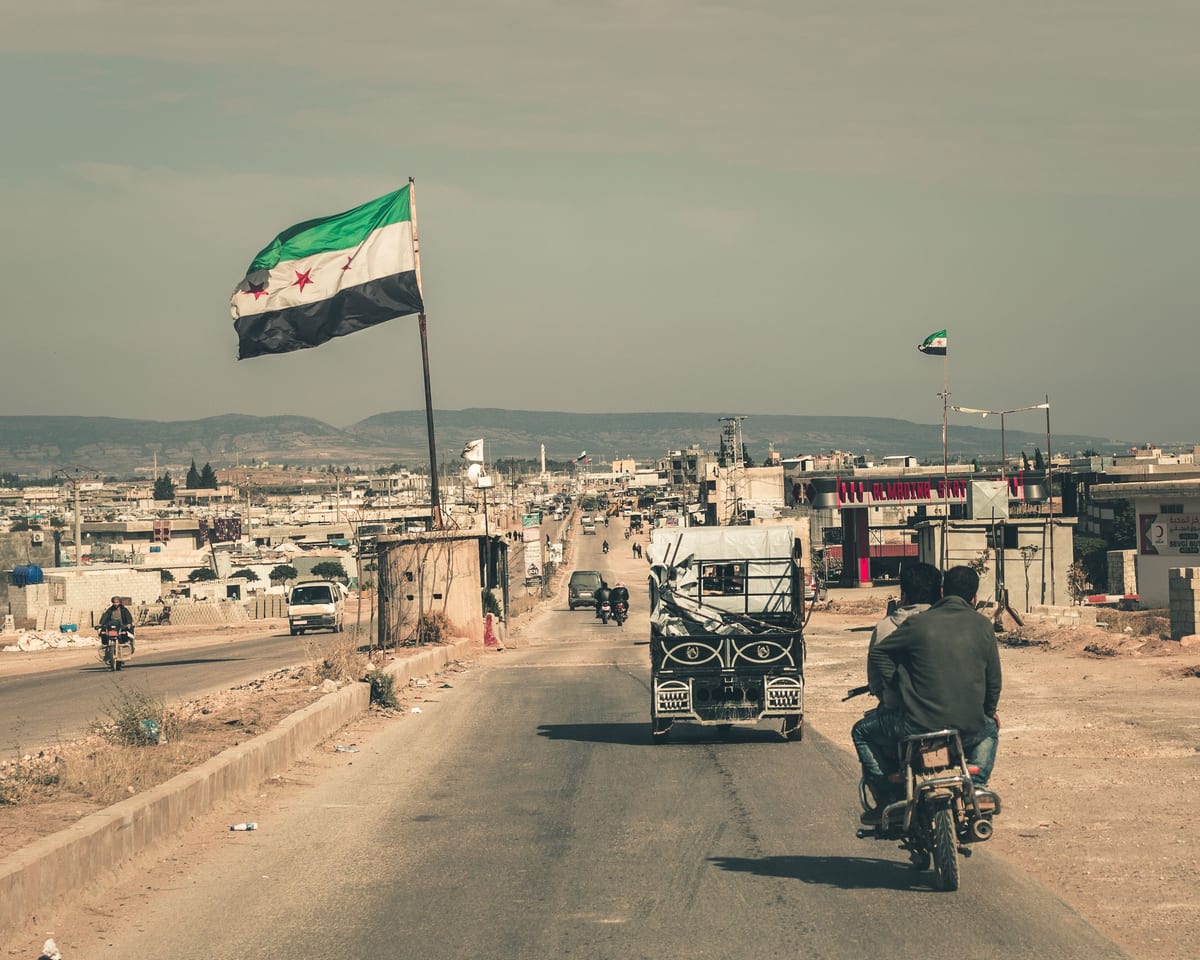
Every August 7th, a small ritual plays out in European foreign ministries, statements are drafted, coordinated, cleared, and released. What makes the 2026 edition notable is not its language, which follows established form, but its signatories: the United Kingdom, France, Germany, and Italy, standing together to mark eighteen years since Russia's military action against Georgia and to condemn the continued occupation of Abkhazia and South Ossetia. Three of those four governments hold active strategic partnerships with India. Their collective framing, "Russian imperialism," "illegal invasion," violations of "international law", is language New Delhi has never adopted, and the distance between these positions is widening.
The statement documents what has changed since 2008. Russia's military presence in the two breakaway regions continues in violation of the six-point agreement signed on 12 August 2008. In October 2025, the European Court of Human Rights found Russia guilty of excessive force, unlawful detention, ill-treatment, and restrictions on movement across the administrative boundary line. On 9 May 2026, Moscow and the de facto authorities of South Ossetia signed an "Agreement on Deepening Alliance and Cooperation," which the four governments say further violates Georgia's sovereignty and territorial integrity. The statement also welcomes the Republic of Nauru's decision to withdraw recognition of the so-called independence of Abkhazia and South Ossetia, and urges other states that extended such recognition to follow suit.
India is not among those states. New Delhi never recognised Abkhazia or South Ossetia, and the MEA has issued no characterisation of Russian actions in Georgia as illegal. This is consistent with a posture India has maintained across the post-Soviet space: abstain or stay silent on resolutions that require applying "illegal occupation" doctrine to a major power with which India maintains structural bilateral interests.
The Architecture of Deliberate Silence
India's non-condemnation on Georgia reflects a calculus that Shyam Saran, former Foreign Secretary, has articulated plainly: Moscow holds a veto at the UN Security Council, and that veto has direct utility for India on cross-border terrorism designations where Chinese and Pakistani interests sometimes converge against New Delhi. Burning that relationship on a sovereignty dispute in the South Caucasus, one with no material Indian stake, has never made strategic sense to Indian policymakers.
There is also a deeper philosophical consistency at work. India is acutely sensitive to the "illegal occupation" frame because it faces analogous accusations, from Pakistan on Kashmir, from China on Arunachal Pradesh. Endorsing a principle that external powers may collectively designate sovereign acts as illegal and demand reversal creates a precedent India has no interest in establishing. Harsh V. Pant of the Observer Research Foundation has described India's refusal to adopt Western legal framing on Russian actions as a principled extension of historical non-alignment, not opportunism, and the Georgia case fits that reading precisely.
What is philosophically interesting is that India's opposition to unilateral border changes, which is genuine, rooted in the 1962 wound with China, is structurally identical to the Western position on Georgia. The line Russia drew in 2008 around Abkhazia and South Ossetia is the same kind of line China has drawn across the Line of Actual Control. India rejects the Chinese version; it declines to comment on the Russian one. Takshashila Institution analysts have flagged this asymmetry as carrying a long-term cost in multilateral credibility that is not yet decisive but is accumulating.
France, Italy, and the Strategic Partnership Problem
The sharpest India-relevant tension in the August 7th statement is relational. France and Italy are not abstract Western governments. They are India's Comprehensive Strategic Partners, with summit-level diplomatic calendars and defence cooperation frameworks that matter concretely to Indian interests.
Prime Minister Modi's February 2025 visit to France, his sixth, produced a joint statement covering artificial intelligence governance, thermonuclear research cooperation, and defence. The relationship with President Macron has the density of a mature bilateral. Italy's Prime Minister Giorgia Meloni visited New Delhi in March 2023, and the joint statement from that visit underscored convergence on democracy, rule of law, and regional stability. These are not countries India can treat as distant lecturers on international norms.
With each successive anniversary statement, each time Paris and Rome co-sign language about "Russian imperialism" and "illegal invasion," the normative gap between these partners and New Delhi becomes more visible and more awkward to navigate. European diplomats have not raised it loudly in bilateral settings yet. But the question surfaces in working-level conversations about technology transfers, supply chain diversification, and India's role in European security architecture discussions. The implicit subtext is: can a country that declines to name Russian territorial aggression be a full partner in building the rules-based order these governments are defending?
India's answer, consistent across administrations, is that it builds partnerships on shared interests and mutual respect, not on normative conformity with any bloc. This is a legitimate position. It has served India well in maintaining relationships with Moscow, Washington, Paris, and Riyadh simultaneously. But the European diplomatic environment is shifting. The EU and UK increasingly embed their security narratives, including on Russia, into the conditions and frameworks attached to technology partnerships and trade agreements. What was once a background divergence is slowly becoming a foreground one.
A Credibility Cost Worth Watching
The practical question for Indian diplomacy is not whether to co-sign future anniversary statements on Georgia, that will not happen. The practical question is whether India uses its bilateral summits with France and Italy to proactively articulate its doctrine of sovereign non-interference as a universal principle.
The distinction matters. Indian silence on Georgia reads differently when accompanied by a clear articulation that New Delhi opposes all unilateral border changes everywhere, including by Russia, while declining to adopt the Western judicial framing as authoritative. That is a coherent position. It separates the political from the legal, maintains the relationship with Moscow, and avoids the selective credibility trap. It is also more consistent with India's actual position on Chinese border behaviour than the current silence implies.
What the 2026 Georgia statement illustrates is the growing codification of anti-Russia legal doctrine among India's European partners, a process that has accelerated since 2022 and shows no sign of reversing. Each ruling from the European Court of Human Rights, each new "deepening alliance" agreement between Moscow and a breakaway territory, adds another layer to a normative architecture that India is conspicuously absent from building. India does not need to enter that architecture. But the cost of standing outside it is no longer zero, and the bilateral forums with Paris and Rome are precisely the right venues to ensure that European partners understand Indian silence as principled doctrine, not as ambivalence that can be resolved with diplomatic pressure.