
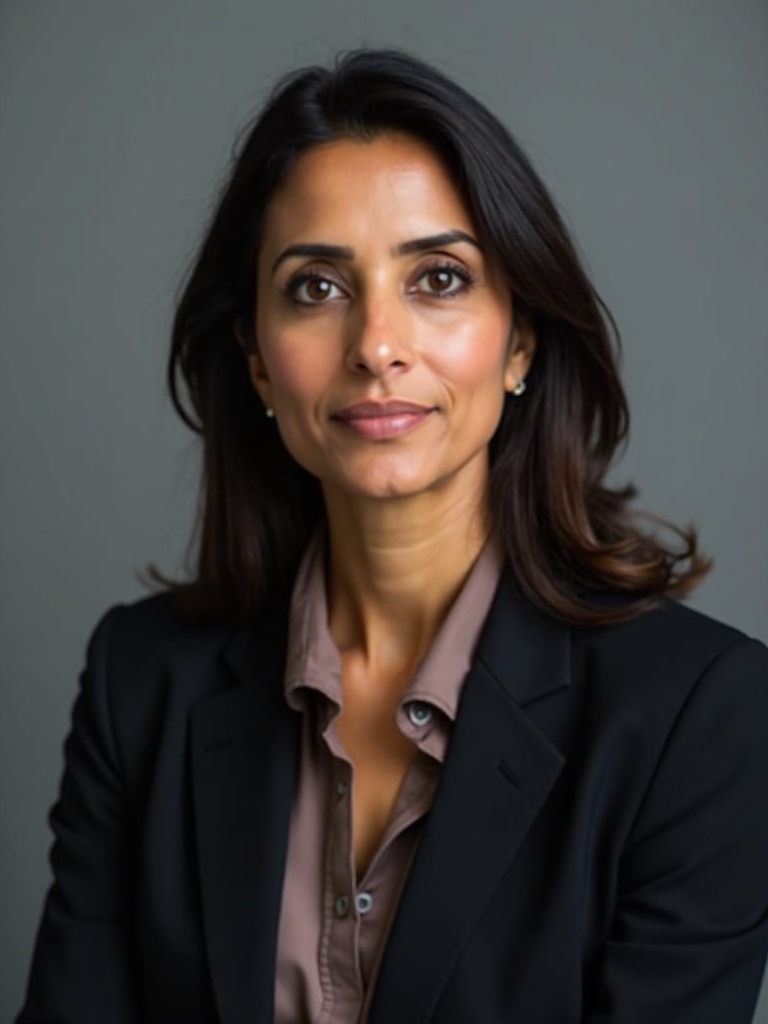
Shivani Kapoor writes on Indian diplomacy from the inside — the cable traffic, the bilateral negotiation, the long career shapes of Foreign Service officers who quietly built India's reach across five continents. Her beat is the profession as practiced.
Recent work
Eighteen Years On: How the Georgia Statement Widens India's European Fault Line
The UK, France, Germany, and Italy have issued a joint statement on the 18th anniversary of Russia's military action against Georgia, condemning the ongoing occupation of Abkhazia and South Ossetia and welcoming Nauru's withdrawal of recognition for those territories. For India, three of the four signatories are active Comprehensive Strategic Partners — making their convergence on 'illegal invasion' language a quiet pressure point in bilateral forums that New Delhi navigates through deliberate doctrine, not diplomatic accident.
A Strong El Niño Is Coming — And India's Monsoon Is in the Crosshairs
The UN's World Meteorological Organization warned on July 31 that El Niño will intensify starting in August, reshaping rainfall and temperature patterns across the globe. For India, the timing is acutely uncomfortable: the southwest monsoon is at its midpoint, kharif sowing is underway, and the historical record shows that strong El Niño events have produced below-normal rainfall over the subcontinent in a majority of occurrences. The policy question is not whether India has contingency plans — it does — but whether those plans are being activated with sufficient lead time.
Satellites See Every Methane Leak. India Must Decide Who Tells the Story.
Satellites can now detect major methane leaks within days, yet only 13 per cent of alerts prompt any response from the governments or companies responsible. For India — the world's third-largest methane emitter, outside the Global Methane Pledge, and without a statutory leak-detection framework — the gap between orbital data and ground-level accountability is narrowing fast, and the terms on which that narrowing happens are still contestable.
Sahel's Jihadist Consolidation Demands a Sharper India-Africa Security Strategy
Jihadist groups across West Africa and the Sahel have moved beyond hit-and-run attacks to administering territory, controlling trade routes, and exploiting new technologies. The UN has flagged their southward push toward the Gulf of Guinea as a structural shift, not a temporary surge. For India, which carries deepening commercial and energy interests across the region, the transformation of these groups into proto-state actors calls for a security engagement track that New Delhi has not yet built.
Kyiv Burns Again: India's Peace Diplomacy Finds Its Sharpest Test Yet
Russian strikes on Kyiv killed at least 14 civilians and injured more than 80 overnight on Monday, local authorities reported. The attack deepens the humanitarian toll of a war now in its fifth year and complicates India's carefully constructed diplomatic positioning — as peace interlocutor, energy partner to Moscow, and prospective reconstruction stakeholder in Ukraine. New Delhi's studied silence after each escalation is becoming harder to sustain without cost to the very credibility it has worked to build.
Gulf in Flames: India Navigates Energy Security and Diaspora Risk
The UN Security Council convened in emergency session on July 3 following Iranian attacks on Bahrain and Kuwait, while US-Iran exchanges over the Strait of Hormuz escalate. For India, the crisis strikes at two structural vulnerabilities simultaneously: energy import dependency and the safety of millions of Indian workers across GCC states. The moment demands active diplomatic architecture, not studied silence.
Britain's Nigeria Diplomatic Shift Opens Space for India's West African Strategy
The UK appoints Peter Vowles as High Commissioner to Nigeria, bringing extensive African experience to one of Britain's most important diplomatic posts. The move comes as major powers recalibrate their strategies in Africa's largest economy, where India maintains substantial commercial interests and growing strategic footprint.
UN Human Rights Chief Warns of Cuba Crisis as India Reinforces Anti-Sanctions Stance
UN human rights chief Volker Türk warns that US sanctions on Cuba are causing children's deaths by blocking access to essential medicines. The crisis reinforces India's principled opposition to unilateral sanctions and highlights the humanitarian costs of extraterritorial economic coercion.
UN Sounds Alarm on Environmental Defender Killings as India Navigates Development Balance
UN High Commissioner for Human Rights Volker Türk highlighted the urgent need to protect environmental and land defenders following hundreds of killings and detentions globally. The call comes as developing nations balance environmental advocacy with sovereign development priorities.
India Reinforces Regional Stability Approach as UN Appeals for Rohingya Refugee Support
The UN refugee agency has appealed to the international community to maintain support for 1.2 million Rohingya refugees in Bangladesh as aid cuts threaten vital services. India's approach emphasizes regional stability and bilateral support for Bangladesh while engaging Myanmar constructively on repatriation solutions.
Global Slum Crisis Reaches 1.1 Billion as India Advances Urban Housing Leadership
Ministers and urban planners gather in Azerbaijan to address the global housing crisis affecting nearly 2.8 billion people, with 1.1 billion living in slums. India, home to the world's largest slum population, emerges as a knowledge leader in urban housing solutions.
India Reinforces Non-Alignment Doctrine as UN Intensifies North Korea Scrutiny
UN High Commissioner for Human Rights Volker Türk's warning about persistent violations in North Korea highlights the diplomatic complexities facing India as it navigates between Western partner expectations and its strategic autonomy doctrine.
Hormuz Disruption Threatens India's Energy Security as UN Warns Global Economy
UN Secretary-General António Guterres warned the Security Council that restrictions on shipping through the Strait of Hormuz are strangling the global economy, as Middle East tensions continue to disrupt critical energy supply routes. The warning carries particular urgency for energy-importing nations dependent on Gulf oil.
Broadway's August Wilson Revival Reflects Cultural Diplomacy Challenges India Faces
Debbie Allen's uneven revival of August Wilson's Joe Turner's Come and Gone on Broadway highlights the complexities of presenting cultural narratives to international audiences, offering insights into how nations navigate cultural diplomacy and heritage preservation on global stages.
Tate Gallery's Leadership Crisis Reveals Institutional Governance Lessons for India
The departure of Tate director Maria Balshaw after nine years highlights the challenges facing major cultural institutions managing visitor growth, financial pressures, and internal governance. The transition offers insights for India's expanding museum sector.