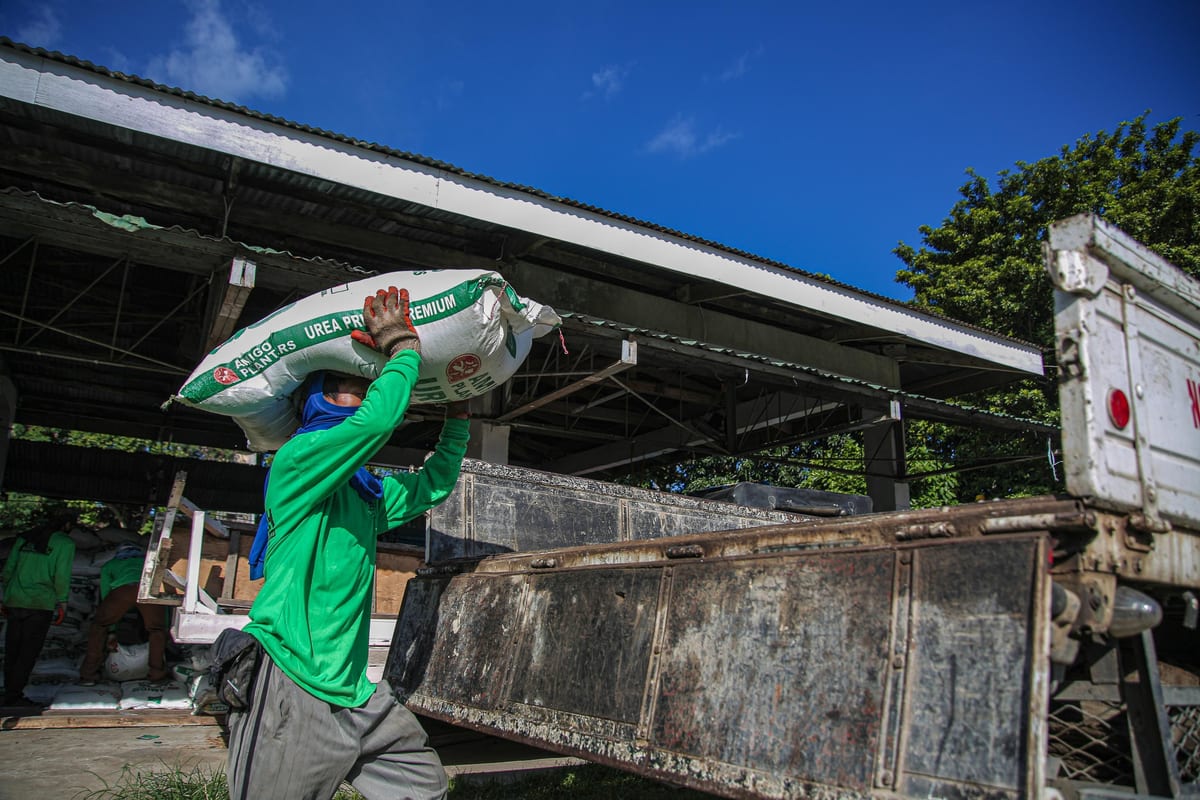
The Comptroller and Auditor General has flagged diversion of subsidised urea across 169 districts, according to an audit covered by India Today. The finding draws a direct line from India's controlled urea pricing to a cross-border smuggler's market.
India's fertiliser subsidy budget has crossed Rs 1.3 lakh crore in recent years. Urea sits at the centre of that outlay. The product moves at a fixed maximum retail price, with the government reimbursing manufacturers the difference between cost and selling price. That keeps farmgate prices low, but it also fixes a price gap across the border. A 50-kg bag costs over Rs 200 less in India than in Nepal or Bangladesh. For a smuggler, every bag that crosses the line is profit earned against the Indian exchequer.
The legal line is clear; the border is porous
Urea diversion is a criminal offense under the Fertiliser Control Order (1985) and the Essential Commodities Act. The Department of Fertilisers operates movement controls through the e-Urvarak portal, direct benefit transfer, and point-of-sale biometric verification. These systems were designed to track a bag from factory to farmer. But the audit's 169-district spread suggests the controls are not catching the leak at the border, where a bag can be bought in a district near Nepal or Bangladesh with full digital authentication and then disappear into an informal trade route.
India is both a major urea producer and one of the world's largest importers. The subsidised domestic price sits well below the landed import cost. The government absorbs that gap through the subsidy. When a bag is smuggled out, the loss is not only the subsidy; it is the foreign exchange spent on importing urea the bag replaced. The audit's nationwide spread shows this is not a fringe phenomenon in two border towns. It is a structural leak in a programme that touches nearly every farming household.
Where the loss is felt first
Each year, leakage from diverted urea runs into thousands of crores. The exchequer pays twice: once for the bag that leaves the country, and once for the replacement bag that farmers in border districts must buy when local stocks run short. Sowing season shortages in eastern Uttar Pradesh, Bihar, and West Bengal are the visible symptom. Farmers queue longer, pay middlemen a premium, or ration their urea. The smuggling network converts a welfare programme into working capital for cross-border crime.
This is why the audit is a judgment on the delivery system, not on Indian agriculture itself. The state has the tools: a unique digital identity for every farmer, a portal that records each sale, and a biometric checkpoint at point of sale. What it lacks is the physical tracking between the factory gate and the retailer's godown. A bag that is authenticated in a border district but never reaches a farmer's field is invisible to the current controls.
The case for moving the subsidy from bag to bank account
Siraj Hussain, a former Union Agriculture Secretary, has pointed to the fixed MRP and the subsidy arbitrage as the driver of smuggling. His logic is arithmetic. So long as India sells urea at a political price while its neighbours sell it at a market price, the difference will find a route across the border. Researchers at ICRIER and the Fertiliser Association of India have reached the same conclusion, calling for a shift from product-based subsidy to direct income support for farmers. Eliminate the price differential and you eliminate the smuggler's margin.
The experience with cooking-fuel subsidies offers a template. When the government moved that support into bank accounts, the black market shrank because there was no longer a subsidised cylinder to divert. Urea can follow the same path. The farmer receives the subsidy as cash, buys urea at market price, and the physical bag loses its arbitrage value. The political risk is real: farmers have been told for decades that cheap urea is their right. But the fiscal cost of the status quo, and the criminal networks it funds, is the stronger claim.
Enforcement must become physical, not just digital
The Department of Fertilisers can close the gap with GPS tracking on urea shipments from plant to retailer. Joint border patrols with Nepal and Bangladesh, backed by customs intelligence, can intercept truckloads that currently slip across informal crossings. The technology exists. The border forces exist. What has been missing is a decision to treat urea diversion as a national security problem rather than a routine subsidy leak. The audit's 169-district finding makes that decision harder to postpone.
India's sovereign choice is to modernise subsidy delivery while retaining agricultural support. Direct benefit transfer for urea, rationalised MRP, and physical shipment tracking would each reinforce the other. They would protect the farmer, stop the leak, and deny smugglers a revenue stream. No one of them alone will work. The smuggler adapts to one fix by moving to the next weak point. Only a layered system, enforced at the border and at the bank, will hold.
The political appeal of a low fixed price is real. But a subsidy that leaks across the border is not a subsidy; it is a transfer from Indian taxpayers to smugglers. The audit's 169-district finding is a fact about enforcement, not about design failure. India has the digital infrastructure and the regulatory authority to stop the leak. The choice now is whether to defend the old delivery system or finish building the new one.