
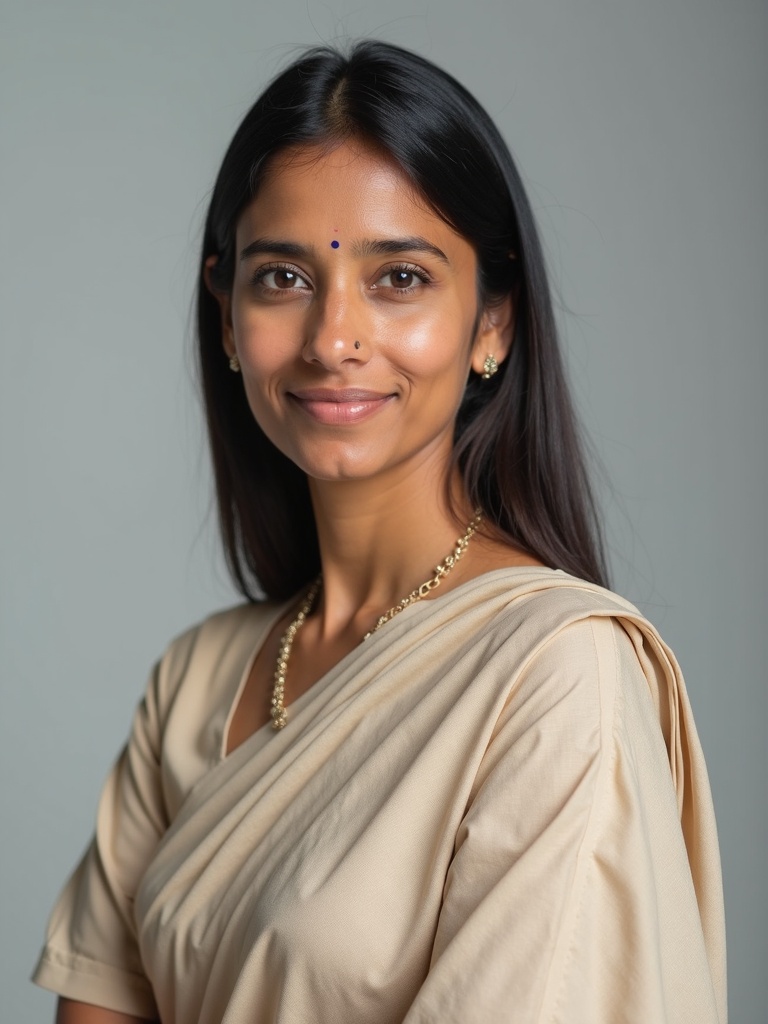
Ankita Sen writes on the India story — how the country tells itself about itself, and how that self-understanding has shifted across seven decades. Her work sits at the seam of history and current affairs, with particular attention to the language public figures use about the nation.
Recent work
DUSU Election 2026: ABVP, NSUI and Left Alliance Contest Four Posts as Voting Begins
Delhi University students vote Friday to choose the DUSU central panel for 2026-27, with ABVP, NSUI and the AISA-SFI alliance contesting president, vice-president, secretary and joint secretary. EVM logistics, traffic restrictions and campaign issues are in place, with counting scheduled for Saturday.
CBSE Schedules 22nd CTET for December 12–13, Replacing September Window
CBSE has shifted the 22nd CTET to December 12 and 13, 2026, from its earlier September date. The change affects mandatory teacher-eligibility testing for central government schools and disrupts aspirants' preparation timelines.
Sberbank Sees Digital Rupee Corridor as India-Russia Trade Expands
Russia's Sberbank is pushing for central bank digital currencies to settle bilateral trade, with CEO Herman Gref saying the two countries' central banks are working on a precise mechanism. The push comes as India and Russia target $100 billion in annual trade by 2030. A working digital corridor would cut transaction costs and settlement delays in energy, defence and pharmaceutical trade.
India Navigates West Asia Escalation as US-Iran Missile Exchange Pushes Crude Near $100
Iranian state media reported missile launches from six cities after the IRGC claimed to have struck a US base in Jordan. US forces had earlier destroyed five Iranian oil tankers following the IRGC's attacks on a US Navy warship. The escalation pushes Brent toward $100 and directly implicates India's crude import bill and Gulf expatriate safety.
UGC NET 2026 Re-Exam: The Small Print That Decides Who Gets to Compete
The UGC NET 2026 re-exam carries a single instruction with outsized consequences: verify that the on-screen question paper matches the subject you chose. Reporting time and entry rules round out the National Testing Agency's guidance for lakhs of aspirants seeking assistant professorship and Junior Research Fellowship eligibility.
Bhagwat's 'World as One' Message Lands in New York as Diaspora Bridge
RSS chief Mohan Bhagwat told a New York audience that the Sangh's vision is to see the world as one, pairing the line with a call to India's unity in diversity. The event drew religious leaders to the front row and drew opposition from New York State Assembly member Zohran Mamdani.
Bengaluru's Voter Roll Crisis Exposes India's Urban Electoral Architecture
Karnataka's Special Intensive Revision of electoral rolls has flagged nearly 49.42 lakh of Bengaluru's 1.03 crore voters for potential deletion under the ASDDO category. The constituencies with the highest deletion rates — Bommanahalli, Vijayanagar, BTM Layout — are precisely those that absorb the largest share of the city's IT workforce and migrant renters. The episode reveals a structural mismatch between India's 20th-century electoral administration architecture and the velocity of its urban migration.
India Rejects PoK Polls as Farce While Pakistan's Crackdown Builds India's Case
India's Ministry of External Affairs has dismissed local elections in Pakistan-occupied Kashmir as a 'complete farce,' with MEA spokesperson Randhir Jaiswal citing the killing of at least 90 civilians and widespread repression since June 2026. The polls, marked by disruptions and protests across PoJK and Pakistani cities, have drawn condemnation from Amnesty International and the Committee to Protect Journalists. For India, the moment is less a diplomatic irritant than a strategic opening — Pakistan's attempt to manufacture democratic legitimacy is collapsing under the weight of its own contradictions.
Delhi's 2.9 Tremor Is a Minor Event With a Major Subtext
A magnitude 2.9 earthquake struck Delhi's North District in the early hours of Sunday, August 2, at a depth of 8 kilometres. No casualties or structural damage were reported. But the event, routine in itself, lands in a city that sits in Seismic Zone IV — and where construction has long outpaced the enforcement of safety standards that a future major tremor would put to the test.
Parliament Seals Anti-Cheating Law: Meritocracy's Institutional Test Begins Now
The Public Examination (Prevention of Unfair Means) Amendment Bill, 2026 cleared both Houses of Parliament this week, with the Rajya Sabha approving it by voice vote on Thursday following the Lok Sabha's passage the day before. The bill tightens penalties for organised exam fraud. But legislative resolve and institutional reform are not the same thing, and the gap between the two will define whether this moment is genuinely transformative or merely symbolic.
From IIT Delhi to the Village Cattle Market: Animall's Rs 565 Crore Bet on Bharat
Neetu Yadav and Kirti Jangra, IIT Delhi civil engineering graduates and college roommates, founded Animall in 2019 to digitise India's cattle trade. The platform connects dairy farmers with buyers and sellers, and has grown to a reported Rs 565 crore valuation. Their story illustrates how technology trained on rural problem statements can generate serious commercial returns while serving India's 80 million dairy-farming households.
Omar Abdullah's Jantar Mantar March Exposes the Statehood Promise's Fraying Edge
Jammu and Kashmir Chief Minister Omar Abdullah alleged that the Centre prevented him and National Conference leaders from reaching Jantar Mantar on July 20 to protest for statehood restoration. The episode surfaces a structural contradiction: the same government that projects J&K's post-2019 democratic normalisation as complete has blocked its elected head of government from exercising a constitutional right. The Supreme Court's December 2023 directive to restore statehood 'as soon as possible' hangs unanswered after a year and a half.
Vance's 'America Wins Either Way' Lands Squarely on India's Chabahar Calculus
US Vice President JD Vance declared America would emerge stronger regardless of whether Iran accepts a final nuclear deal, arguing Tehran's nuclear capabilities are already severely degraded. The statement follows US retaliatory strikes on Iranian drone facilities after an incident in the Strait of Hormuz. For India, the stakes in this bilateral drama extend well beyond West Asia — touching crude oil supply lines, a strategic port on the Persian Gulf, and the International North-South Transport Corridor that New Delhi has spent years building.
Canada Navigates Trump Trade Pressure as North American Dynamics Shift
Canadian Trade Minister Dominic LeBlanc remains optimistic about resolving trade disputes with the Trump administration through bilateral arrangements, as the US chose not to extend the USMCA by July 1. The uncertainty creates potential openings for other trading partners in the North American market.
India Maintains World's Cheapest LPG Rates Despite ₹89 Price Rise
Despite recent price hikes totaling ₹89, India's domestic LPG remains the cheapest globally, with the government absorbing over ₹960 per cylinder in subsidies. Ministry data shows Indian households pay significantly less than Pakistan, Bangladesh, and developed nations like the US and Canada.
Gen Raja Subramani Charts Tri-Services Integration as New Chief of Defence Staff
General NS Raja Subramani has assumed charge as India's Chief of Defence Staff, with tri-services integration and theaterisation implementation as priority mandates. His background as Military Advisor at the National Security Council Secretariat positions him to advance critical defense reforms amid regional security challenges.
Corporate India Rallies Behind Modi's Import Reduction Call Amid Energy Crisis
Leading industrialists including Gautam Adani and Sunil Bharti Mittal backed Prime Minister Modi's call to reduce fuel and gold imports as geopolitical tensions drive up energy costs. The corporate support signals alignment between government policy and business strategy on reducing India's import vulnerabilities.