An earthquake of magnitude 4.9 struck Uttarakhand's Chamoli district on Tuesday night, and the jolt travelled across the National Capital Region, NDTV reported. Residents in Delhi, Noida and Gurugram described on social media how windows rattled and ceiling fans swayed, while India Today confirmed the epicentre as Chamoli. The shaking was felt from Dehradun to parts of western Uttar Pradesh. No immediate reports of casualties or structural damage had emerged by late Tuesday, though dispatchers in Delhi and Noida logged calls from residents asking whether the tremor was an earthquake or a passing metro train.
The National Center for Seismology placed the magnitude at 4.9, NDTV reported. Moderate by global standards, but in the Himalayan arc it carries a different signal. Chamoli sits above one of the most tightly wound sections of the Indian plate boundary, where the subcontinent pushes north into the Eurasian landmass at a constant rate. The accumulated strain does not need a catastrophic trigger to announce itself; a 4.9-magnitude event is often the earth's way of releasing pressure. Seismologists will read the location and depth to determine whether this was an isolated release or the opening note of a sequence of smaller events.
The Seismic Memory of Garhwal
Uttarakhand carries the memory of past Himalayan earthquakes that flattened mud-and-stone houses, cracked concrete structures and rewrote local building practices. A generation later, much of that memory has faded from the daily calculations of builders and municipal engineers. Tuesday night's tremor, felt in Delhi's Lutyens bungalows and Noida's glass towers, is a reminder that the hazard has not migrated; the population density above it has. The same steep valleys that held a few thousand people in the last century now hold summer retreats, pilgrimage routes and hydropower projects.
The Garhwal-Kumaun seismic gap remains one of the most closely watched fault segments in the subcontinent. Seismologists have long pointed to accumulated strain along this stretch, where the historical record suggests a large rupture is overdue. Tuesday's moderate earthquake does not release that strain; it reveals the contours of a larger unsettled account. In scientific shorthand, a 4.9-magnitude event is not a pressure valve but a sign that the valve is stuck.
Delhi's Amplified Vulnerability
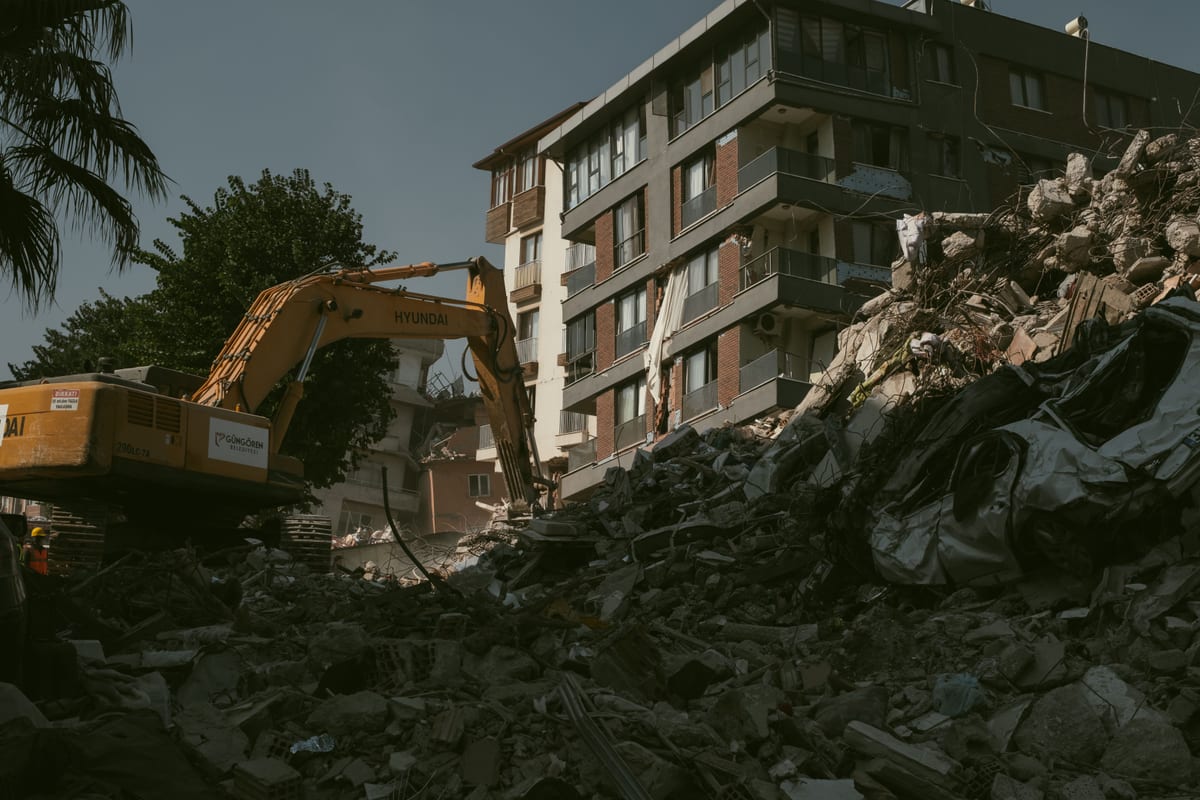
The capital region's experience of the tremor reflects as much about building stock as about geology. Delhi's high-rise clusters, many erected before the current generation of seismic codes, tend to amplify long-period ground motion. A distant event does not bring down modern structures. It does expose frail balconies, unreinforced parapets and water tanks perched on brittle rooftops. The shaking also travels differently through the alluvium beneath the Yamuna floodplain, where several new residential sectors have grown in the past two decades.
What Delhi felt on Tuesday was not a direct hit. The capital sits far from the epicentre, yet millions reported the shaking because the Indo-Gangetic alluvium carries seismic waves far beyond the epicentre and because the city's built environment is a patchwork of formal and informal construction. In Uttarakhand's hill towns the risk is starker: narrow roads, steep slopes and older masonry that predates any enforceable code. Landslides triggered by even moderate shaking can cut off villages for days, a secondary hazard that often does more damage than the earthquake itself.
The Governance Question
India's disaster response institutions have improved over the past two decades. The National Center for Seismology disseminates parameters within minutes, and the National Disaster Management Authority coordinates standard protocols with state units. That machinery worked on Tuesday: no panic, no collapse, and the night passed with ordinary complaints about sleep disruption. The state disaster management authority in Uttarakhand moved through its standard checklist, and municipal teams in Delhi inspected older buildings where residents reported cracks in plaster.
What remains uneven is prevention. Building codes drafted by the Bureau of Indian Standards exist, but enforcement in hill municipalities is sporadic. Retrofitting old buildings in Delhi-NCR and Uttarakhand is a capital-intensive task that no municipal budget has treated as urgent. Tuesday night's tremor should be used to audit seismic safety, not just to measure response time. The audit would find two Indias: one where new construction meets modern standards, and another where homes are added floor by floor without a structural engineer ever visiting the site.
Resilience as Infrastructure
The Coalition for Disaster Resilient Infrastructure, which India has championed, frames resilience as an infrastructure problem rather than a charity problem. A 4.9-magnitude earthquake that causes no damage is not a test of anything. It is a warning. The question before Uttarakhand's municipalities and Delhi's urban planners is whether they will reserve funds for retrofitting and code enforcement before a larger event leaves them with no choice. Early warning dissemination through mobile networks remains patchy; an alert that reaches a smartphone ten seconds before the shaking starts is of little use if the building it enters is not designed to stay upright.
No aftershock sequence has been reported so far. Whether one develops will shape the next 48 hours, not because a 4.9 event would produce dangerous aftershocks, but because each small tremor reopens the same question: is this the moment to act? For Delhi's millions, Tuesday night was a brief interruption. For Uttarakhand's disaster managers, it was another entry in a ledger that argues for treating seismic safety as a standing budget line rather than an episodic response.
For Indian readers, the Chamoli tremor is less a headline than a gauge. The capital's buildings swayed for a few seconds, and the social media feed moved on. The geological clock beneath the Garhwal-Kumaun gap did not pause. The only question is whether the next reminder arrives as another moderate jolt or as a reckoning with the architecture of unpreparedness.