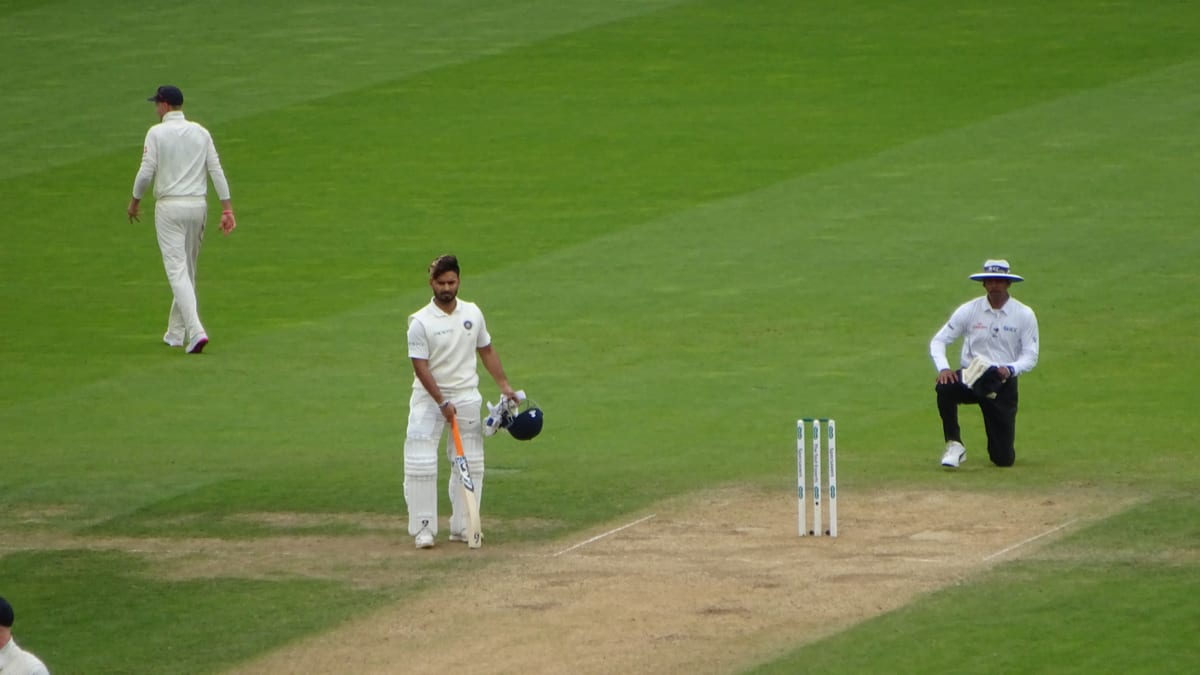

The scorecard reads Sussex v Leicestershire 151/3, a fragment of information that tells you almost nothing and everything at once. Three wickets down, 151 runs scored, another day in the county circuit grinding forward without fanfare or television cameras. Yet these are the matches where cricket's future is actually forged.
County cricket exists in cricket's shadows, the unglamorous cousin to the IPL's pyrotechnics and Test cricket's gravitas. But look past the noise, and you find the engine room where players learn their trade through repetition, failure, and the slow accumulation of skill that no T20 franchise can replicate. The Sussex-Leicestershire fixture represents thousands of similar encounters across England's domestic calendar—unremarkable individually, collectively indispensable.
The Architecture of Development
What makes county cricket matter isn't the scorelines but the system behind them. Players like Joe Root, Ben Stokes, and Jos Buttler developed through seasons of county matches where the pressure is real but manageable, where technique can be rebuilt without international scrutiny, where a young batsman can fail for three weeks and still get another chance.
The county circuit runs on cricket's most valuable asset: time. Time to develop, time to fail, time to understand your game beyond the instant gratification of franchise cricket. A match like Sussex v Leicestershire might not trend on social media, but it provides something the modern game increasingly lacks—space for players to think.
This development model works because it's boring. The matches matter enough to demand genuine effort but not enough to crush a player's confidence with every mistake. It's cricket's equivalent of the minor leagues, except the standard is higher and the pathway to international cricket clearer.
India's Domestic Cricket Paradox
Indian cricket faces a curious inversion of England's county model. The Ranji Trophy and Vijay Hazare Trophy theoretically serve the same developmental purpose, but they operate in an ecosystem dominated by the IPL's gravitational pull. Young Indian players increasingly view domestic cricket as a stepping stone to franchise contracts rather than an end in itself.
The result is a domestic circuit that struggles for identity. Unlike county cricket, which maintains its own rhythm and standards, India's first-class competitions feel secondary to the IPL machine. Players arrive with one eye on their strike rates and Instagram followers, the patience required for five-day cricket eroded by T20 thinking.
This creates a development gap that becomes visible at the international level. Indian batsmen often struggle with the mental side of Test cricket not because they lack technique, but because they haven't learned the art of building innings without constant entertainment value. The county circuit's unglamorous virtue—its emphasis on process over outcome—is exactly what Indian domestic cricket needs to rediscover.
The IPL's success has inadvertently devalued the work of first-class cricket. When a Ranji Trophy century earns less recognition than a cameo IPL innings, the incentive structure tilts toward spectacle over substance. Young players learn to think in six-ball increments rather than session-by-session construction.
The Hidden Value of Unremarkable Cricket
Sussex v Leicestershire 151/3 represents cricket at its most functional. No pyrotechnics, no manufactured drama, just players working through the fundamental challenges of the sport. The batsman who reaches fifty in such a match has learned something different from the one who smashes boundaries in a packed stadium. He has learned patience, the ability to value his wicket, the craft of building partnerships when entertainment value is irrelevant.
This is cricket's equivalent of practicing scales on a piano—unglamorous but essential. The county circuit provides what psychologists call deliberate practice: repetitive, focused work on specific skills without the pressure of immediate performance outcomes. English cricket produces players comfortable in all formats despite their domestic T20 competition being less lucrative than the IPL.
The scorecard's simplicity masks the complexity of what occurs during such matches. A partnership of 80 runs in a county game teaches different lessons from the same partnership in an IPL chase. The county partnership is built through communication, patience, and the gradual accumulation of singles and twos. The IPL partnership relies on calculated risks and boundary-hitting. Both have value, but only one develops the mental architecture required for Test cricket.
Cricket's Development Philosophy
The Sussex-Leicestershire fixture reveals cricket's essential truth: development happens in quiet moments, not spectacular ones. The player who averages 35 in county cricket for three seasons often makes a better international prospect than the one who averages 50 in one brilliant year. Consistency over time reveals character in ways that peak performances cannot.
This principle applies beyond batting averages. County cricket teaches players to handle different conditions, different pressures, different teammates. It is cricket education through experience rather than instruction. A young spinner learns to bowl to different fields, different batsmen, different match situations without the weight of social media analysis or franchise expectations.
The format also preserves cricket's strategic depth. In T20 cricket, tactics are often reduced to matchups and powerplay execution. County cricket requires deeper thinking: how to set fields for different phases of an innings, how to build pressure through dot balls, how to construct innings based on match situation rather than entertainment value.
For Indian cricket, the county model suggests a different approach to domestic cricket development. Rather than treating the Ranji Trophy as an IPL audition, it should be valued for its own developmental properties. Players need time to fail, time to rebuild technique, time to understand their games without the constant pressure of franchise selection.
The scorecard Sussex v Leicestershire 151/3 won't produce highlight reels or social media engagement. But somewhere in that unremarkable fixture, cricket's future is taking shape through the patient accumulation of skill, experience, and understanding that no franchise glamour can replace. Indian cricket's continued evolution depends on recognizing this fundamental truth: the best players emerge not from the brightest lights, but from the sustained work done when nobody is watching.