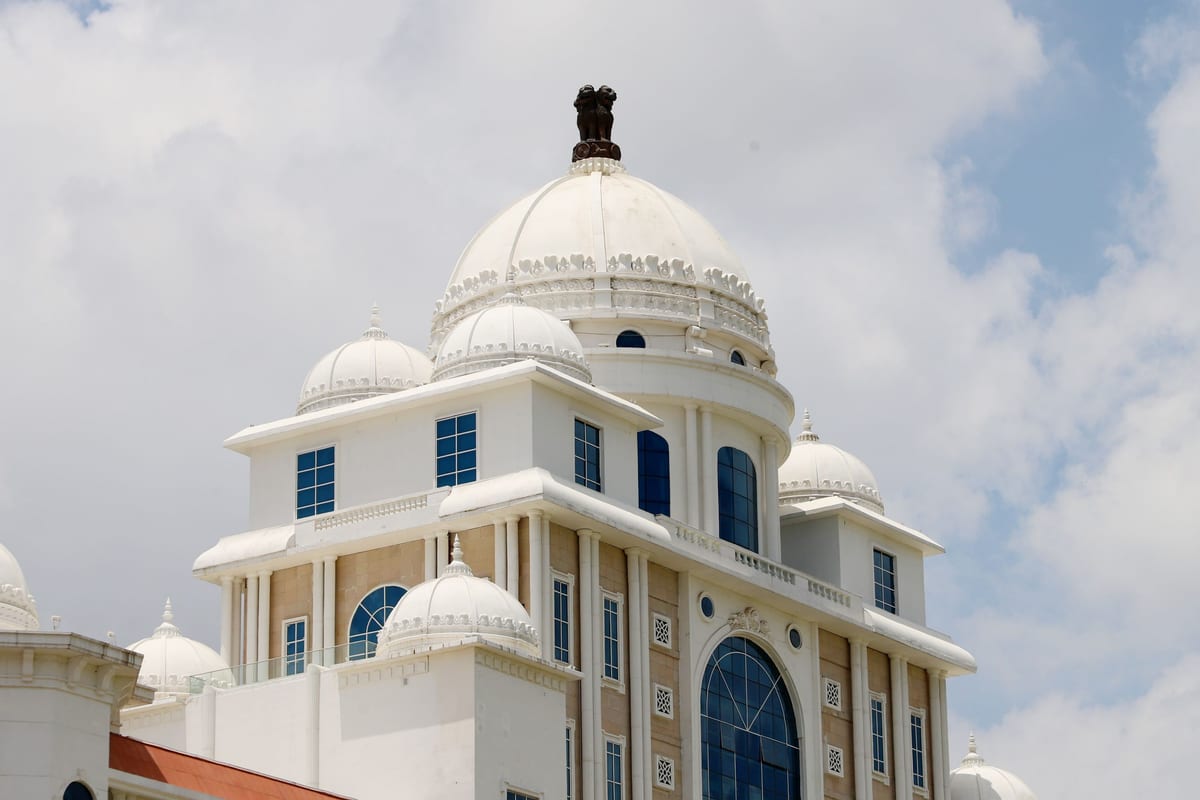
The Delhi Metro Rail Corporation has ordered entry and exit gates at 57 stations shut from 9 PM on 9 October and through 10 October until further notice, a security measure placed ahead of a protest demanding Chief Election Commissioner Gyanesh Kumar's resignation. The order, announced on X by DMRC, does not halt train movement; interchange facilities remain available at the affected stations except New Delhi Metro station.
Passengers can still change lines at Janpath, Patel Chowk, Central Secretariat, Lok Kalyan Marg, Rajiv Chowk, Seva Teerth (Udyog Bhawan), Mandi House, Barakhamba Road, ITO, Delhi Gate, Khan Market, and R.K. Ashram Marg, among the listed stations, but they cannot enter or exit through them. New Delhi station loses even interchange access. The restrictions cover central Delhi and other parts of the capital, including busy commercial areas and key interchange points.
The closure is tied to a planned Citizens for Justice and Peace protest on 10 October pressing for the resignation of Gyanesh Kumar. Delhi Police cited concerns about crowds gathering near stations and moving toward the protest venue or other sensitive locations, according to the DMRC update. The Supreme Court has set a boundary:
There must be no complete ban on Metro services.
Regulate, the court has said, but do not bring the network to a halt.
Indian Railways has cancelled Mail and Express trains scheduled to arrive at New Delhi and Hazrat Nizamuddin stations between 4 am and 2 pm on 10 October, citing anticipated traffic congestion, according to LiveMint. The order applies to trains departing their originating stations after 2 pm on Friday. Delhi will also shut all retail liquor shops on 9 and 10 October, LiveMint reported, as a preventive measure.
The Supreme Court draws a line
The court's direction is narrow but material. It does not prevent Delhi Police from managing crowds; it prevents a full shutdown of public transport as the default response to a protest. A capital city does not stop functioning every time a political demand reaches the street. Interchange access at 56 of the 57 stations preserves the network's connective tissue while limiting the places where crowds can assemble and disperse.
A selection dispute moves to the street
The protest's target is the appointment process that produced the Chief Election Commissioner. Parliament has altered that selection mechanism more than once in recent years, and the changes have been contested between the government and opposition benches. That argument now moves from committee rooms to the Metro gates. The appointment of an election commissioner is not a routine administrative matter; it bears on the perceived independence of the Election Commission itself. A protest that asks for a resignation is a political demand, not a criminal act. The institutional response so far has been to manage mobility rather than prohibit the gathering.
The demand is specific. Citizens for Justice and Peace has asked for Gyanesh Kumar's resignation over the process that selected him, an argument that has echoed through opposition benches. The Election Commission's authority rests on the perception that it sits above partisan contest. When that perception is challenged, the response is not only legal; it is also about how the state treats a political demand in public space. Banning a protest would be the easier security call. The court has refused to allow that, and the police have chosen a regulated restriction instead.
The city pays in time
The closures begin on Thursday evening, not Friday morning. Commuters returning home after 9 PM on 9 October found gates shut at Rajiv Chowk and Central Secretariat, forcing detours before the protest had begun. On 10 October, the geography spans the heart of Connaught Place, the government district, and the rail terminals. Indian Railways' cancellation of morning arrivals at New Delhi and Hazrat Nizamuddin adds a second layer: passengers stepping off long-distance trains will emerge into a city where the Metro station next to the terminal is closed to entry and exit.
For Delhi's daily commuters, the geography of the closures is not random. Rajiv Chowk, Central Secretariat, Kashmere Gate, and Mandi House sit at the centre of the Yellow, Blue, and Violet line interchanges. Closing their entry and exit gates forces passengers to find alternate stations or rely on road traffic already strained by railway cancellations and police deployments. The cost falls on office workers, hospital visitors, students, and vendors, not on the protesters themselves, who can assemble at a fixed venue. The Supreme Court's limit on Metro shutdowns does not eliminate that cost, but it prevents it from becoming total.
The railway and liquor orders extend the security perimeter beyond the Metro. A passenger arriving at New Delhi station on a cancelled train has a different problem from a commuter who cannot exit Rajiv Chowk. The first is stranded before arrival; the second is rerouted after. Both are consequences of the same calculus, but they fall on different populations. The liquor shop closure is a standard preventive measure in Delhi ahead of large gatherings and signals that the administration views the protest as a law-and-order event first.
Regulated, not halted
The DMRC's distinction between entry and exit closure and interchange access is an operational detail with strategic weight. It allows the city's rail network to continue moving workers from Ghaziabad to Gurugram while denying protesters a mass assembly point at Rajiv Chowk. That is a deliberate choice, not an incidental one. It reflects a police approach that seeks to disperse crowds across a wider geography rather than block the network entirely. The Supreme Court's language, regulate, do not ban, gives that approach a legal frame. Whether it holds in practice depends on whether station-level staff can enforce the difference without turning rush-hour platforms into choke points.
Proportionality as institutional habit
There is a difference between securing a city and suspending it. The court's directive, the DMRC's partial closures, and the railway order each occupy a different point on that spectrum. The risk is not that any single measure is illegitimate; it is that repeated, broad preemptive restrictions can normalise the idea that lawful protest requires transit shutdowns. India's electoral process has absorbed intense street contest before, from earlier agitations to post-poll disputes over counting. The institutions have held where the response was calibrated to the threat, not to the discomfort of the demand.
For the Election Commission, the deeper issue is not the Metro closures but the confidence its appointment process commands. Protests demanding a commissioner's resignation are not new; they become sharper when the selection mechanism is itself contested. The answer will not come from station gates. It will come from the clarity with which the institution publishes the basis of its appointments and the rules under which its members recuse themselves. That is the part of the story that outlasts 10 October.
A capital that can run its Metro while a protest unfolds may be a more useful measure of democratic health than the number of stations a police force can close. The Supreme Court has set that threshold for 10 October. The question now is whether the administration's practice matches the court's principle: regulate the risk, not the city.