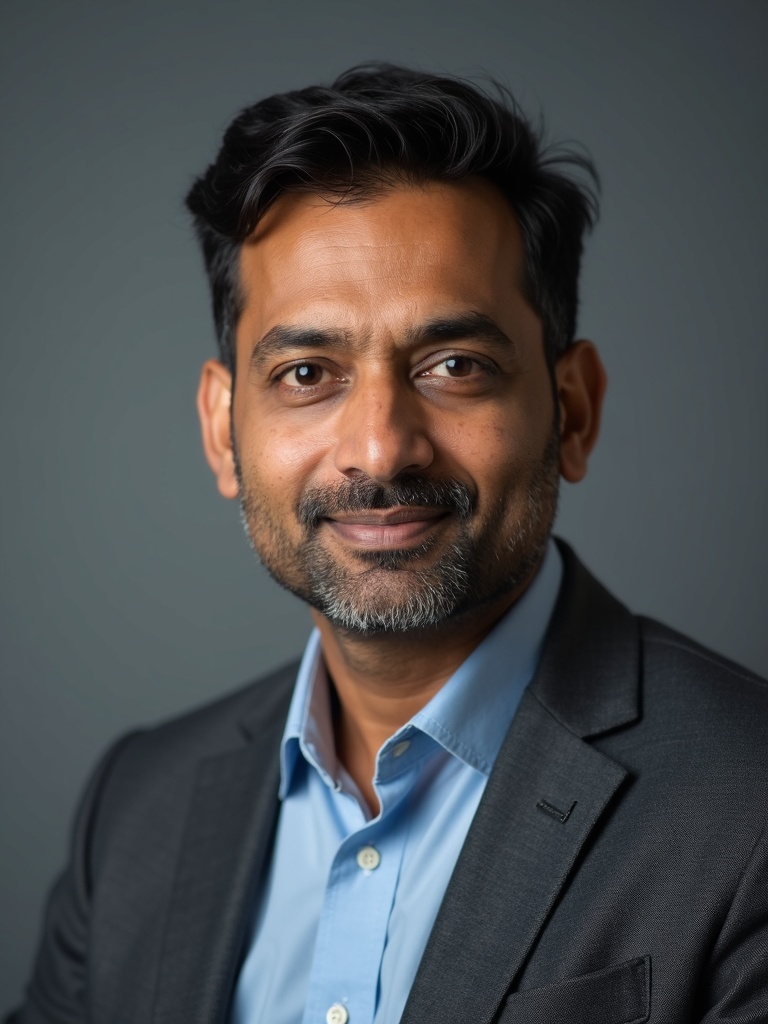
Pargat Singh began his tenure as Punjab Congress chief with two sentences that carry weight beyond typical first-day remarks. The former India hockey captain said Punjab needs issue-based politics and described the 1984 anti-Sikh riots as a mistake. NDTV reported the remarks on 8 October, months before the state votes for a new assembly and shortly after a bruising factional reorganisation in the party.
His elevation followed the resignation of Amarinder Singh Raja Warring as state unit president. The central leadership had already replaced Bhupesh Baghel with Sachin Pilot as Punjab in-charge, a change that acknowledged the Warring-Charanjit Singh Channi rivalry had split the state unit. LiveMint reported the appointment as a reset ahead of the 2027 assembly election. The new chief has served as the party's general secretary for organisation, an NDTV assessment noted.
The response from Bhagwant Mann was quick and edged with the vocabulary of the hockey field Pargat Singh once commanded. The chief minister said he hoped the new Congress chief's team members would pass him the ball because without a pass no goal can be scored.
"I hope his team members also pass him the ball, because without a pass, no goal can be scored," Bhagwant Mann said.
The jab framed the Congress appointment as an individual change inside a party that has struggled to work as a coherent unit in Punjab. But it skates past the deeper shift Pargat Singh is attempting: moving the argument from who leads the revival to what the revival should be about.
The 1984 admission and its limits
Calling the 1984 anti-Sikh riots a mistake differs from offering an apology or accepting culpability. A mistake can be acknowledged without specifying who made it, how it was organised, or what should follow. For a party that has spent decades avoiding the subject except in carefully hedged formulations, even this word is a departure. It creates room for a conversation the Congress has rarely wanted inside Punjab.
The legacy is not abstract. Sikh families across the state carry memories of the days after the assassination of Prime Minister Indira Gandhi, when mobs targeted Sikhs in Delhi and other cities. The legal record has never matched the scale of the violence. Investigative panels and special teams have revisited cases over the years, but convictions remain few. That gap between the known history and the judicial outcome has fuelled alienation and given political oxygen to narratives that treat the state's relationship with the Centre as permanently scarred.
Pargat Singh's wording does not close this gap. It opens a question: will the Punjab Congress follow the word with support for victims who are still seeking trial dates, witnesses who need protection, and communities that want memorialisation rather than silence? Without that follow-through, a mistake is merely an adjective attached to a tragedy, not the beginning of accountability.
Issue-based politics as a survival strategy
The call for issue-based politics is less novelty than necessity. Punjab's electoral calendar punishes parties that cannot answer the state's immediate stresses: farm incomes under pressure from high input costs, a public employment pipeline that has not kept pace with educated youth, a drug economy that has hollowed out border districts, and an industrial base starved of private investment. These are governance questions, and they reward parties that can present credible operational plans.
The Congress has struggled to do that. Its state unit has spent years in factional contests that consumed the energy meant for policy. Pargat Singh's appointment gives the party a chance to change that dynamic, but only if the former hockey captain can impose discipline on a group of leaders who have rarely accepted direction. He brings name recognition and organisational experience, yet neither guarantees that district presidents and former chief ministers will cede campaign space for a shared platform.
The 2027 race and the identity trap
Punjab votes in 2027, but the campaign has begun. The incumbent Aam Aadmi Party government under Bhagwant Mann will defend its record on services and governance, while the Shiromani Akali Dal and the BJP will seek their own openings. The Congress enters this contest with a new face and an old burden. The 1984 admission, if repeated and backed by concrete action, could blunt one of the Akali Dal's sharpest rhetorical weapons. It could reassure Sikh voters who have viewed the Congress as a party that asks for their support while refusing to examine what happened.
There is a risk in this approach. Identity politics in Punjab has never been only about the past. It feeds on present grievances about farm laws, water sharing, and the perception that New Delhi treats the state as a granary rather than a partner. Shifting to issues means competing on the same terrain where the Aam Aadmi Party has built credibility: schools, health clinics, power supply, and grievance redress. The Congress must either outperform that record or explain why its governance vision is more durable. Calling for issue-based politics is easy; the test is whether the party can name the issues sharply enough to win an argument instead of just a headline.
What this means beyond Punjab
For India's Sikh community, concentrated in Punjab but spread across the country and the world, a credible acknowledgement from the Congress has significance beyond state borders. It signals that the party most associated with 1984 in popular memory is no longer treating the riots as a closed file. That matters for national integration. It also matters for the diaspora networks whose remittances and business ties have long been sensitive to questions of dignity and justice in their home state.
The central government has its own role. Prime Minister Narendra Modi has acknowledged the pain of 1984 on multiple occasions, and the state's residents have heard that recognition. But recognition from one party does not substitute for institutional completion. If the Punjab Congress pairs Pargat Singh's word with active support for victims' legal claims, the central government's earlier expressions of empathy gain a legislative and judicial counterpart. The result would be stronger than either party alone could produce.
The measure of a sentence
Political language in India often changes before institutions do. A chief minister announces a scheme that never reaches the last mile. A party president calls an event a tragedy, and the files remain closed. Pargat Singh has named two uncomfortable truths: the Congress carried a burden from 1984, and Punjab's voters deserve a campaign about their lives rather than their grievances. Neither sentence is sufficient. Together, they form a test that only the months between now and 2027 can grade.
Indian readers should watch for the second step. Does the Punjab Congress file follow-up resolutions? Does it invite riot victims to party platforms not as symbols but as citizens with pending cases? Does it produce a governance agenda with numbers attached? An admission without accountability will fade into the same cycle of words that has defined Punjab politics for four decades. A conversion from rhetoric to institutional action, even partial, would be rare in Indian public life.