When a Ukrainian grain storage facility burns from a drone strike, the fire does not stay in Zaporizhzhia. It travels, invisibly, through commodity markets, across shipping lanes, and into the cooking pots of households from Cairo to Chennai. The UN News report on drone warfare in Ukraine, published this week, frames the crisis as a civilian protection issue — and it is that, certainly — but the arithmetic of this conflict has always had a longer reach than its immediate casualties suggest.
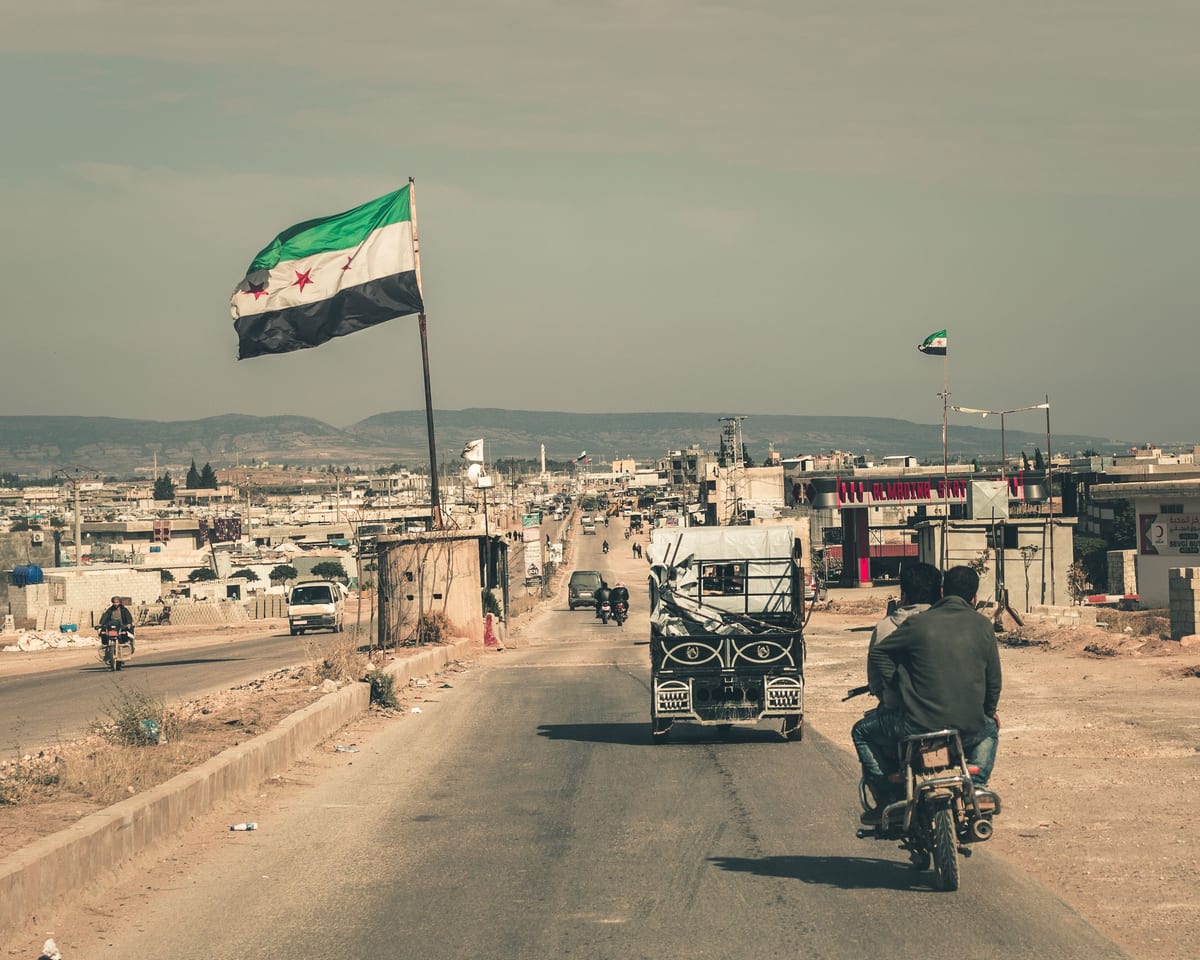
The drone has made the entire geographic depth of Ukraine a contested zone. The front line no longer marks the boundary between safety and danger. Small, cheap, and in some configurations nearly silent, drones now strike grain depots, harvesting equipment, irrigation infrastructure, and the rural logistics networks that move food from field to port. UN agencies have flagged that these attacks compound the disruption already created by the closure of maritime corridors in the Black Sea. When Ukrainian agricultural output contracts, the effects propagate outward to every country that depended on that supply chain.
The Commodity Thread Running Through Delhi
India depended on it deeply. Before the war, the Ukraine-Russia corridor supplied a large share of India's sunflower oil imports — analysts working on South Asian commodity exposure have estimated the annual volume at roughly 1.5 to 2 million tonnes — making it the single largest source of an edible oil that sits on nearly every kitchen shelf in the country. The war disrupted that flow in 2022; Indian importers pivoted to Argentina, Malaysia, and domestic alternatives. But pivoting is not the same as replacing, and the price signal of a tighter global market does not dissipate just because the import origin shifts. Every escalation that further degrades Ukrainian agricultural capacity — and drone strikes on storage and harvesting equipment do exactly that — sustains the elevated price environment that has been pressing on India's edible-oil inflation for four consecutive years.
Fertilizer supply chains carry the same logic. Ukraine and Russia together accounted for a significant share of global potash and nitrogen exports before 2022. Indian agriculture, which runs on fertilizer-intensive cropping patterns, absorbed the price shock when those supply chains fractured. The drone campaign's assault on agricultural logistics is not merely a Ukrainian problem; it is a structural tax on every import-dependent food economy, and India remains one of the largest of those.
The FAO has noted that attacks on grain storage and harvesting equipment compound the Black Sea corridor disruption — a dynamic that keeps global edible-oil and wheat prices elevated well beyond what ceasefire diplomacy alone can resolve. The damage accumulates in destroyed irrigation channels, in fields that will not be replanted this season because the equipment to plant them no longer exists.
Ukraine as Classroom
The second thread is harder to see from the outside but may prove the more consequential over time. Ukraine has become the world's most data-rich laboratory for drone warfare — not in a metaphorical sense but in a precise operational one. Every saturation attack, every counter-drone intercept, every electronic-warfare disruption, every FPV drone swarm absorbed by a hardened position generates doctrinal data that military establishments around the world are ingesting and debating. India's armed forces are among the most attentive students.
The Indian Army and Air Defence commands have been studying Ukrainian tactical patterns with the specific lens of their own operational environment — an LAC where terrain, altitude, and the absence of established front lines create a threat profile that rhymes, in important ways, with the dispersed drone threat Ukraine is now managing. The Parliamentary Standing Committee on Defence, in a 2023 report, explicitly cited the Ukraine conflict as evidence for accelerating India's indigenous counter-drone development — a rare instance of a parliamentary body invoking an active foreign war to justify a domestic procurement priority.
The lesson being absorbed is doctrinal: that drone saturation can substitute for mass artillery where conventional logistics are constrained; that counter-drone systems require layered depth rather than a single intercept layer; and that civilian and economic infrastructure are now primary targets in a war fought with cheap, mass-produced aerial munitions. Each of these lessons has direct application along India's northern and western fronts, where adversaries have invested in drone capabilities with a seriousness that predates the Ukraine conflict by several years.
The Governance Gap India Could Fill
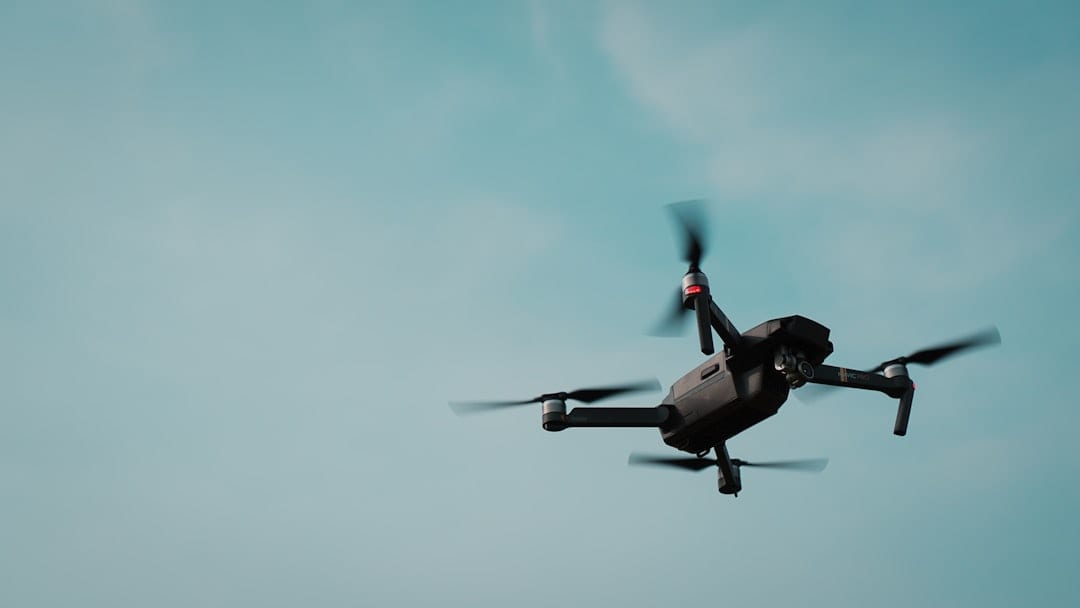
What the Ukraine conflict has exposed is a governance vacuum. No existing international framework effectively constrains the use of drones against civilian agricultural infrastructure. The laws of armed conflict were drafted for a world of distinguishable military targets; a drone that burns a grain silo operates in a legal grey zone that neither the Geneva Conventions nor MTCR-adjacent export controls were designed to address. The proliferation of drone technology — components manufactured across dozens of jurisdictions, assembled cheaply, and deployable by non-state actors as readily as state militaries — has outrun the normative architecture that was supposed to govern it.
India's non-aligned posture in this conflict is frequently described, in Western commentary, as fence-sitting. That framing misreads the strategic position. India has engaged both Kyiv and Moscow at the highest diplomatic levels, has called consistently for dialogue over escalation, and has declined to join either the Western sanctions architecture or the Russian political project. That equidistance, uncomfortable as it looks to alliance-minded observers, carries a specific diplomatic dividend: India is one of the few major powers that can table a norm-setting proposal on drone use near civilian infrastructure without being dismissed as a partisan actor.
Brahma Chellaney of the Centre for Policy Research has noted precisely this dynamic — that India's abstention posture at the UN gives it leverage to propose norms on civilian-targeting drone use that neither Washington nor Moscow could credibly advance. The Takshashila Institution's Pranay Kotasthane has added a complementary observation: that drone component supply chains, many running through China, represent a chokepoint India must map both for its own procurement security and for any export-control negotiation it enters. These observations describe the strategic geometry India occupies and the choices that geometry makes available.
A focused Indian proposal — perhaps tabled through the G20 or the SCO, forums where India exercises genuine convening authority — on drone use near agricultural and food-storage infrastructure would position New Delhi as a global food-security architect. The proposal need not resolve the broader Ukraine war to be consequential; even a framework that created documentation obligations or established agricultural zones as presumptively civilian infrastructure would advance the normative conversation and reinforce India's positioning as a voice for the Global South's food-security interests.
What the Numbers Cannot Capture
There is a final dimension that commodity price indices and doctrinal white papers cannot fully register: the transformation of civilian life in agricultural Ukraine into something permanently provisional. Farmers who cannot insure their equipment, cannot predict whether their stored grain will survive the next drone wave, and cannot plan a planting season around infrastructure that may not exist by harvest face more than a bad year. They are being driven out of production in ways that will take years to reverse even after the fighting stops.
For India, the structural question is not whether to pick a side in a European war. It is whether to shape the world that emerges from it — specifically the governance architecture for a technology that will define the next generation of conflict across every theatre, including India's own. The drone is already in the neighbourhood. The doctrine and the norms that govern its use are still being written. That is where India's leverage lies — not in condemnation, not in studied silence, but in the active, credible, non-partisan work of norm construction that its diplomatic position uniquely permits.