The fifteen members of the UN Security Council gathered in emergency session on Thursday to confront what has become the Gulf's most dangerous rupture in decades: Iranian strikes on Bahrain and Kuwait, combined with a sustained exchange of blows between Tehran and Washington over the Strait of Hormuz. The meeting carries all the hallmarks of a Council deadlocked between competing vetoes — but for India, sitting somewhere between the noise of the chamber and the silence of its own diplomatic offices in Manama, Kuwait City, and Tehran, what matters is not the procedural outcome. What matters is what happens to the water.
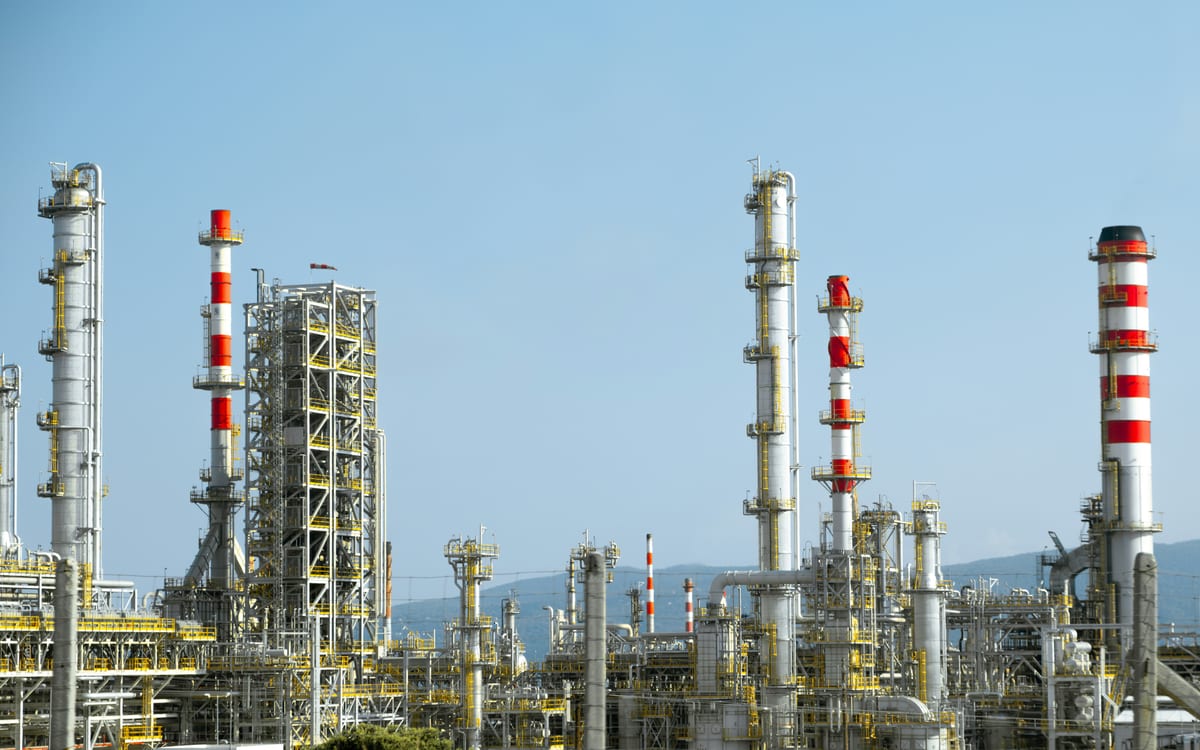
The Strait of Hormuz is perhaps twenty-one miles wide at its narrowest point. Through it moves an extraordinary share of the world's seaborne oil and liquefied natural gas. India sources the overwhelming majority of its crude from West Asia, and any sustained closure or militarisation of that chokepoint does not merely inconvenience Indian planners — it restructures the economics of Indian industry from the refinery gate outward. Longer routing, costlier alternatives, spot-market surges: each feeds directly into the current-account deficit and, eventually, into the price of every product moved by truck, train, or ship across the subcontinent.
The Diaspora Dimension
Over eight million Indian workers live and labour across the Gulf Cooperation Council states — in construction camps outside Riyadh, in logistics hubs in Dubai, on industrial sites in Kuwait. Their remittances, running to over fifty billion dollars annually according to the MEA's strategic tracking, sustain households across Kerala, Uttar Pradesh, and Bihar in ways that no domestic programme has yet replicated at scale. When a Gulf economy contracts — when a war drives away investment, grounds civilian aviation, or sends expatriate workers home — those remittances collapse with the speed of a wire transfer reversed.
Former Indian Ambassador Navdeep Suri, who served in both the UAE and Egypt, has argued that the Indian diaspora in the Gulf constitutes a strategic asset of the first order. Such an asset demands a proactive government evacuation and communication architecture during regional crises, not the scramble of improvisation. India demonstrated in Operation Kaveri in 2023 that it can mount a Vande Bharat-style evacuation when pressed. The question now is whether the consular infrastructure across GCC posts is already at heightened readiness, or whether New Delhi will again find itself building the runway as the aircraft descends.
Chabahar in the Cross-Fire Zone
India's Chabahar Port project sits on Iran's southeastern coast. It is geographically removed from the Strait, but not diplomatically removed from an Iran now trading strikes with the United States. Analysts at the Takshashila Institution have previously noted that any tightening of US secondary sanctions in a war scenario could place Indian entities with Chabahar exposure under legal and financial risk, regardless of existing waivers. That risk was theoretical eighteen months ago. It is operational today.
K.C. Singh, former Secretary at the Ministry of External Affairs, has argued in his published commentary that India's studied ambiguity on Iran-US tensions cannot survive a full-scale Gulf war. Ambiguity is a diplomatic instrument — useful precisely because it preserves optionality. But instruments have load-bearing limits. When Iranian missiles fall on Bahraini soil and US forces exchange fire over the world's most critical energy chokepoint, the instrument bends.
India at the Security Council
India has cycled in and out of non-permanent Security Council membership over the decades, and its posture in that chamber on West Asian crises has been consistent: call for de-escalation, urge dialogue, resist the gravitational pull of either P5 bloc. Happymon Jacob of CSDS and JNU has argued that this posture, deployed with genuine analytical weight rather than diplomatic throat-clearing, positions India as a credible interlocutor with Tehran in moments when Washington has no channel and Moscow has no credibility. The Voice of the Global South summits — the third of which India hosted in August 2024, drawing participation from 123 countries — have constructed a platform that gives this posture institutional backing. A Security Council resolution calling for immediate cessation of hostilities and protection of civilian shipping would be consistent with India's UNCLOS obligations and its role as a voice for the Global South's development interests.
The question is whether India moves from posture to action. The MEA's established instinct — call for restraint, avoid formal alignment — is sound as a baseline. What the current escalation demands is something beyond the baseline: back-channel facilitation between parties that have severed direct communication, pre-positioned diplomatic proposals that do not wait for the Council's procedural outcome, and a public articulation of Indian interests clear enough that neither Tehran nor Washington misreads New Delhi's silence as indifference.
The Structural Fault-Line
Harsh V. Pant of the Observer Research Foundation has consistently argued that India's Gulf policy must delink energy security from geopolitical alignment — that procurement strategy and political stance should be managed on separate tracks, insulated from each other as far as possible. That argument has real merit in a world of managed tension. In a world of active kinetic exchange over the Strait, the tracks converge whether India wishes them to or not.
This crisis exposes a structural fault-line that predates this week's Security Council session. India's energy import dependency and its diaspora concentration in the Gulf together represent an exposure that the foreign policy architecture has not fully crisis-proofed. Building strategic petroleum reserves at pace, diversifying crude sourcing toward African and American suppliers, and hardening the consular evacuation machinery are not responses to this crisis — they are overdue preparations for a category of crisis that the Gulf's geography makes periodic. The Iranian strikes on Bahrain and Kuwait are not an anomaly. They are a signal about the frequency distribution of future shocks.
What the Security Council produces on Thursday — a resolution, a deadlock, a presidential statement watered to invisibility — matters less for India than what New Delhi decides before the chamber adjourns. India has standing with Tehran that Washington lacks, credibility with Gulf monarchies that Moscow cannot claim, and a legitimate multilateral voice that neither P5 bloc can dismiss. Using all three simultaneously, in service of a de-escalation outcome that protects Indian energy flows and Indian workers, is not a departure from strategic autonomy. It is its fullest expression.