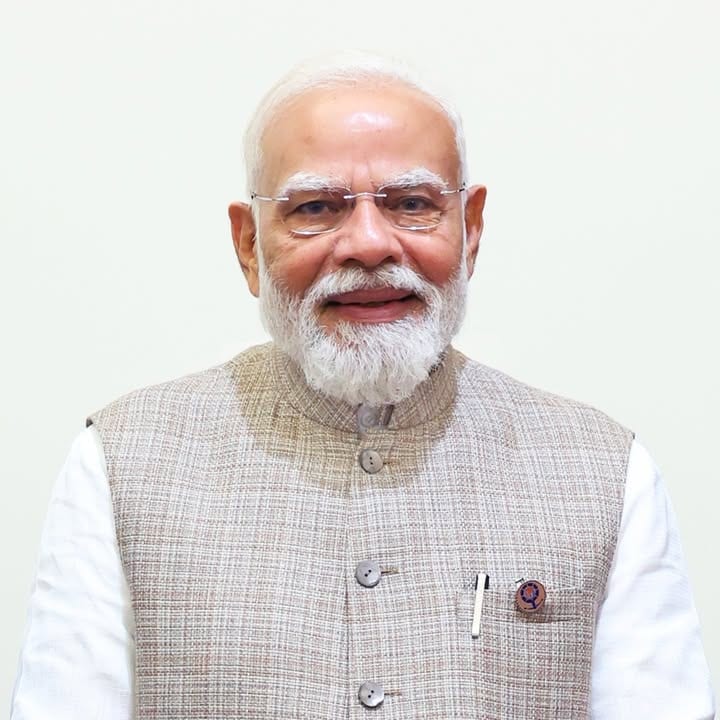
Prime Minister Narendra Modi paid tribute to Mahatma Gandhi on his birth anniversary, the 157th since the Mahatma's birth, stating his belief that Gandhi's ideology will continue to guide and inspire humanity in the years to come. The tribute, reported by NDTV, follows the protocol established over decades of state homage on October 2, a national holiday.
Mahatma Gandhi's ideology will continue to guide and inspire humanity in the years to come.
The statement is at once banal and profound. Banal because successive prime ministers have offered nearly identical formulations on this date, affirming Gandhi's relevance without specifying what that relevance demands of the Indian state. Profound because the assertion carries a claim about India's civilisational purpose that extends far beyond its borders. The Prime Minister's words, delivered without elaboration, place the burden of proof on the institutions that govern the world's most populous democracy.
The Ritual of Remembrance
Every year, the state's homage to Gandhi follows a predictable script. The wreath, the silence, the interfaith prayers, the official messages. This annual repetition is not a weakness but a structural feature of Indian statecraft: the republic periodically re-anchors itself to a figure whose moral authority remains its most durable political asset. That authority rests on two pillars: non-violence as a method of political change, and an equal citizenship that refuses to grade Indians by religion or caste. Both remain contested in practice, which is precisely why the ritual matters.
For Indian citizens, the event is a recurring marker of the republic's founding values. The homage does not resolve political disputes, but it performs a function similar to a constitutional preamble read aloud: it names the standards against which the state asks to be judged. When the Prime Minister says Gandhi's ideology will guide and inspire humanity, he is, whether intended or not, re-committing India to a benchmark that is easier to invoke than to meet.
Soft Power as Civilisational Currency
Gandhi remains India's most recognisable export to the world's conscience. His influence on Martin Luther King Jr., Nelson Mandela, and movements from the American South to South African townships is historical record. Indian diplomacy has long understood this. The Ministry of External Affairs foregrounds Gandhi as a universal icon in bilateral and multilateral outreach, and the United Nations marks October 2 as the International Day of Non-Violence. This is not merely a commemorative gesture; it is a strategic deployment of moral capital in a world where hard power narratives dominate.
The soft-power payoff is real but difficult to quantify. A foreign service that can point to Gandhi as its national patron gains an entry point into conversations about conflict resolution, human rights, and civilisational dialogue that a purely transactional diplomacy would not. The annual tribute from the Prime Minister reinforces this positioning. When New Delhi speaks of non-violent statecraft, the world is more inclined to listen because the claim is backed by a figure whose life demonstrated the method.
The Gap Between Reverence and Application
Here lies the tension that the ceremony cannot paper over. India has, for decades, invoked Gandhi to anchor a pluralist and non-violent national identity, yet the translation of that identity into policy remains uneven. The gap is not unique to any single government; it is a structural feature of a modern state that must balance Gandhian idealism with the imperatives of economic growth, national security, and coalition politics. The question is not whether successive governments have been faithful to Gandhi, but whether the republic's institutions have built mechanisms that make his values operational beyond the annual wreath-laying.
The strategic recommendation emerging from this tension is straightforward: convert the United Nations' International Day of Non-Violence into concrete Indian-led initiatives. A global fellowship for non-violent conflict resolution, a Gandhi Centre for Peace Studies with adequate funding, civic education programmes that teach Gandhian methods in Indian schools and panchayats. These ideas have been floated by Indian analysts and diplomats for years. The failure to implement them is not a lack of resources but a lack of institutional will. The tribute matters, but the tribute alone is not a policy.
Domestically, the gap is more consequential. A republic that honours Gandhi on October 2 and then conducts its routine political business without reference to his methods has not betrayed him so much as compartmentalised him. The challenge for Indian democracy is to ensure that Gandhian pluralism and non-violence inform the daily conduct of politics, not just the ceremonial margins. That is a harder test than any wreath-laying, and it is the test that the Prime Minister's statement implicitly invites.
What Indian Readers Should Take From This
The annual homage to Mahatma Gandhi is not a relic. It is a living negotiation between India's founding promise and its current practice. The Prime Minister's tribute is one sentence in that negotiation, but it commits the state to a standard. Indian readers should hold that standard in view when they assess the republic's performance on pluralism, non-violence, and equal citizenship. The soft power that Gandhi gives India is not a gift to be spent; it is capital that must be renewed by matching reverence with application. That work begins again on October 3.