There is a moment, just after dawn, when Gangtok belongs entirely to itself. The sun rises slowly behind the eastern ridges, spilling gold across the snow-capped shoulders of Kanchenjunga, the world's third-highest peak, and the city stirs with the low, resonant hum of monastery bells. Prayer flags catch the first mountain breeze, their colours, red, white, blue, green, yellow, snapping against a sky so clear it feels newly made. You understand, in that moment, that you have arrived somewhere that has been holding the world together, quietly and faithfully, for a very long time.
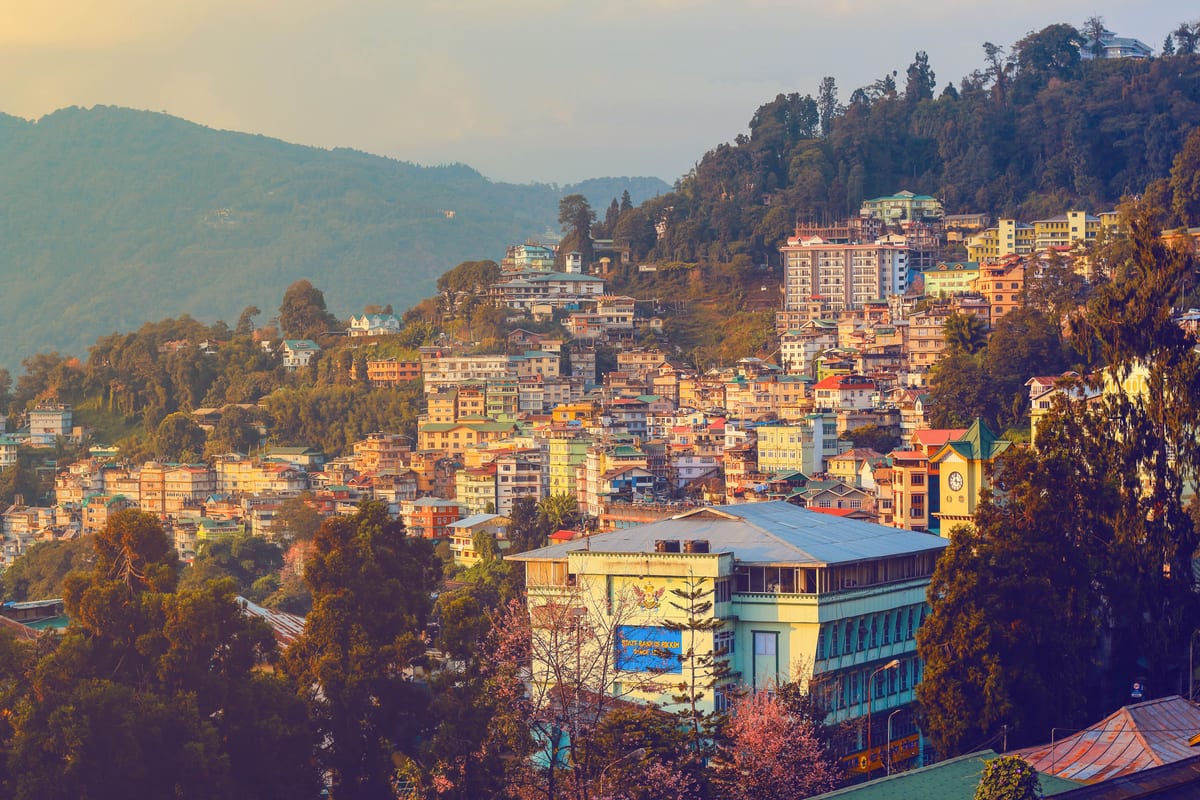
Gangtok, the capital of the northeastern Indian state of Sikkim, is described by Incredible India as "the mystical jewel of the Eastern Himalayas", and for once, the official poetry is not exaggeration. Perched at roughly 1,650 metres above sea level in the Himalayan folds of the Shivalik range, this city is a modern, bustling capital and one of India's most profound repositories of Buddhist culture, mountain tradition, and civilisational memory.
A Civilisation That Never Stopped Breathing
What sets Gangtok apart from almost every other Indian hill destination is this: it does not display its heritage. It practises it. The monks at Rumtek Monastery are not performing for tourists when they assemble for their daily prayers, they are continuing a tradition of Tibetan Buddhist scholarship and spiritual discipline that stretches back centuries. The incense rising from the Enchey Monastery, nestled in dense forests above the city, is not atmosphere. It is devotion.
India's civilisational story is often told through temples, forts, and museum corridors. Gangtok tells it differently, through the crimson robes of a young novice monk crossing a courtyard, through the meticulous geometry of a sand mandala, through the chorus of chanting that rolls down through the valleys like weather. This is DOCTRINE-14 in its most elemental form: heritage as a living, breathing, daily inheritance rather than an artefact to be preserved behind glass.
The Rumtek Monastery, one of the most significant Kagyu Buddhist institutions outside Tibet, is a powerful symbol of this continuity. Perched on a hilltop overlooking Gangtok, it draws monks, scholars, and pilgrims from across the Himalayan world. The Enchey Monastery offers quieter contemplation, set among rolling hills and whispering forests, its stillness is the product of centuries of sustained prayer.
A Canvas of Colours: The Living City
But Gangtok is not only a city of monasteries and meditation. Step onto MG Marg, the city's main pedestrian promenade, and you enter one of northeastern India's most vibrant public spaces. Lined with shops selling traditional Sikkimese handicrafts, contemporary fashion, and local produce, MG Marg is where Gangtok shows you its secular face: cheerful, open, and utterly at ease with itself.
The markets reveal cultural confluence. Sikkimese, Nepali, Tibetan, and Lepcha traditions weave together in the food, the textiles, the music drifting from a roadside speaker, and the faces of the people going about their day. Sit at a roadside café with a cup of chai, or better still, a bowl of thukpa, the hearty noodle soup that is both a Himalayan staple and comfort food, and watch this city compose itself around you.
Festivals, Traditions, and the Pang Lhabsol Spirit
Gangtok's cultural calendar is rich and deeply rooted. The annual Pang Lhabsol festival is among the most extraordinary of India's living ceremonial traditions, a centuries-old event in which performers don elaborate costumes and execute the ancient art of mask dancing, honouring the guardian deity of Kanchenjunga. To witness it is to understand that in Sikkim, the mountain is not merely a geographical feature. It is sacred geography, a presence to be respected and celebrated.
Nearby Namchi rewards the curious traveller with the towering statue of Guru Padmasambhava, the revered sage credited with bringing Buddhism to the Himalayan world, a monument that is simultaneously devotional and impressive in its scale and craftsmanship.
Best Time to Visit
Gangtok rewards visitors across most of the year, but the choice of season shapes the experience significantly. According to Incredible India's climate data, temperatures in the city range from approximately 2.5°C in January winters to a pleasant 25°C peak in the summer months. The most popular windows for travel are spring, from March through May, when temperatures warm, rhododendrons bloom across the hillsides, and the skies offer clear views of Kanchenjunga. October and November constitute an excellent post-monsoon window, when the rains have washed the valleys clean and the mountain panoramas are at their most dramatic.
The monsoon months of June through August bring lush greenery but also heavy rainfall and occasional road disruptions, beautiful if you are prepared for it, challenging if you are not.
How to Reach Gangtok
Gangtok is accessible by two airports. Bagdogra International Airport (IXB) in West Bengal, roughly 124 kilometres away, is the primary air gateway and is connected to major Indian cities. The newer Pakyong Airport (PYG), located closer to Gangtok in Sikkim itself, has expanded connectivity in recent years. From both airports, shared taxis and private cabs offer the road journey into Sikkim, a drive through increasingly dramatic Himalayan scenery.
The nearest major railway station is New Jalpaiguri Junction (NJP), well connected to the national rail network, from where surface transport to Gangtok takes approximately four to five hours depending on road conditions and the season.
Why Gangtok Belongs in India's Heritage Story
India's heritage is vast and plural, a civilisation that has absorbed, integrated, and expressed itself through dozens of languages, faiths, art forms, and landscapes. Gangtok is one of its northeastern chapters: a city that holds Tibetan Buddhist scholarship, Sikkimese folk tradition, Nepali cultural vibrancy, and Himalayan ecological wisdom all within a single mountain ridge. It is proof that India's civilisational story does not end at the Gangetic plains or the Deccan plateau, it climbs, magnificently, all the way to the sky.
To visit Gangtok is to remember that India is not one story but many stories, all told at once, all of them alive. Come for the mountains. Stay for the monasteries. Leave transformed by the quiet, extraordinary evidence that some civilisations continue to create meaning, beauty, and belonging, every single day, at the top of the world.