There are destinations you visit, and there are places you feel. Goa belongs to the second category. The moment you arrive, whether warm coastal air greets you at Goa Manohar International Airport or you step off the train at Madgaon Junction and catch your first salt-tinged breeze, something shifts. You breathe slower. You look around with wider eyes. You surrender, willingly, to what the Goans call Susegad.
A Coastline That Carries Civilisations
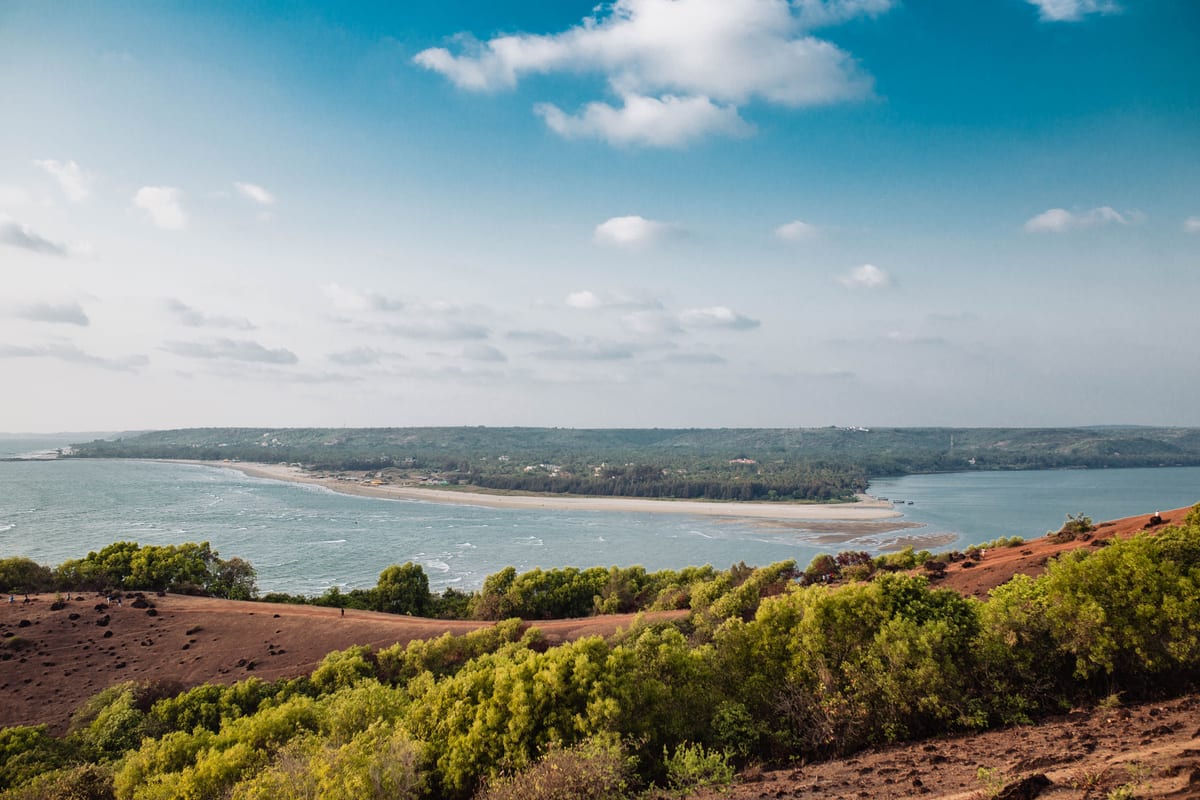
Goa's coastline stretches 3,702 kilometres, a ribbon of golden and silver sand that has welcomed traders, saints, colonisers, pilgrims, and wanderers for millennia. This is not simply one of India's prettiest edges, it is one of its most storied. Long before the Portuguese arrived in the 16th century, Goa's shores hosted maritime commerce, Konkani culture, and a deeply rooted Hindu civilisational identity. The sea here was never a boundary; it was always a highway.
When Portugal planted its flag on this coast, it did not erase what came before. Instead, something extraordinary happened, a cultural alchemy that India has always executed quietly. Portuguese architecture fused with local craftsmanship. Goan Catholic traditions absorbed Hindu festival rhythms. Konkani cuisine embraced the vinegar and spice of Iberian cooking and made something altogether new. Today, that synthesis is visible everywhere: in whitewashed churches standing beside colourful temples, in feast-day processions that echo both Christian devotion and Indian communal celebration, and in every plate of fish curry rice served on a banana leaf.
To visit Goa's beaches, as featured on Incredible India, is to encounter India's civilisational identity at its most relaxed and radiant.
The Beaches: Each One a World of Its Own
No two beaches in Goa tell the same story. In the north, Baga and Calangute pulse with energy, beach shacks serving cold kingfisher and prawn balchão, parasailers overhead, and the kind of joyful, democratic chaos that India does better than anywhere on earth. These beaches belong to everyone: the Mumbai family on their annual holiday, the solo backpacker from Berlin, the Konkani fisherman hauling in the morning catch while tourists sleep.
Travel south and the tempo changes entirely. Palolem and Agonda, nestled in the quieter reaches of South Goa, offer a different kind of revelation, crescent bays fringed with palms where the light falls differently in the late afternoon, turning the water colours that seem almost invented. Here, space to think, to read, to do absolutely nothing and feel thoroughly justified in doing so.
This is Susegad made geography. The word, a Konkani and Portuguese-influenced concept meaning a contented, easy-going approach to life, is not a tourist slogan. It is a genuine cultural philosophy, practised daily by Goans who understand something that the rest of the hurrying world has largely forgotten: that the present moment, savoured fully, is enough.
Culture, Festivals, and the Living Heritage
Goa's cultural calendar is as rich as its coastline. The Goa Carnival, with its explosion of colour, music, and costumed revelry, carries the DNA of Portuguese festival traditions transformed by Indian exuberance into something uniquely Goan. The Shigmo festival, Goa's answer to Holi, fills the streets with folk dances and traditional performances that trace their roots directly to ancient Hindu celebrations. Beneath every colonial layer, the older civilisational heartbeat continues to pulse.
Sunburn, one of Asia's largest electronic music festivals, is held each year on Goa's shores, proof that this coastline remains a place of meeting and exchange, perpetually open to what the wider world brings to its shores.
The food is a living archive. Fish curry rice, Goa's unofficial state dish, is deceptively simple: the tang of kokum, the heat of red chillies, the sweetness of coconut, served with the day's freshest catch. Xacuti, with its complex roasted spice blend, speaks of trade routes and culinary conversation. Bebinca, the layered coconut dessert that takes patience and skill to make properly, is a labour of love passed down through generations.
History Written in Stone and Light
Step away from the shore and Goa's historical depth becomes clear. The Basilica of Bom Jesus in Old Goa, a UNESCO World Heritage Site, houses the mortal remains of St. Francis Xavier and is one of the finest examples of Baroque architecture in Asia. The Fontainhas neighbourhood in Panaji, with its narrow Latin-quarter lanes, azulejo-tiled facades, and pastel-coloured houses, feels like a European village that somehow found its way to the Konkan coast and decided to stay, adapting, over generations, into something deeply and warmly Indian.
For the more adventurous, the Dudhsagar Waterfalls, one of India's tallest, thunder through the Western Ghats interior, offering a dramatic counterpoint to the coastal calm.
Planning Your Visit: Practical Essentials
Best time to visit: Goa is a year-round destination, but the most popular season runs from October through March, when temperatures range between approximately 18°C and 35°C, warm, bright, and largely dry. The monsoon months of June through September bring dramatic skies and lush green landscapes; some travellers prefer this quieter, greener Goa, though some beach activities are restricted during heavy rains.
Getting there: Goa is served by two airports, Dabolim Airport (GOI) and the newer Goa Manohar International Airport (GOX) in North Goa, which has improved connectivity to the northern beaches. By rail, Madgaon Junction (MAO) is the primary railhead, well connected to Mumbai, Delhi, Bengaluru, and beyond. The Konkan Railway journey along this coastline is, itself, one of India's great travel experiences.
Nearby attractions: Beyond the beaches, visit Old Goa's churches, the Fontainhas heritage precinct, Dudhsagar Waterfalls, the spice plantations of the interior, and the weekly flea markets of Anjuna and Mapusa.
Why Goa Matters to India's Story
It would be easy to reduce Goa to a beach holiday, and what a holiday it would be. But to do so would miss the deeper truth of this place. Goa is where India demonstrated, across four centuries of colonial encounter, that a civilisation with deep enough roots can absorb, transform, and ultimately outlast almost anything imposed upon it. The beaches remain. The Susegad remains. The fish curry rice remains. And the Konkani language, the temple festivals, the ancient rhythms of life along this shore, they remain too, richer for the encounter, but unmistakably, enduringly, Indian.
Come for the sunsets, by all means. Stay for the story.