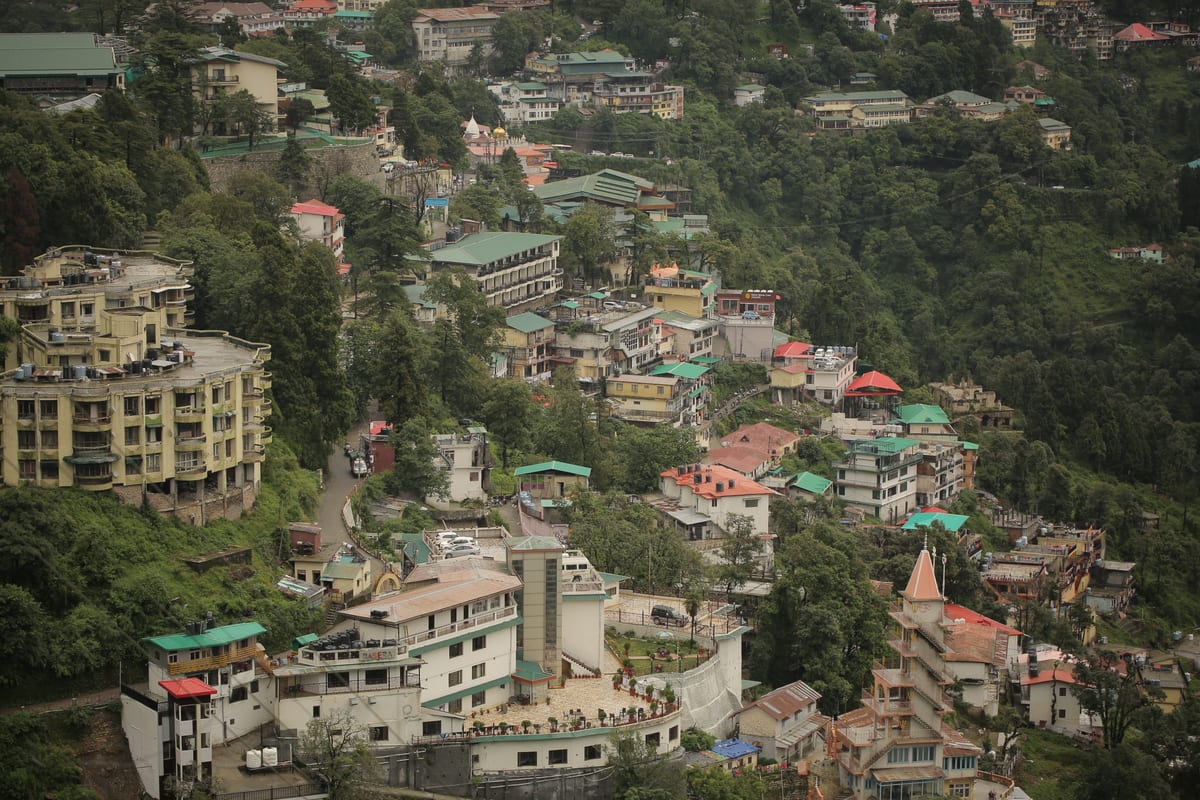
There is a particular quality of light in Shimla, a cool, crystalline luminosity that filters through the deodar cedars and bounces off the distant snow peaks of the Himalayas. It is the kind of light that makes history feel close, as though the decades are simply layers of mist that lift and settle and lift again over the ridgeline. Shimla, the capital of Himachal Pradesh and the beloved Queen of the Hills, has always had this effect on those who arrive here. It does not merely impress. It lingers.
A Town Built on History
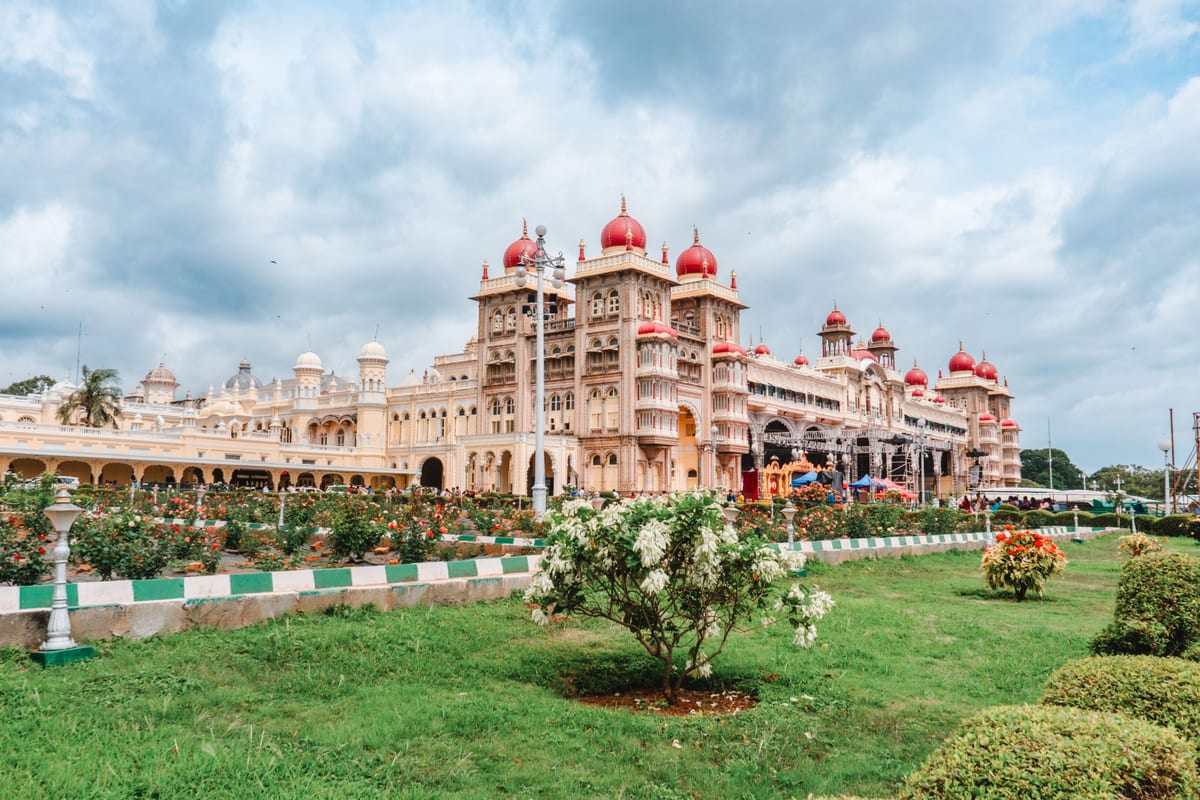
Shimla's fame is largely a colonial inheritance. When the British established it as the summer capital of the Indian Empire, they brought an architectural vocabulary of grand churches, turreted bungalows, and civic buildings that could have been lifted from the English countryside, except that they perch improbably on Himalayan ridges at over 2,200 metres above sea level. Walking through the town today, this legacy appears at every turn: in the mock-Tudor facades, in the spires that punctuate the treeline, and in institutions like the Gaiety Heritage Cultural Complex, a five-storey Victorian building now more than 120 years old. Once a theatre for colonial society, it is now a living stage for music, performance, and celebration, a building that once excluded now belongs to everyone.
Yet Shimla was never purely a British invention. Long before the colonial administrators climbed these hills seeking relief from the plains summer, this region was home to a rich Himachali culture with its own shrines, traditions, and rhythms. The colonial chapter was vivid, but only one chapter. The story had been unfolding far longer, and it continues today.
The Living Heritage of Shimla
The Himachal State Museum and Library offers one of the most rewarding ways to understand Shimla's layered identity. A repository of regional history, it holds rare books, manuscripts, and historical documents alongside a remarkable collection of traditional Himachali artefacts, sculptures, ancient coins, pottery, miniature paintings, textiles, and a celebrated doll gallery. Standing before these objects, the complexity, artistry, and deep roots of Himachali civilisation become apparent, stretching back through these mountain valleys long before any summer capital was declared.
The spiritual dimension of Shimla is equally powerful. Ancient temples and historic churches coexist here with a naturalness that reflects India's capacity for absorbing the new without abandoning the old. The Tara Devi Temple, perched on a hilltop outside the main town, serves as one such anchor, a place of genuine devotion that draws pilgrims as much as it draws travellers. This is not heritage preserved behind glass. This is heritage in active, breathing use.
The Mall, the Ridge, and the Pulse of the Town
At the heart of Shimla's social life are two iconic spaces: the Mall and the Ridge. The Mall is the bustling commercial centre of town, lined with shops, bakeries, restaurants, and the kind of cheerful human density that makes mountain towns feel alive. The Ridge is the great open esplanade where the town comes together, for festivals, live music performances, impromptu celebrations, and the simple pleasure of standing at elevation with the sweep of the Himalayan peaks spread before you. All year long, the Ridge serves as Shimla's village square, amphitheatre, and town hall. It is where the community exhales.
A Heritage Walk offers an immersive guided experience that connects the architectural landmarks, the colonial stories, and the Himachali undercurrents into a coherent, human narrative. It is one of the finest ways to spend a morning in Shimla.
The Toy Train: A UNESCO Journey Through the Hills
No account of Shimla is complete without the Shimla-Kalka Railway, a UNESCO World Heritage Site and one of India's most beloved rail experiences. The narrow-gauge line climbs through tunnels, bridges, and forested hillsides at a pace that forces you to slow down and truly see the landscape. The Toy Train is not simply transport. It is an event, a rolling meditation on the beauty of the Himalayan foothills. Book your seat, open the window, and let the mountains do their work.
Best Time to Visit
Shimla is a destination for all seasons, and each has its own character. Summers, from March through June, offer temperatures between approximately 2°C and 29°C depending on the month, making it a welcome escape from the heat of the plains. This is peak season, and the town hums with energy. Monsoon months of July and August bring lush greenery and dramatic cloud formations, though mountain roads require caution. Autumn, particularly October and November, brings clear skies and golden light that photographers and trekkers prize. Winter, December through February, transforms Shimla into a snow-dusted landscape, with temperatures dipping as low as -2°C in January. If snowfall is on your wish list, plan accordingly.
Getting There
Shimla is well connected for the traveller willing to make the mountain approach part of the adventure. The nearest airports are Shimla Airport (SLV) for direct regional connection, and Shaheed Bhagat Singh International Airport (IXC) in Chandigarh for wider domestic and international connectivity, from where road transfer to Shimla takes roughly three to four hours through scenic hill country. By rail, Shimla Railway Station (SML) is the terminus of the heritage Kalka-Shimla line. By road, Shimla is accessible from Delhi via the NH-5 corridor, a drive of approximately 350 kilometres that rewards the effort with escalating Himalayan grandeur.
Why Shimla Still Matters
Shimla matters because it refuses to be only one thing. It is a colonial relic and a living Indian city. It is an ancient spiritual landscape and a modern cultural venue. It is a place of snowfields and festivals, of Victorian theatre and Himachali devotion, of a UNESCO railway and a ridge where strangers gather to watch the same sunset. In that multiplicity, Shimla mirrors something essential about India, the capacity to hold contradictions with grace, to transform inheritance rather than be defined by it, and to keep living, loudly and joyfully, in the present.
Come with time to wander. Come with curiosity about what lies beneath the postcard image. Come ready to be surprised. Shimla, the Queen of the Hills, has been welcoming travellers for generations, and she has stories yet to tell.
Plan your journey with the official Shimla destination guide on Incredible India, the Ministry of Tourism's authoritative resource for travel across the country.