There are cities that accumulate history, and then there is Varanasi, a city that is history, still breathing, still praying, still lighting its lamps every evening along a river that has witnessed more human devotion than perhaps any waterway on earth. Mark Twain, who visited in the nineteenth century, captured it with characteristic precision: "Banaras is older than history, older than tradition, older even than legend." That observation has lost none of its force. If anything, it grows truer with each passing century.
Varanasi sits in the eastern reaches of Uttar Pradesh, cradled in the crescent bend of the Ganga. It answers to three names, Varanasi, Kashi, Banaras, each carrying its own weight of meaning. The oldest and most sacred of these is Kashi, derived from the Sanskrit root Kash, meaning "to shine." According to legend, this was the spot where the first ray of light touched the earth, a story that feels less like mythology and more like metaphor when you watch a winter dawn crack open over the river. Revered as the City of Light, Varanasi is believed to have been founded by Lord Shiva himself and is counted among Hinduism's seven sacred cities, the Sapta Puri. For devout Hindus, to die in Kashi is to achieve moksha, liberation from the cycle of birth and rebirth. That conviction shapes every ritual, every cremation, every pilgrimage conducted here today.
A Civilisation That Never Paused
What distinguishes Varanasi from every other ancient city in the world is not its age alone but its unbroken continuity. Rome has ruins. Athens has museums. Varanasi has neither, or rather, it has both, invisibly folded into the texture of ordinary life. A silk weaver in the old city lanes may work on a loom whose design has not changed in five centuries. A priest performing the dawn aarti at the river's edge recites verses composed millennia before the printing press existed. Students hurry past funeral pyres on their way to Sanskrit pathshalas. The sacred and the secular do not merely coexist here; they are, in the deepest sense, the same thing.
The Incredible India page for Varanasi describes the city as "ancient, vibrant, chaotic, spiritual, artistic and yet deeply human." That last phrase lingers after you leave. For all its cosmic significance, the city where Shiva is said to reside, where the Ganga absolves sin, where death is a doorway, Varanasi is relentlessly, tenderly human. A wedding procession may pass a funeral cortege on the same narrow lane, garlands of marigold brushing against white funeral shrouds. Neither pauses. Both belong.
The Ghats: The Soul of Varanasi
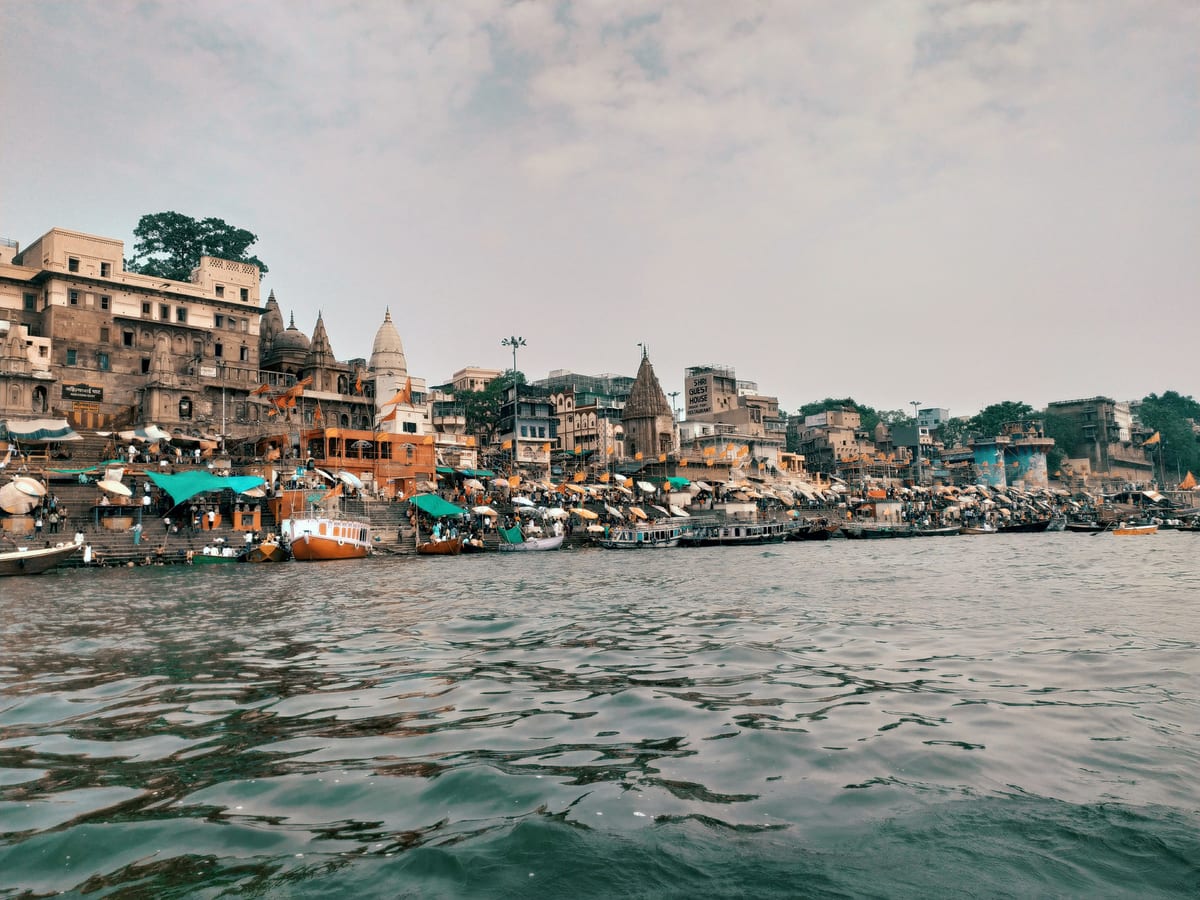
The defining geography of Varanasi is its ghats, stone stairways descending to the river, each with its own name, its own deity, its own ritual purpose. There are more than eighty ghats strung along the western bank of the Ganga, forming a riverfront that is simultaneously a temple, a cremation ground, a bathing pool, a yoga studio, a music hall and a marketplace.
Dashashwamedh Ghat is the ceremonial heart of the city. Every evening, as dusk settles and the river turns molten copper, a team of priests conducts the Ganga Aarti, a choreographed act of devotion involving fire, flowers, incense, conch shells and Sanskrit chants. To witness it from a boat on the river, watching the flames rise against the darkening sky while thousands of devotees crowd the ghat steps, is to understand why travellers return to Varanasi again and again. It is devotion made visible.
Assi Ghat, at the southern end of the ghats, offers a quieter but equally moving experience: Subah-e-Banaras, a sunrise gathering of yoga, classical music, and collective prayer that greets each day with an intentionality most cities have long forgotten. Manikarnika Ghat, one of Hinduism's holiest cremation grounds, burns around the clock. It is not morbid, or rather, it is morbid in the way that all honest confrontations with mortality are, which is also clarifying, even beautiful. No photograph truly prepares you for it, and no visitor leaves it unchanged.
Beyond the River: The City Within the City
Behind the ghats lies the old city, a labyrinth of lanes so narrow that morning light arrives in slivers. Among temples and tea stalls and silk shops, Varanasi reveals its other genius. The city's Banarasi silk, woven on handlooms by families who have practised the craft across generations, remains among the finest textile traditions in the world. A visit to the weaving quarters of Madanpura or Lallapura is a lesson in craft and cultural transmission: knowledge passed father to son, stitch by stitch, century by century.
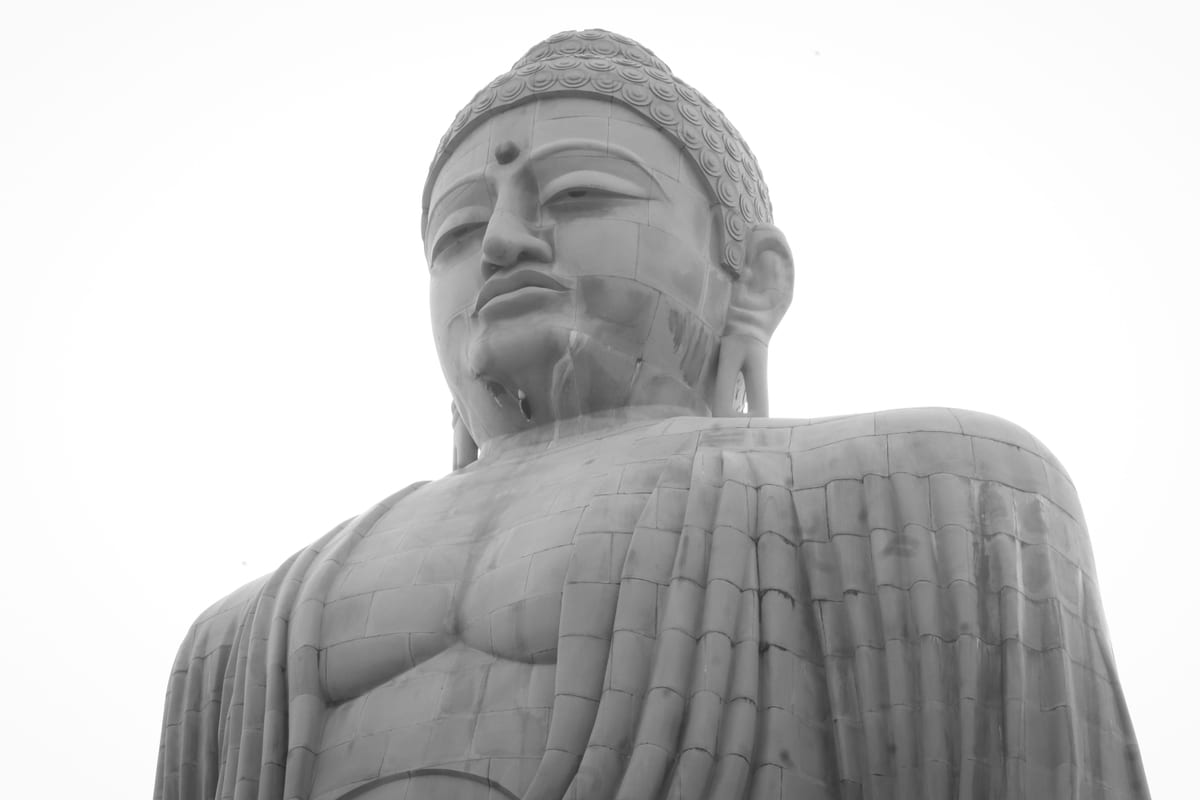
The Kashi Vishwanath Temple, dedicated to Lord Shiva, stands at the spiritual centre of the old city. Nearby, Sarnath, just twelve kilometres away, marks the spot where the Buddha delivered his first sermon after attaining enlightenment. Varanasi is not merely a Hindu pilgrimage city; it is a crossroads of India's philosophical traditions, where Hinduism's oldest living city stands a short drive from Buddhism's most sacred site.
When to Visit and How to Get There
The finest months to visit Varanasi are October through March, when temperatures range from six to thirty-five degrees Celsius and the air carries the cool clarity that makes early-morning boat rides on the Ganga transcendent. The Dev Deepawali festival in November, when the ghats are illuminated by hundreds of thousands of earthen lamps, is a particularly extraordinary time to be in the city. Summer months, April through June, can be intensely hot, with temperatures exceeding forty-three degrees Celsius, though the city never fully empties; faith does not observe a tourist season.
Varanasi is well connected to the rest of India. Lal Bahadur Shastri International Airport (VNS) receives direct flights from Delhi, Mumbai, Bengaluru and several other major cities. Varanasi Junction Railway Station (BSB) is a major rail hub with connections across the country. Once in the city, the ghats are best explored on foot or by boat, a pre-dawn boat ride along the river, watching the city wake to its rituals, remains one of the most singular travel experiences in all of India.
Why Varanasi Matters
India has monuments that inspire awe and landscapes that inspire wonder. Varanasi inspires something rarer: the sensation of being present at the source of something vast and enduring. It is not a city that performs its heritage for visitors, it simply continues, as it has always continued, indifferent to the gaze of the camera, absorbed entirely in the business of being alive and dying and being reborn. You cannot consume Varanasi; you can only surrender to it, even briefly, and carry something of its light back with you when you leave.