New Delhi: HD Korea Shipbuilding & Offshore Engineering, the shipbuilding arm of HD Hyundai, has reiterated its intent to become the primary strategic investor in a proposed greenfield shipyard at Thoothukudi in Tamil Nadu, the ministry of ports, shipping and waterways said in a statement Wednesday. The commitment follows a meeting in Seoul between shipping minister Sarbananda Sonowal and HD Hyundai chairman Chung Ki-sun during Sonowal's four-day visit to South Korea.
The two sides agreed to work toward a joint venture structure and to finalise a detailed project report within six months. National Shipbuilding & Heavy Industries Park, Tamil Nadu Ltd, the state-level entity driving the Thoothukudi cluster, and HD KSOE expressed a shared intent to advance the proposed greenfield shipyard. Sonowal told Chung that his main goal in Seoul was to realise quickly the vision he had outlined to Prime Minister Narendra Modi: that India would become a core pillar of HD Hyundai's global future.
"We have a clear mandate to scale up our work together. The memorandum of understanding we signed on 20 April 2026 is the bedrock of what we want to build together in Thoothukudi, Tamil Nadu. A greenfield shipyard with a $4 billion investment is a massive milestone, and we are completely committed to backing it," Sonowal said, according to the ministry statement.
The yard is envisaged as a flagship initiative under the India-Republic of Korea Special Strategic Partnership. The cluster spreads over 3,000 acres and will include shipbuilding infrastructure such as an over-300-metre dry dock. The HD KSOE facility will also house several of the Korean entity's vendors that have supported its shipyard operations. This matters more than the headline dollar figure because it implies the movement of an ecosystem, not just a single assembly line.
Why Thoothukudi
Thoothukudi sits on the east-west shipping lane that connects the Strait of Malacca to the Red Sea and the Suez Canal, a route that carries a large share of global container and energy cargo. A repair and building yard on that corridor gives vessel operators a refit option without detouring through Singapore or Colombo. For India, the location combines a deep-water harbour with rail and road links into southern Tamil Nadu's industrial clusters. Thoothukudi also has port-side industrial activity, so heavy engineering labour and power connections already exist.
India has long relied on imported tonnage for coastal and oceangoing cargo. The government's port-led industrialisation agenda identifies shipbuilding as one of the few heavy industries where Indian labour costs and engineering capability can combine with foreign technical collaboration to build vessels for both domestic and export markets. HD Hyundai brings the shipyard planning, dry-dock engineering and project execution experience that Indian yards have lacked at scale. The nearest comparable Indian capacity has come from public-sector yards, some of which have built warships and high-value vessels but have not become commercial hull exporters.
A partnership with a six-month clock
The six-month DPR timeline is the first real test. Past Indian shipyard proposals have foundered on land acquisition, environmental clearances, power evacuation and port connectivity. The ministry's statement did not say who will hold the clearances, whether the 3,000 acres are fully in state control, or how the joint venture will structure technology transfer. Those questions will determine whether the $4 billion figure becomes concrete steel or remains a visiting-card number exchanged in Seoul.
Sonowal's visit has tied the Thoothukudi project to the broader India-South Korea maritime momentum since President Lee Jae Myung's visit to New Delhi earlier this year. The existing Comprehensive Economic Partnership Agreement between India and South Korea covers goods trade, but services and investment commitments in shipbuilding have historically been shallow. A greenfield shipyard with vendor migration is a different order of integration: it asks Korean mid-sized suppliers to set up operations in Tamil Nadu, not merely ship components from Korea. That is why the vendor clause in the proposed facility matters. If those suppliers follow, the project creates an industrial cluster with multiplier effects in welding, steel fabrication, electrical systems and marine services. If they do not, the yard becomes an assembly site dependent on imported subassemblies.
Economic and strategic weight
The shipbuilding commitment carries both economic and strategic weight. India's merchant fleet is small relative to its cargo volumes, and a domestic yard capable of building large commercial vessels would cut freight costs over time and reduce exposure to foreign vessel prices and delivery schedules. A Thoothukudi yard would position Tamil Nadu as an alternative to the established shipbuilding centres in China, South Korea and Vietnam. For Korean shipbuilders, India offers a lower-cost production base with access to a growing domestic market and a friendly investment regime.
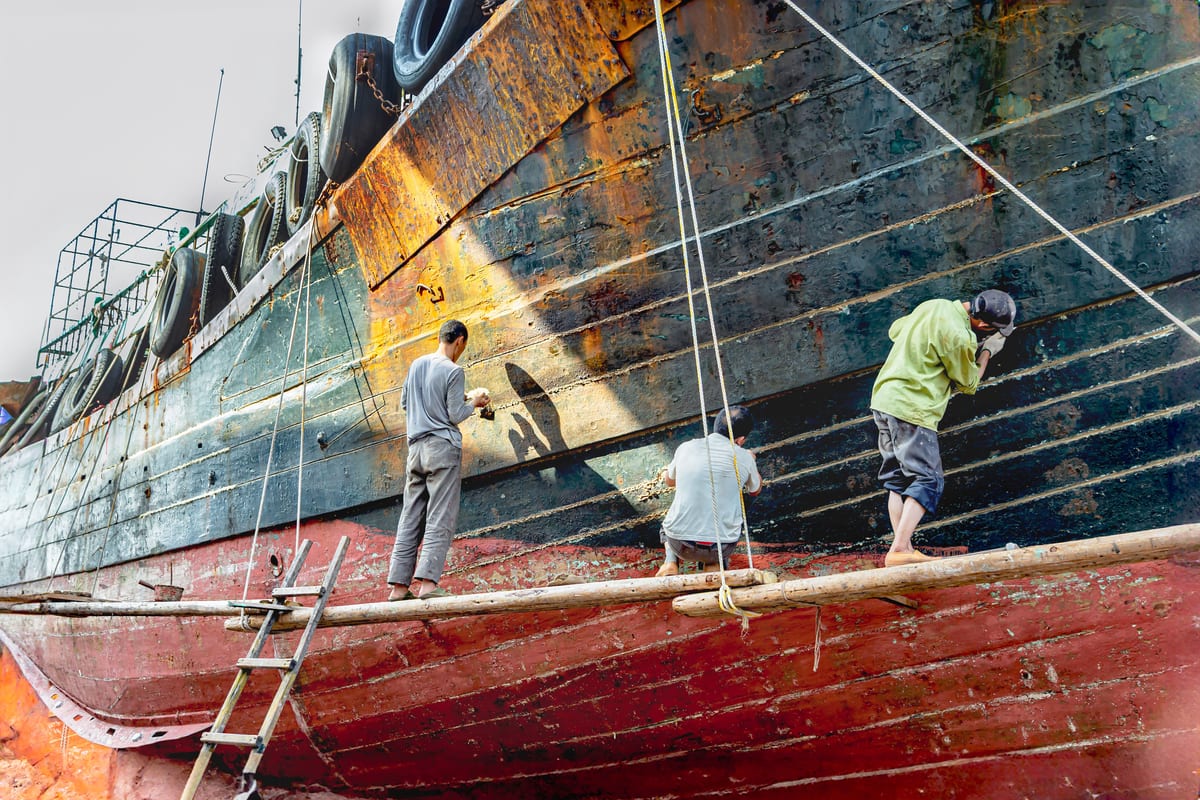
The project also touches defence repair. Commercial dry docks of this size can, with engineering modifications, serve naval auxiliaries and support vessels. The ministry's statement does not mention defence work, but the capability overlap is unavoidable. A 300-metre dry dock is larger than many existing Indian repair facilities, and the Indian Navy's auxiliary fleet requires exactly this kind of capacity. That dual-use potential strengthens the case for integrating the yard with India's maritime security infrastructure rather than treating it as a purely commercial enclave.
Local supplier development and skills
For Tamil Nadu's workforce, the more meaningful commitment is not the $4 billion figure but the vendor ecosystem clause. Welding certification, marine electrical work and dry-dock rigging are capabilities that Indian yards usually import or train from scratch. If the joint venture agreement ties HD KSOE's investment to skill certification programmes in Thoothukudi and neighbouring districts, the yard can create a labour pool that outlives the first order book. Indian public-sector yards have trained workers but have not built a commercial certification pipeline for private yards. HD Hyundai's vendors operate to international classification society standards, and their presence in Tamil Nadu would expose local subcontractors to processes that are otherwise learned only on overseas assignments. That skills transfer, rather than the headline investment number, may be the most durable outcome of the Seoul meeting.
What remains to be resolved
The gap between an expressed investment intent and a functioning yard is measured in clearances, not press statements. The joint venture structure has not been finalised. The detailed project report will need to specify financing, land transfer, power availability, dredging requirements and environmental impact. HD KSOE has not given a public timeline for construction beyond the six-month DPR. Nor has the ministry published the text of the 20 April 2026 memorandum, so the binding obligations are not yet visible. Indian state and central agencies will need to move faster than they have in past shipyard projects, several of which have been announced, tender documents circulated, and then stalled on land or environmental disputes.
The LiveMint report does not quote independent Indian analysts or Tamil Nadu officials. The ministry's framing is the primary Indian voice in this development, which is common for a commercial engagement led by a line ministry rather than the external affairs establishment. That absence of independent scrutiny places a heavier burden on the government to publish the DPR and the joint venture agreement when they are ready. Without those documents, the public cannot distinguish a credible industrial commitment from a statement that has yet to produce legal documents.
The Thoothukudi project is the most concrete sign yet that India's shipbuilding outreach is moving from exploratory talks to named partners, named sites and dollar figures. For Tamil Nadu's industrial south, the yard promises a new cluster of heavy engineering jobs outside Chennai's automotive belt. For Indian shipping, the promise is a yard that can build, repair and refit commercial tonnage on the busiest sea lane in the Indian Ocean. The six-month DPR clock has started. The more difficult clock runs against the land, environmental and connectivity approvals that have broken earlier Indian maritime projects. If the state machinery that cleared past port expansions can match HD Hyundai's schedule, Thoothukudi may become what the east-west corridor has not seen in decades: an Indian yard that foreign flags seek out, not one that merely builds for Indian owners.